We tell you all about Cardamom
Product
-
14.04.23
Suggestions
Lemongrass: a complete guide to its benefits, uses and recipes
Sommaire
Key takeways:
|
Among the great aromatic plants celebrated across cultures and seasons, lemongrass stands apart. Its fresh, lemony scent instantly evokes Southeast Asian cuisine, yet its use goes much further than exotic dishes.
Used for centuries, lemongrass is valued for its flavour, its versatility and its ability to bring balance to a dish through light citrus notes.
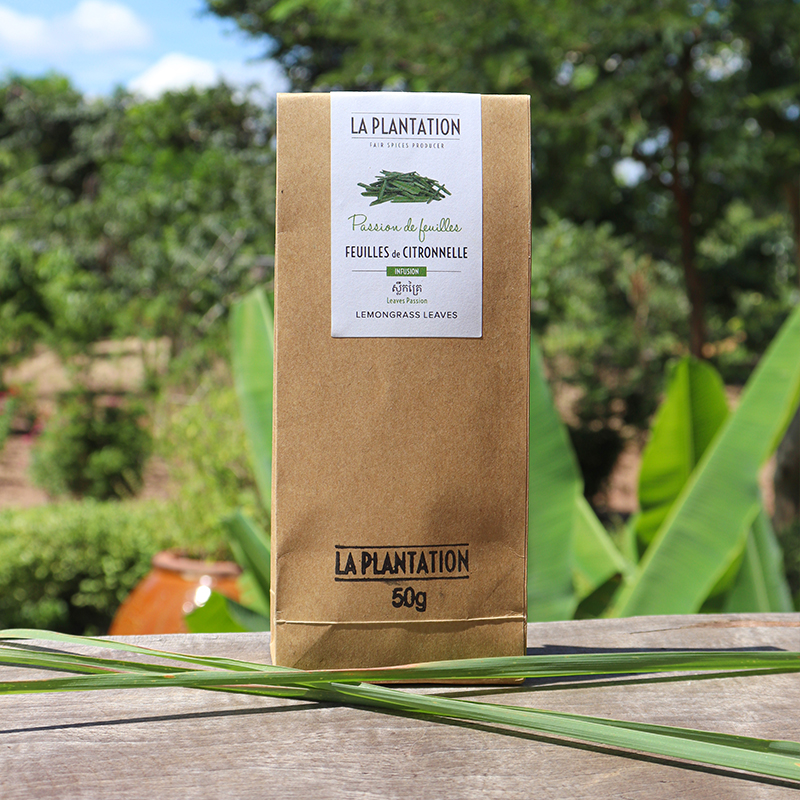
In Kampot, in southern Cambodia, the warm climate and mineral-rich soil offer lemongrass a unique aromatic profile. This is where La Plantation cultivates and processes the plant with care, offering two complementary formats such as dried lemongrass leaves for herbal teas and ground lemongrass stalks for precise, easy cooking.
This guide explains what lemongrass is, which part you should use, how to cook with it, how to brew it, and how to integrate it naturally into everyday meals, always in line with European culinary standards.
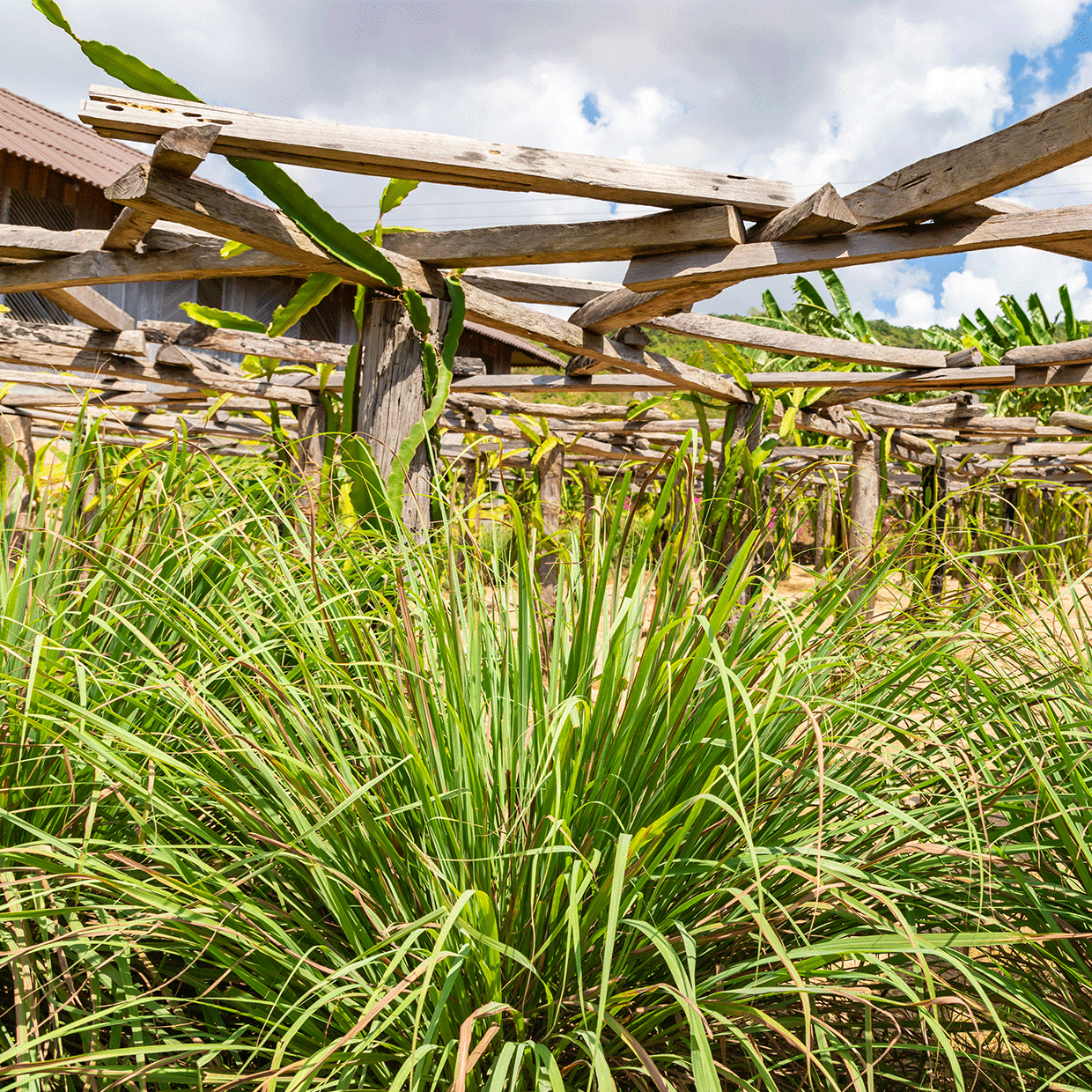
What is lemongrass?
Lemongrass comes from Southeast Asia, where it has been used for generations in home cooking, markets and traditional food culture. You will find it in Cambodia, Thailand, Vietnam and Indonesia, where it flavours soups, curries, marinades and aromatic preparations.
In Kampot, lemongrass has long been part of traditional agriculture.
Grown in a warm, humid climate, it develops a clear, clean aroma that is easy to use in everyday recipes without overpowering the dish.
Culinary lemongrass belongs to the Cymbopogon genus, and more specifically to Cymbopogon citratus.
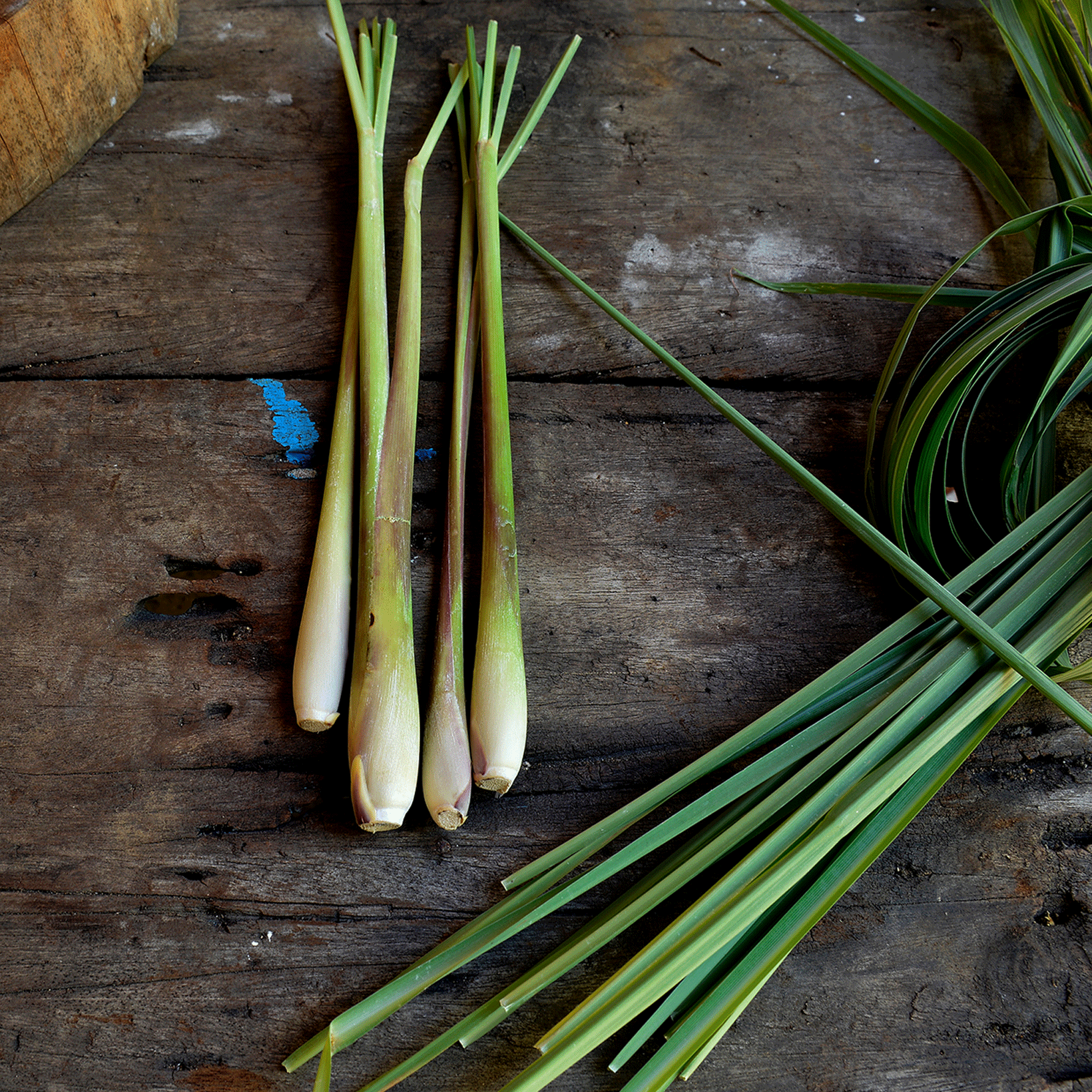
It is a perennial herb with long, narrow, blade-like leaves and a thick white base, the famous lemongrass stalk used in cooking.
This base contains the highest concentration of essential aromatic compounds, which explains why it is the preferred part for cooking.
Traditional benefits of lemongrass
In Southeast Asian cultures, lemongrass is valued first for its flavour which is fresh, bright and naturally lemony. It brings balance to rich dishes, perfumes broths and adds a clean finish to meals.
Traditionally, lemongrass is used:
to lighten heavy dishes
to bring freshness to broths
to offer a soothing end to a meal
to create aromatic herbal teas and warm drinks
Within European regulations, lemongrass is considered an aromatic plant traditionally consumed for well-being.
Its interest lies in its natural compounds, including citral, which gives lemongrass its intense lemon aroma.
Lemongrass is often associated with:
digestion comfort
a calming feeling during meals
a refreshing effect
its contribution to everyday balance
Its antioxidant content and absence of caffeine make it a pleasant, gentle ingredient that fits into varied and balanced diets.
How to use lemongrass?
Not all parts of the plant serve the same purpose.
The white stalk (base): This is the most aromatic part. It is widely used in cooking because it resists heat and releases its lemon notes gradually.
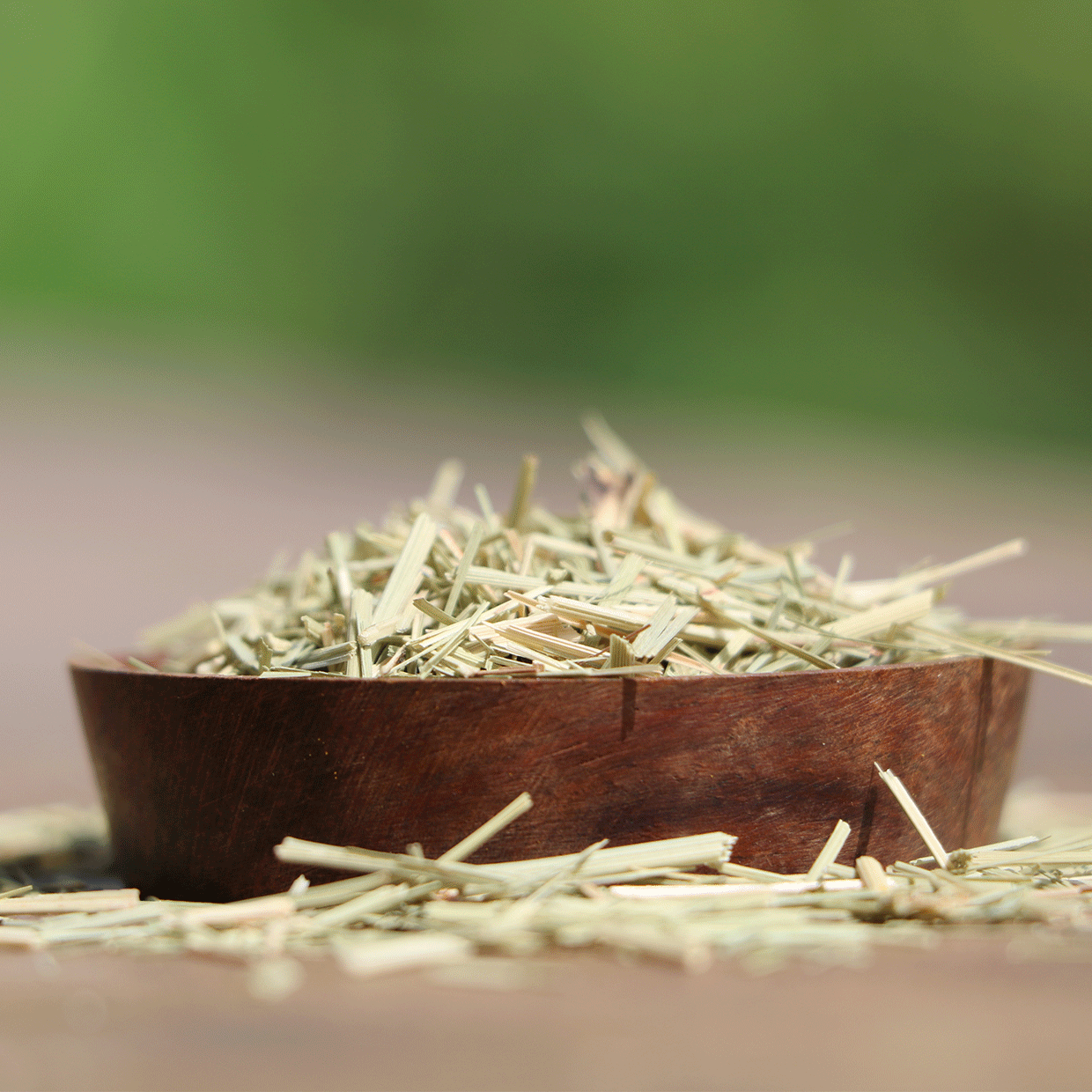
The leaves: Long, fibrous and aromatic. They are perfect for herbal teas, infusions and broths, where they are infused and then removed.
The tougher upper leaves: Usually not eaten directly. They are used to flavour soups and stews, then discarded.
Each part brings a different profile, making lemongrass a flexible ingredient for both sweet and savoury dishes.
It is essential to distinguish culinary lemongrass from varieties grown mainly for essential oils or insect repellents.
Only lemongrass intended for food use is grown, dried and processed under agricultural standards, is suitable for cooking or infusions.
Lemongrass can be found in several formats:
Fresh stalks, often sold in Asian grocery stores
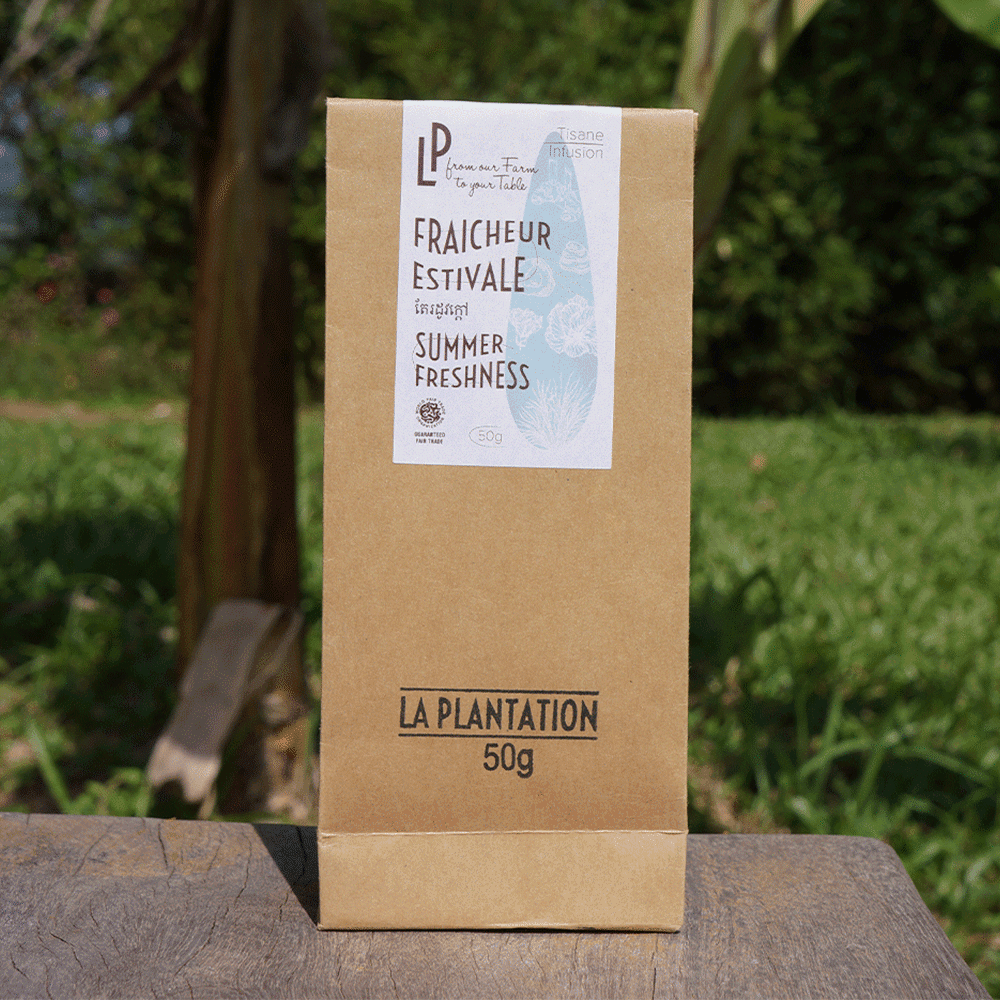
Dried lemongrass leaves, ideal for teas and broths
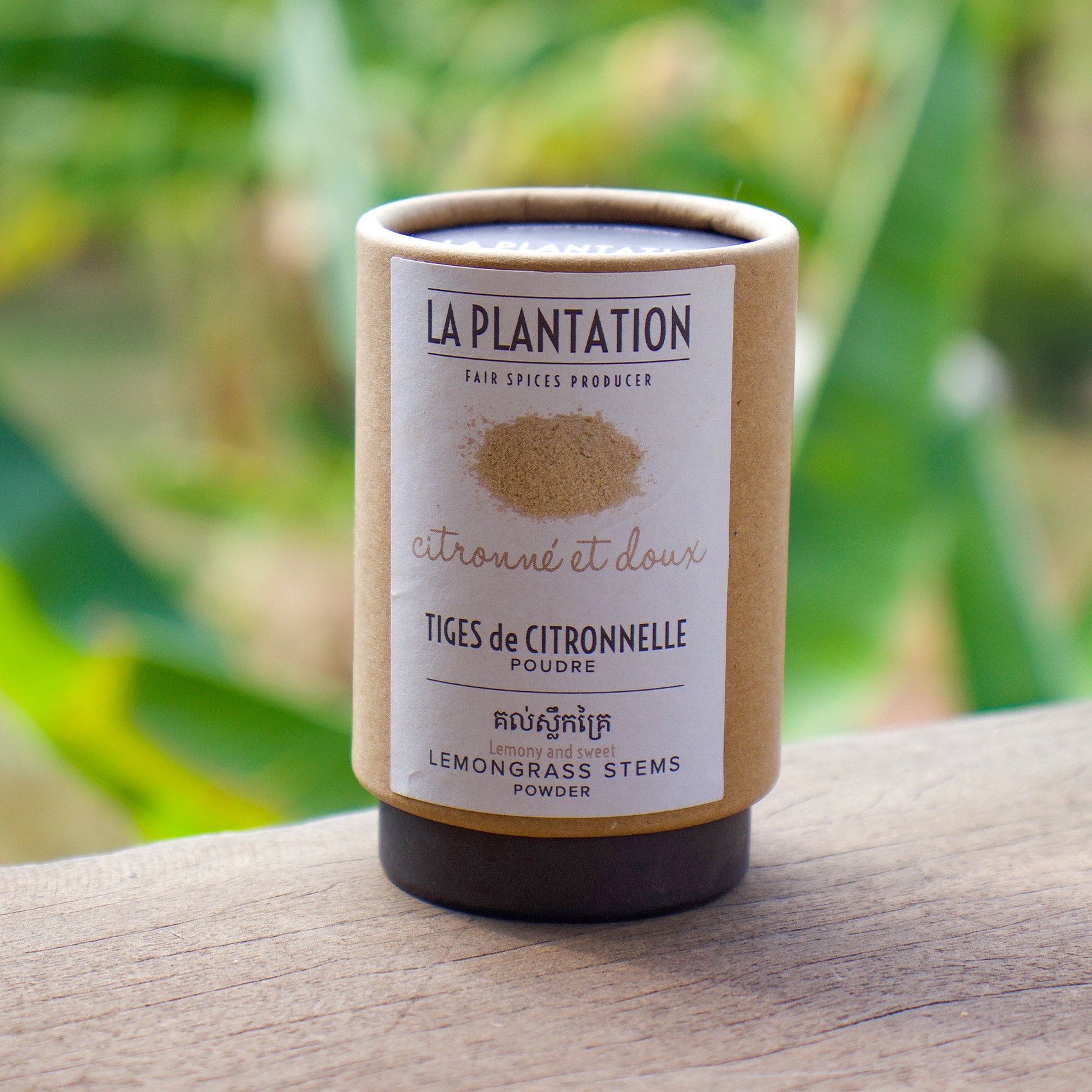
Ground lemongrass stalks, easy to use for cooking and precise seasoning
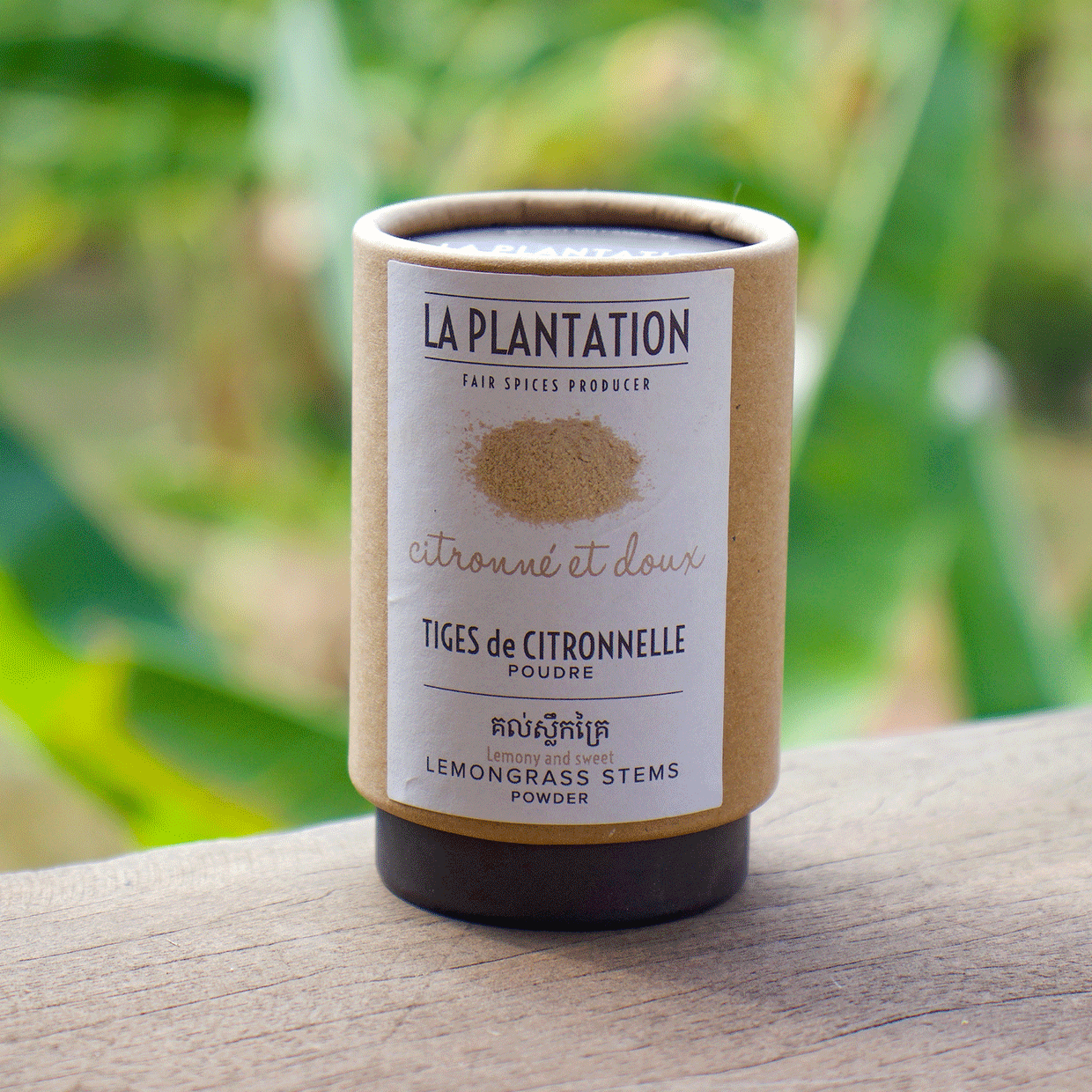
At La Plantation, the two forms available are:
Dried lemongrass leaves which is perfect for teas and decoctions
Lemongrass powder is excellent for curries, soups, marinades and European-style dishes
These formats make lemongrass easy to use in modern kitchens while preserving its natural aroma
Using lemongrass in herbal teas
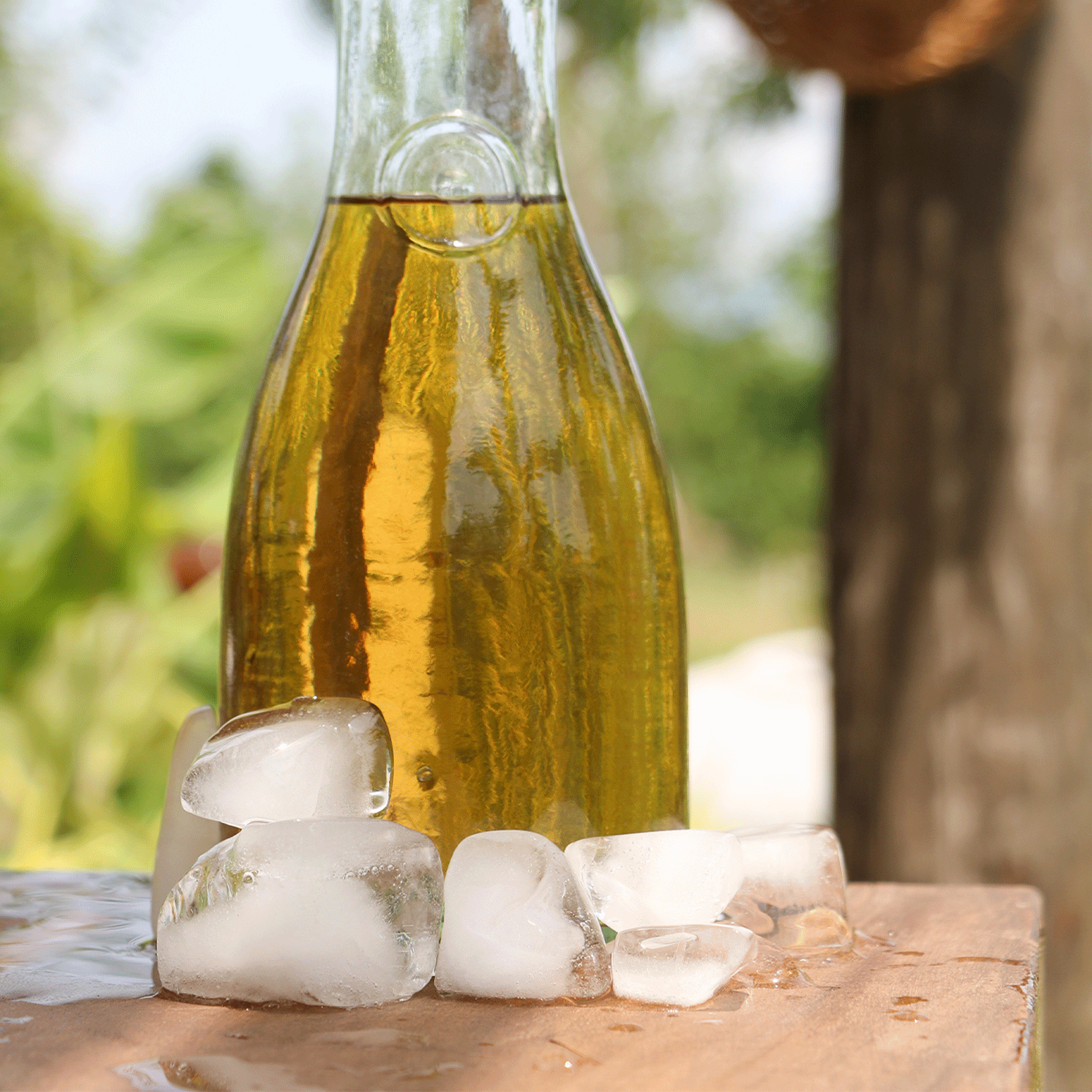
Dried lemongrass leaves make a soft, lemony infusion with no bitterness and a very clean aroma.
It is a gentle drink you can enjoy at any time of day, warm or lukewarm, alone or blended with other plants.
1. Heat filtered water until it starts to simmer
2. Add one tablespoon of dried lemongrass leaves
3. Infuse for 5 to 7 minutes
4. Strain and enjoy
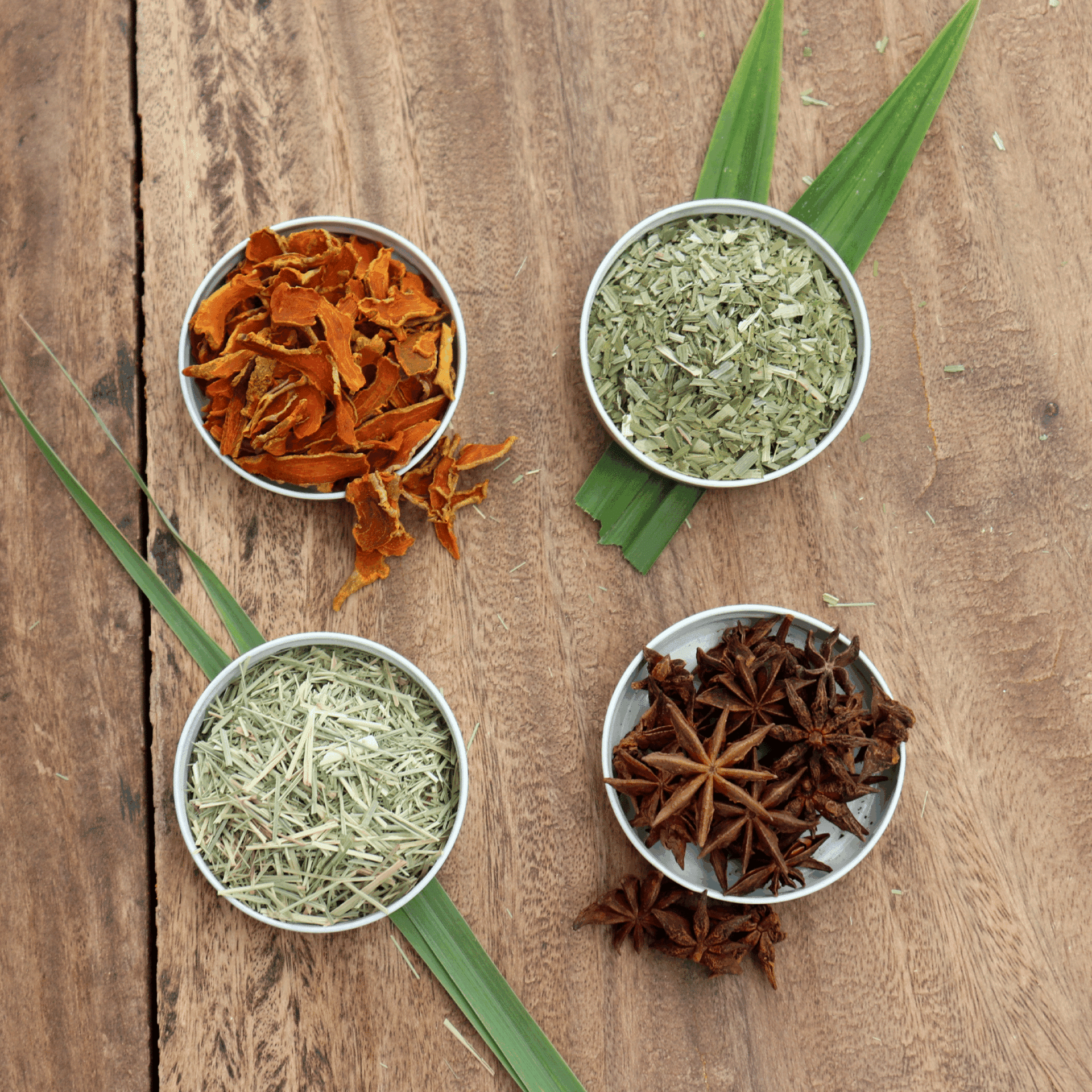
You can drink it plain, or mix it with ginger, star anise, hibiscus or mint to create new aromatic profiles.
Lemongrass tea brings freshness, lightness and a clean end to a meal, without caffeine.
How to cook with lemongrass?
Lemongrass enhances many savoury and sweet preparations. It works particularly well in:
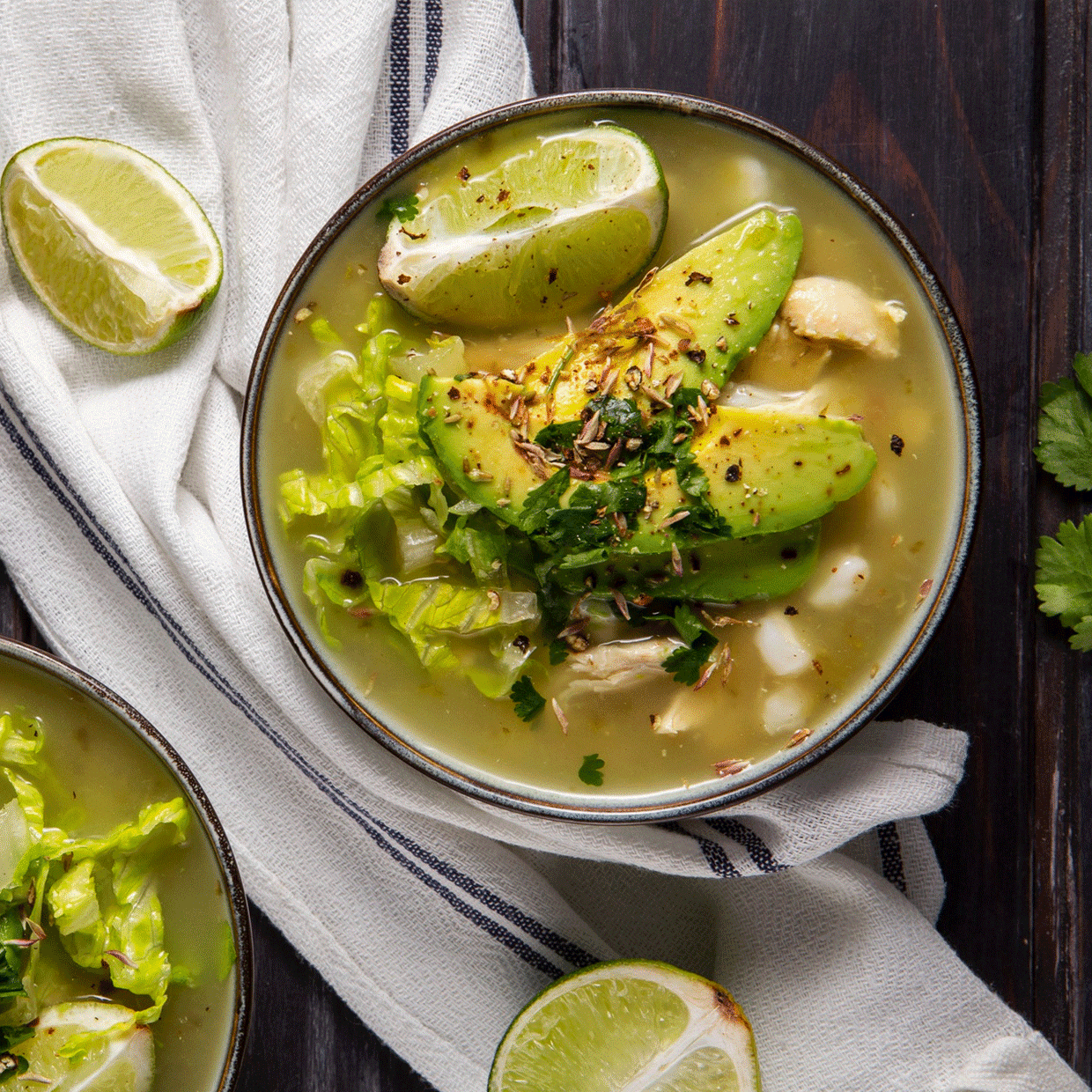
soups and broths
curries
marinades
slow-cooked dishes
light desserts
The powdered form is especially practical for European kitchens, offering precise measuring and easy blending in everyday recipes.
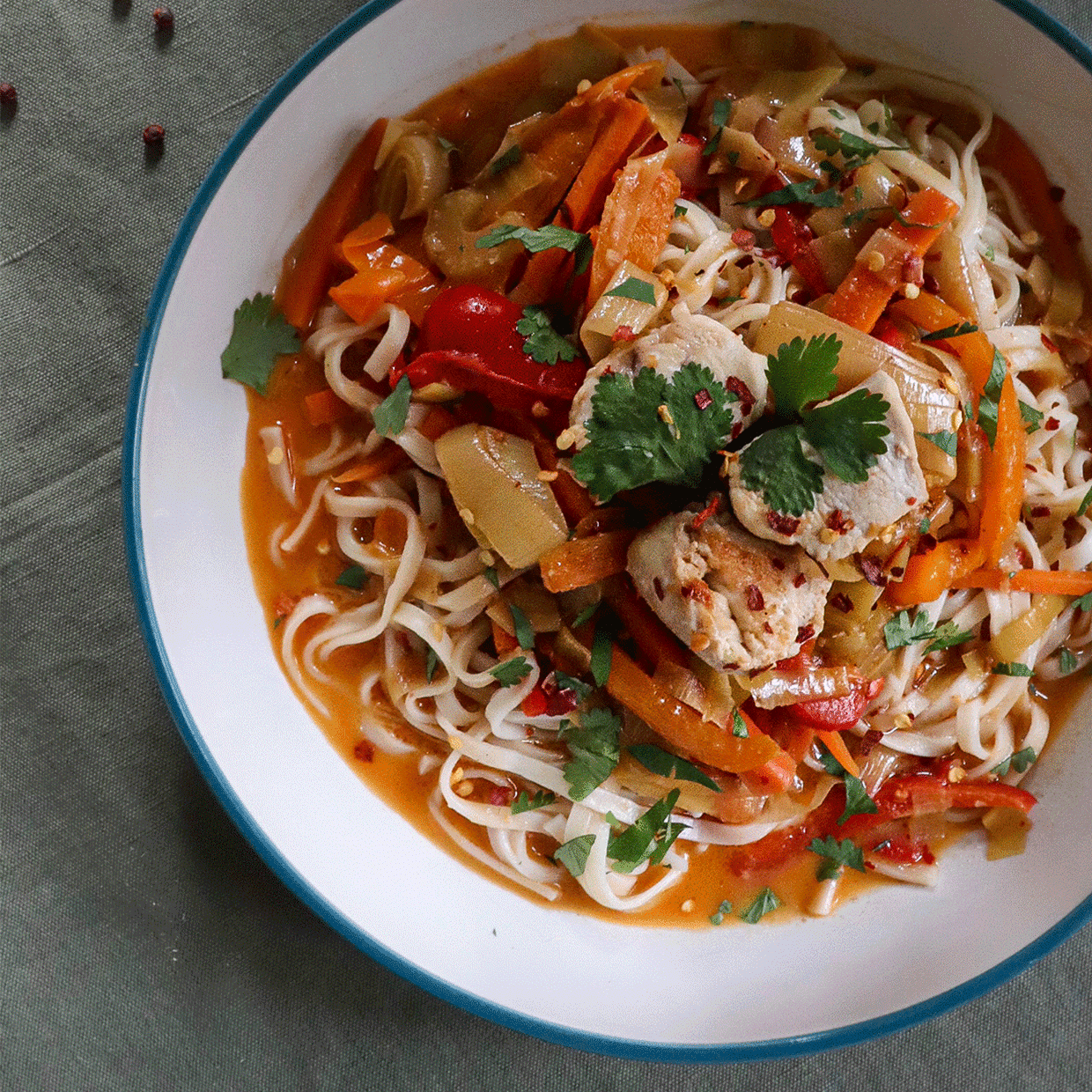
In Cambodia, lemongrass has been used for centuries in dishes such as Lok Lak, a stir-fried beef dish with a bright seasoning base, and Num Banh Chok, Cambodian rice noodles served with a fragrant lemongrass sauce. Its aroma brings clarity and citrus depth to any base.
Although often associated with Southeast Asian dishes, lemongrass fits remarkably well into European winter cooking.
Its freshness lightens hearty recipes and balances richer flavours.
Savoury ideas
Lemongrass pot-au-feu: a subtle twist that brings brightness to the broth.
Winter vegetable velouté (parsnip, celeriac) with a hint of lemongrass.
Lemongrass veal blanquette for an unexpected fresh finish.
Revisited sauerkraut, where lemongrass balances fermented cabbage.
Lemongrass pork roast, with stalks infused in oil or marinade.
Coconut chicken with lemongrass, creamy and aromatic.
Sweet ideas
Lemongrass crème brûlée, delicate and lightly citrusy.
Apple tarte tatin with lemongrass, for natural lemon notes without added acidity.
Lemongrass custard, ideal with chocolate or fruit desserts.
Lemongrass adds lightness, clarity and aromatic freshness to both sweet and savoury dishes, making it a powerful ingredient for creative cooking.
Precautions and safety notes
Lemongrass is a widely used aromatic plant and is safe when consumed in normal culinary amounts.
However, like any strong aromatic ingredient, it deserves a few precautions.
Sensitive individuals: people with digestive sensitivity may prefer small amounts at first.
Pregnancy: large quantities of lemongrass infusions are not recommended during pregnancy; medical advice is advised.
Medical conditions: lemongrass does not replace a varied diet or medical treatment. Always ask a health professional if you have a specific condition.
These guidelines follow EU regulations, which prohibit medical claims.
Lemongrass is used for flavour, aromatic comfort, and well-being traditions, not for therapeutic treatment.

Frequently asked questions about lemongrass
Which part of lemongrass is edible?
The white stalk is the most commonly used part in cooking.
The leaves are best for infusions or to flavour broths before removing them.
Can you use lemongrass leaves?
Yes. They are ideal for infusions or aromatic decoctions.
Their flavour is softer and more herbal than the stalk.
How do you recognise good-quality lemongrass?
Good lemongrass should be aromatic, fresh and clean, with no rancid smell.
It should also come from a reliable food-grade source.
Is lemongrass only for Asian cooking?
No. Lemongrass fits beautifully into European cuisine, especially winter dishes like soups, vegetables, pot-au-feu or desserts.


Subscribe to our Newsletter now
Get a free product for your first order!
Donation