Our curry
Powder
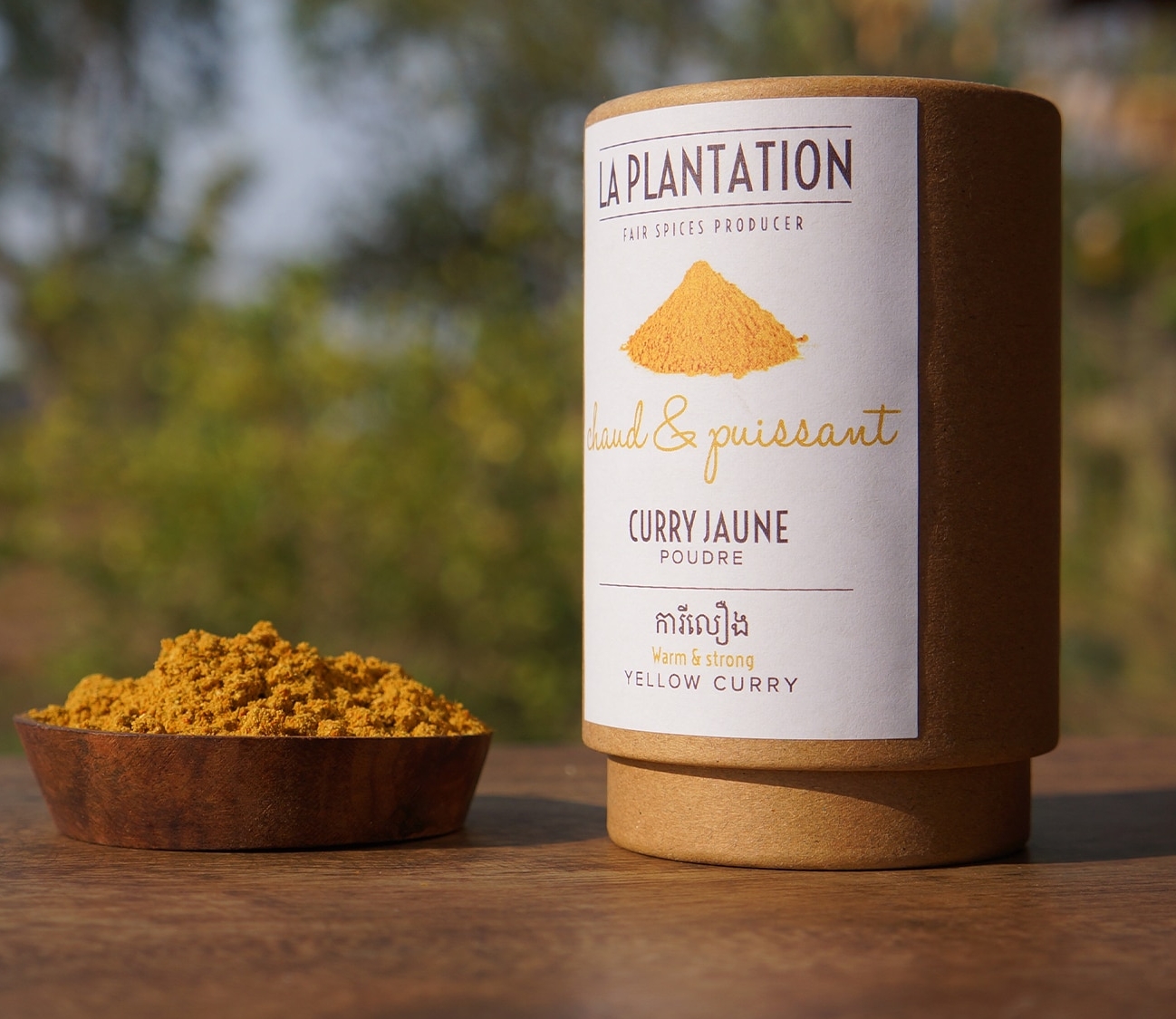
Discover 3 curry powder blends inspired directly by Khmer culinary traditions: Khmer red curry, Khmer green curry and yellow curry. Each blend is made from spices grown in Kampot or carefully sourced from local producers in Cambodia. All three are ready to use and designed to work equally well in everyday cooking and more elaborate recipes.
Curry
What curry powders Are in the range?
The range includes three distinct blends, each with its own flavour profile and recommended uses.
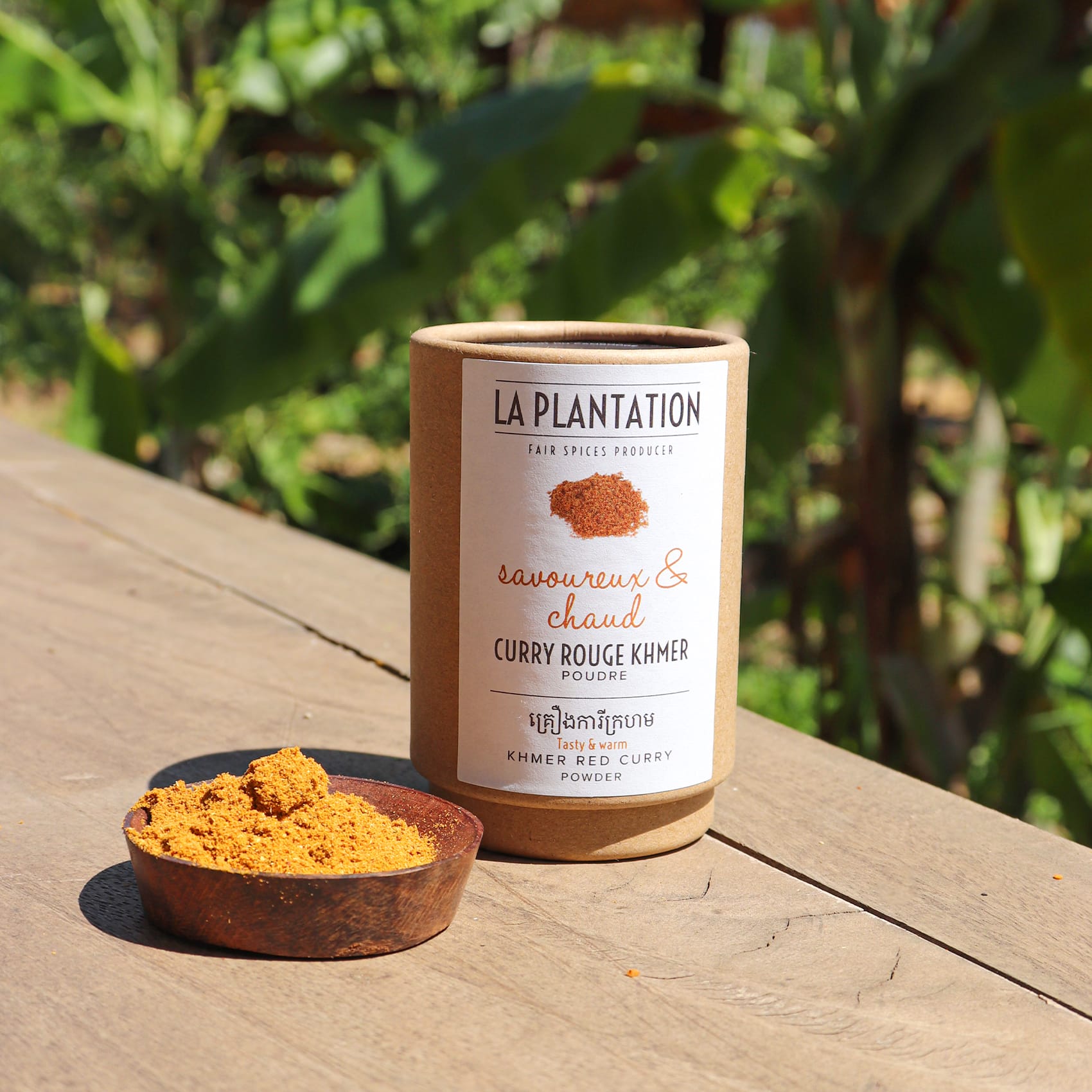
Khmer red curry is the mildest and most approachable of the three. Turmeric is the dominant note, and the warm colour comes from sweet paprika and annatto. It suits a wide range of dishes: vegetables, fish, lentils, eggs or tofu. This is the natural starting point for anyone new to Cambodian flavours.
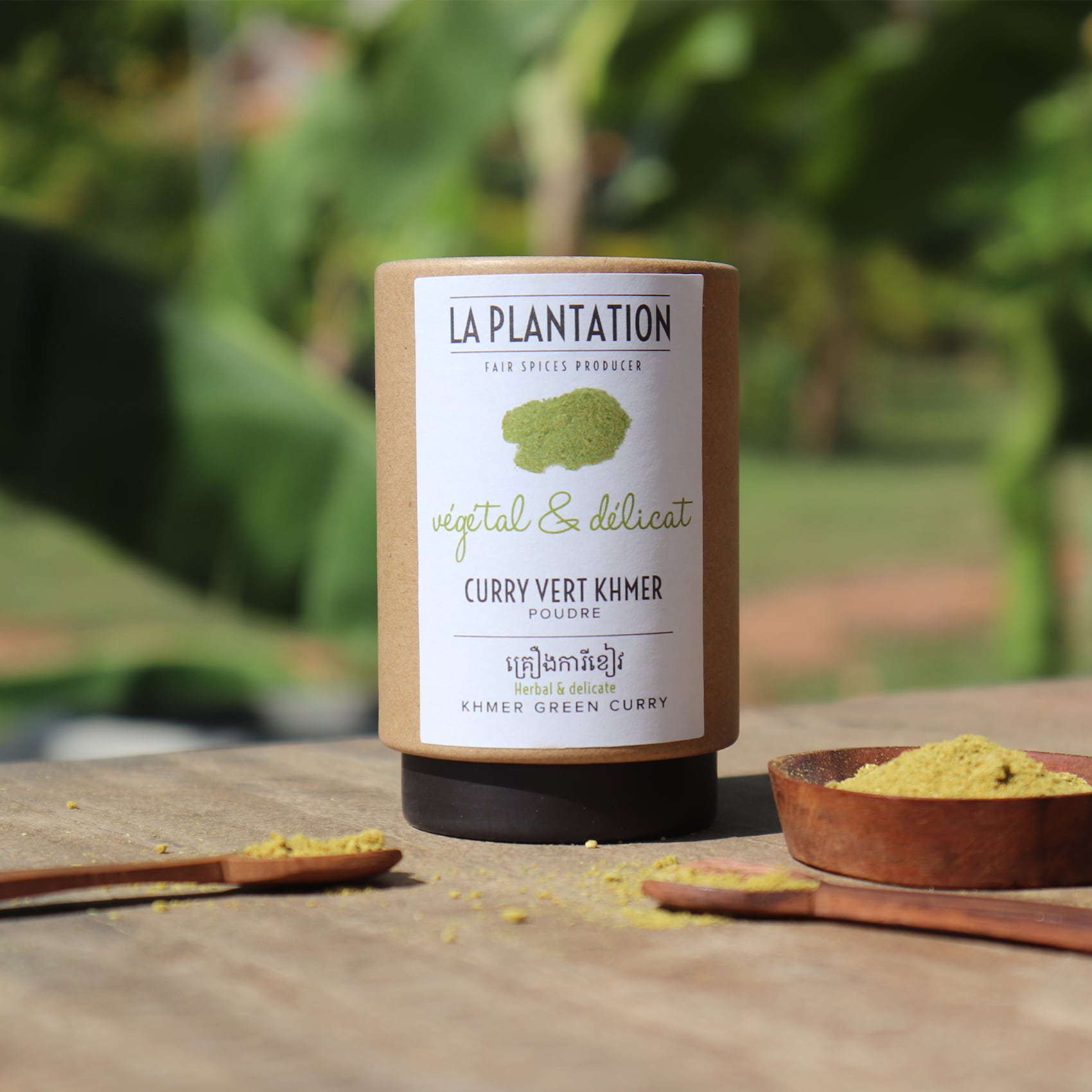
Khmer green curry is fresher and more herbaceous than the red. Lemongrass leaves give it a distinct brightness, while green paprika adds a subtle warmth. The overall profile is delicate and slightly citrusy, making it well suited to chicken, prawns or vegetables cooked in coconut milk.
Yellow curry is the most intense of the three. It contains bird’s eye chillies and mild long pepper, and draws its characteristic golden colour from turmeric. The flavour is slightly earthy and peppery, with a warming depth that holds up well to slow cooking. It pairs particularly well with beef, duck or root vegetables.
What makes Khmer curry different?
Khmer curry stands apart from Indian or Thai curry through its base ingredients and aromatic balance. Where Indian blends often lean on roasted spices, Khmer curry relies more heavily on lemongrass, kaffir lime leaves and locally grown chillies, ingredients that are characteristic of South-East Asian terroir and give these blends a fresher, more herbaceous character.
Every blend in this range is made from ingredients grown or sourced directly in Cambodia. That direct connection to the land is what sets them apart from generic curry powders, whose composition is typically standardised and disconnected from any specific culinary tradition.
How to use curry powder in the kitchen?
Curry powder is one of the most versatile spices in everyday cooking. A practical guide to using curry offers recipe inspiration and technique tips.
Curry powder works best when added at the start of cooking. The most effective method is to bloom the blend in a drizzle of hot oil for 30 to 60 seconds before adding the other ingredients. This step (known as tempering) draws out the aromatic compounds in the spices and develops greater depth in the finished dish.
Khmer red curry works well in a slow-cooked dish with coconut milk, root vegetables and red meat. Khmer green curry pairs naturally with sautéed prawns, chicken and green vegetables in a light coconut broth. Yellow curry, the most versatile of the three, can also be stirred directly into soups, fried rice or pasta sauces.
All 3 blends also work as a dry marinade: mix with a drizzle of oil and a squeeze of lemon to coat meat or fish before cooking.
Frequently asked questions on curry powder
Khmer red curry is the ideal entry point. Its intensity is mild, its flavour profile is accessible and it adapts to a wide range of everyday dishes. Khmer green curry suits those who enjoy fresh, herbaceous flavours. Yellow curry is the right choice for cooks looking for more warmth and character.
The heat level varies across the range. Yellow curry is the hottest of the three, due to its bird’s eye chilli content. Khmer green curry has a moderate heat. Khmer red curry is the mildest and is suitable for all palates, including those sensitive to spice. Check the individual product page for the full ingredient list and heat level before purchasing.
Yes. While coconut milk is traditional in Khmer curry dishes, these blends work equally well with stock, plain water, yoghurt or cream as a cooking liquid. They can also be used as a dry seasoning for roasting or grilling without any liquid at all.
As a general guide, one teaspoon per person is a good starting point for a sauce or stew. Adjust to taste. When used as a dry rub or marinade, a slightly larger quantity is needed to coat the surface of the meat evenly.
Keep curry powder in a sealed container in a cool, dry place away from direct light and heat. Stored correctly, these blends will retain their aroma and potency for up to 24 to 36 months from the production date.