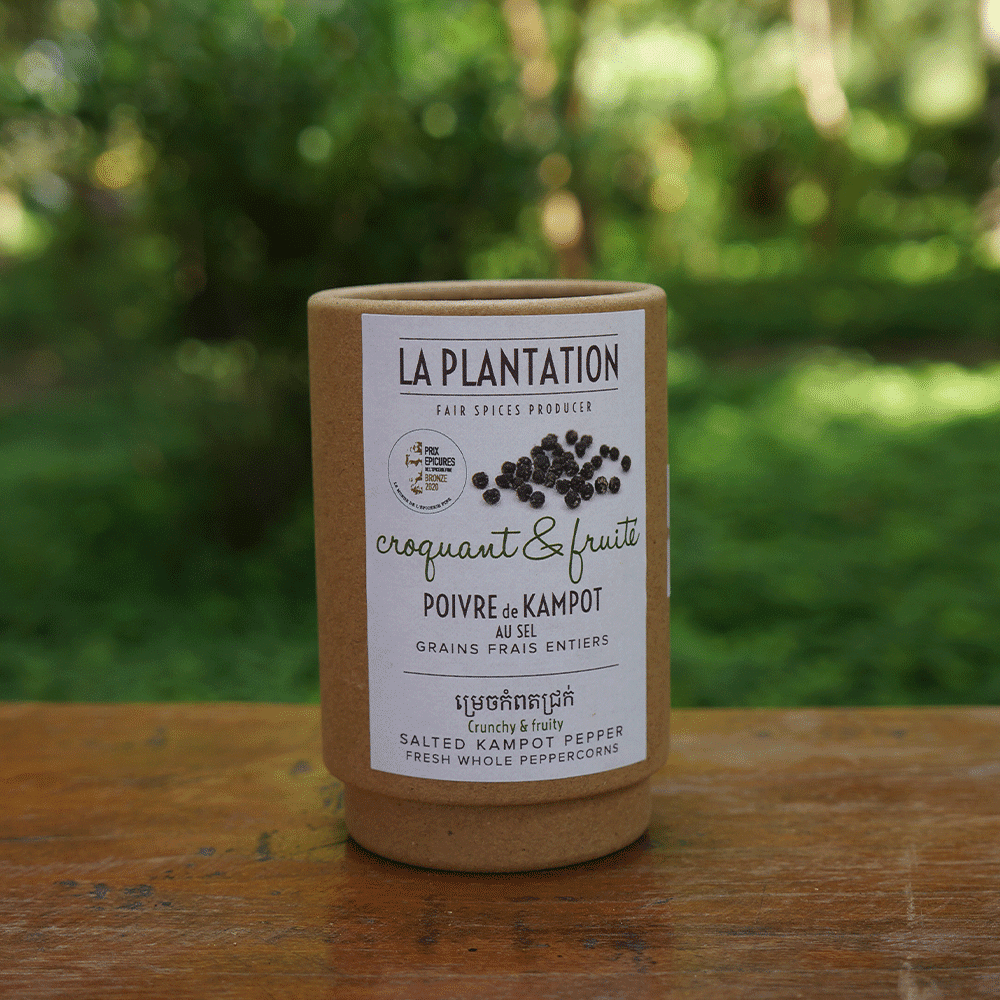
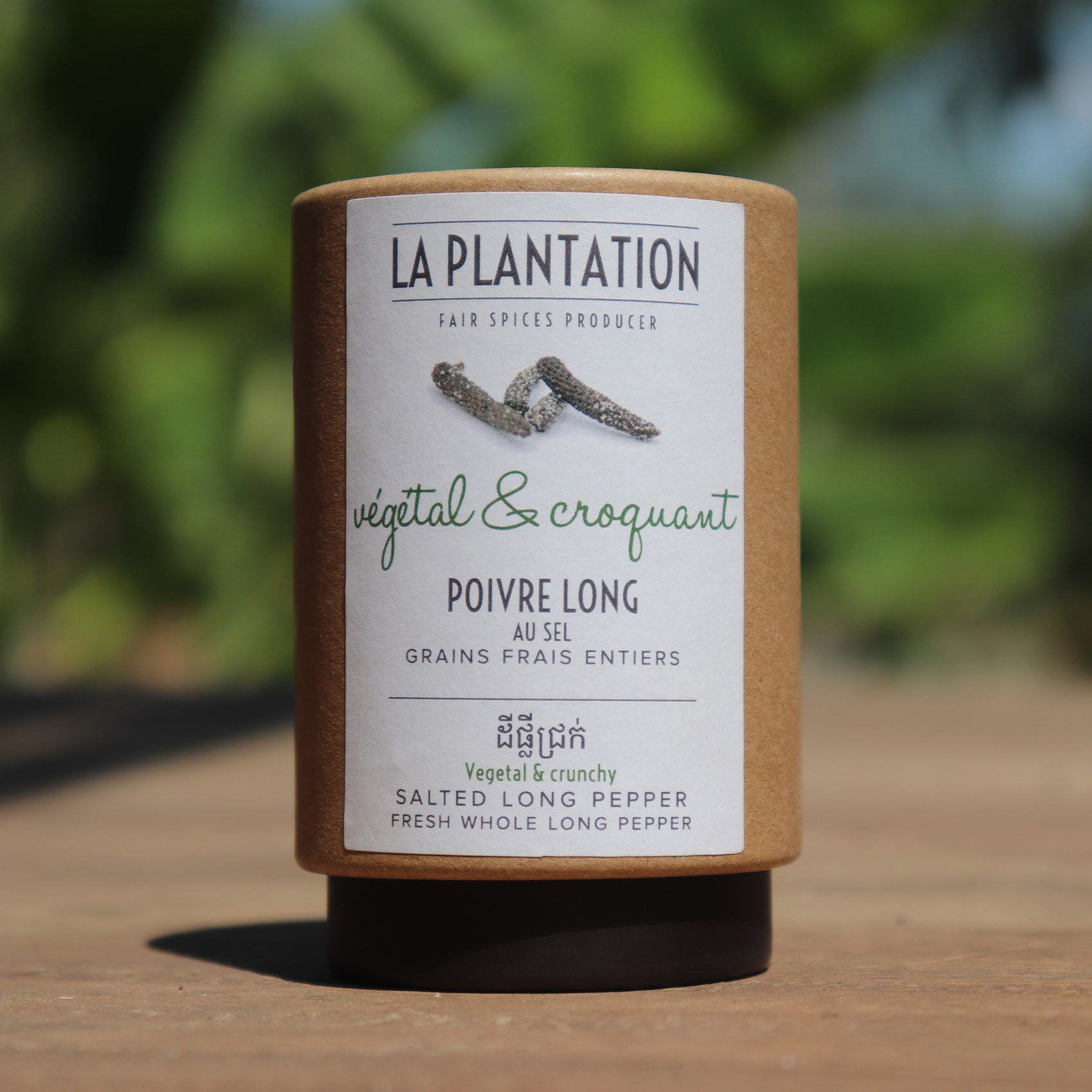
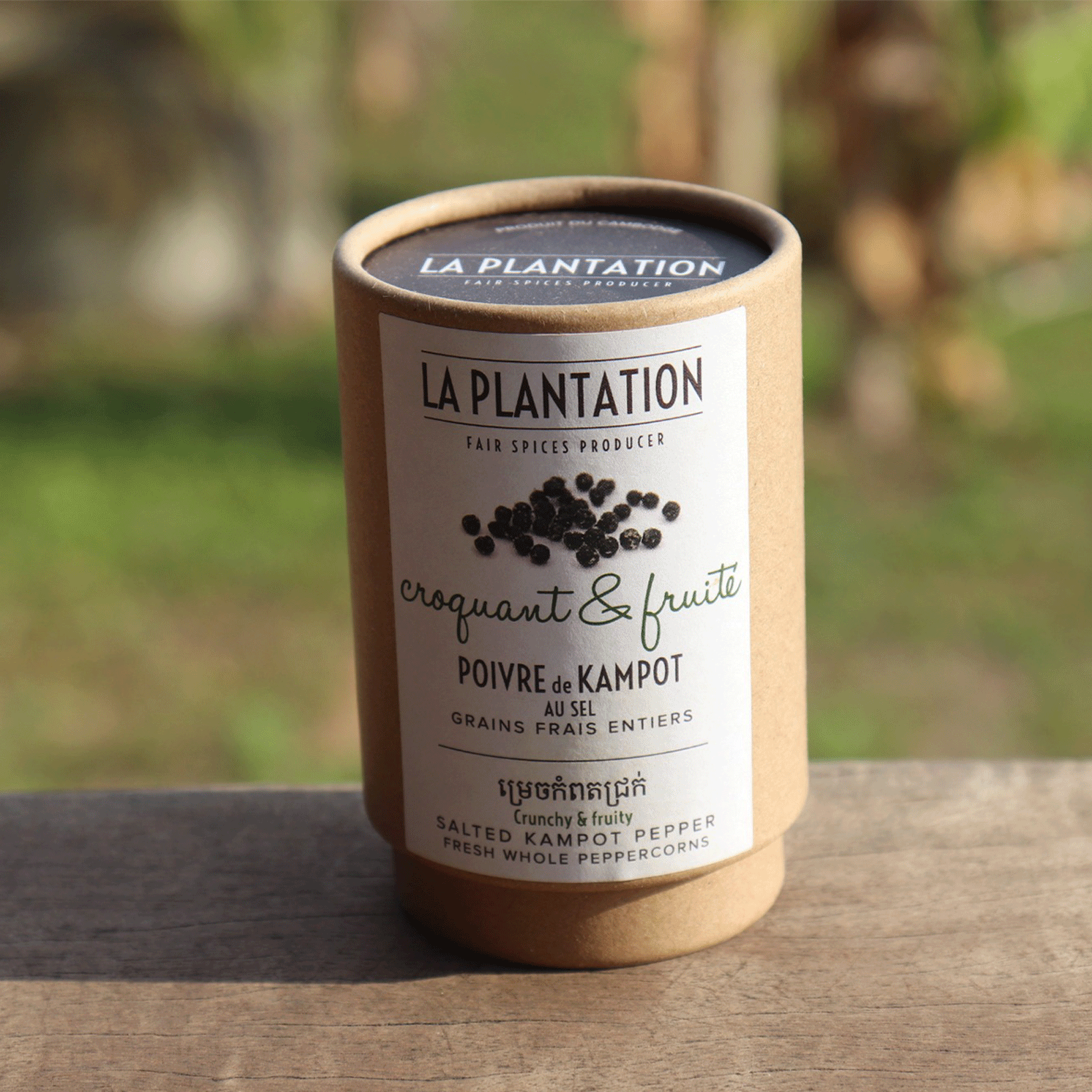
Discover more about our original creation: Fresh Kampot Pepper with Salt
Expertise
-
07.06.24
Suggestions
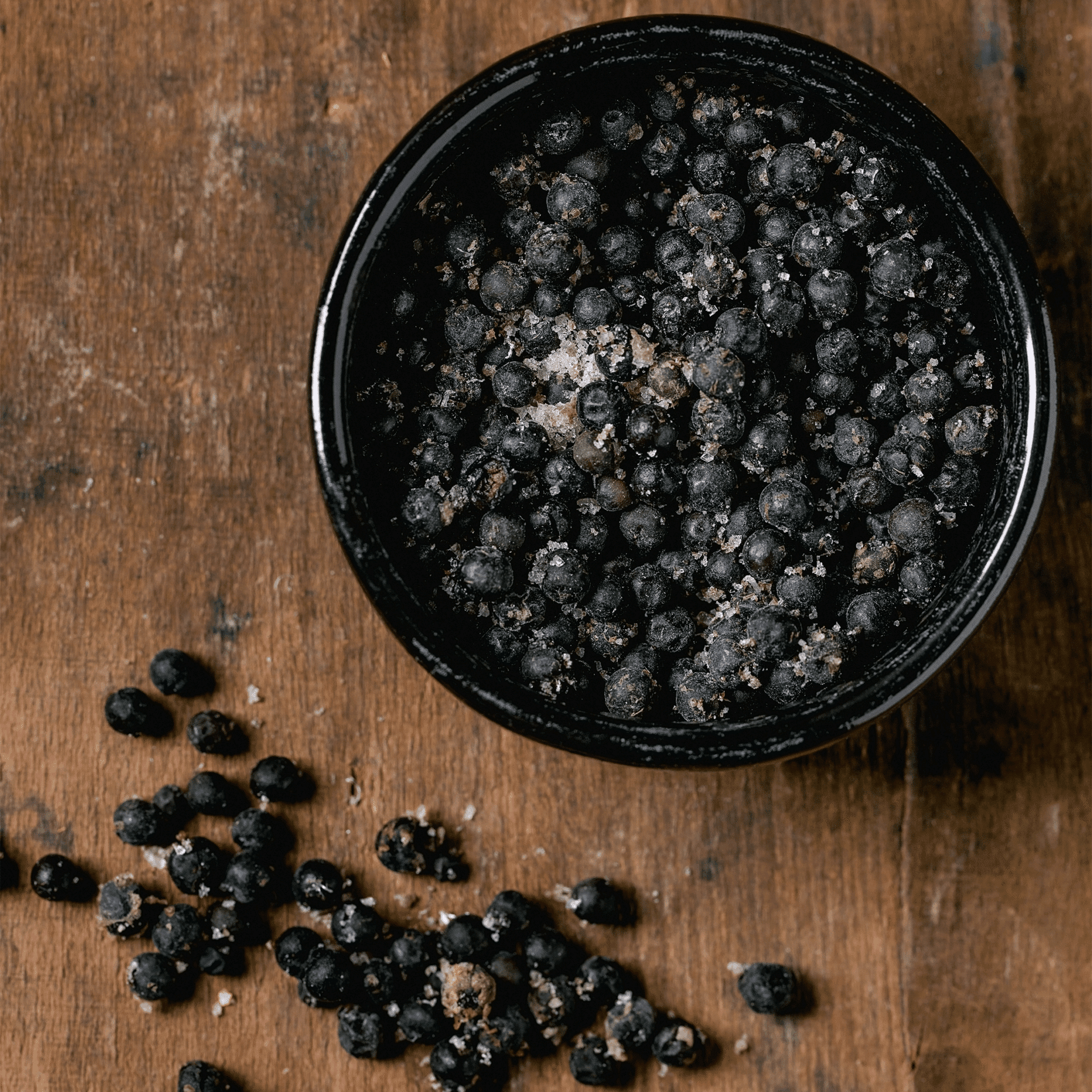
Salt fermented pepper: What it is and how to use it in the kitchen?
Sommaire
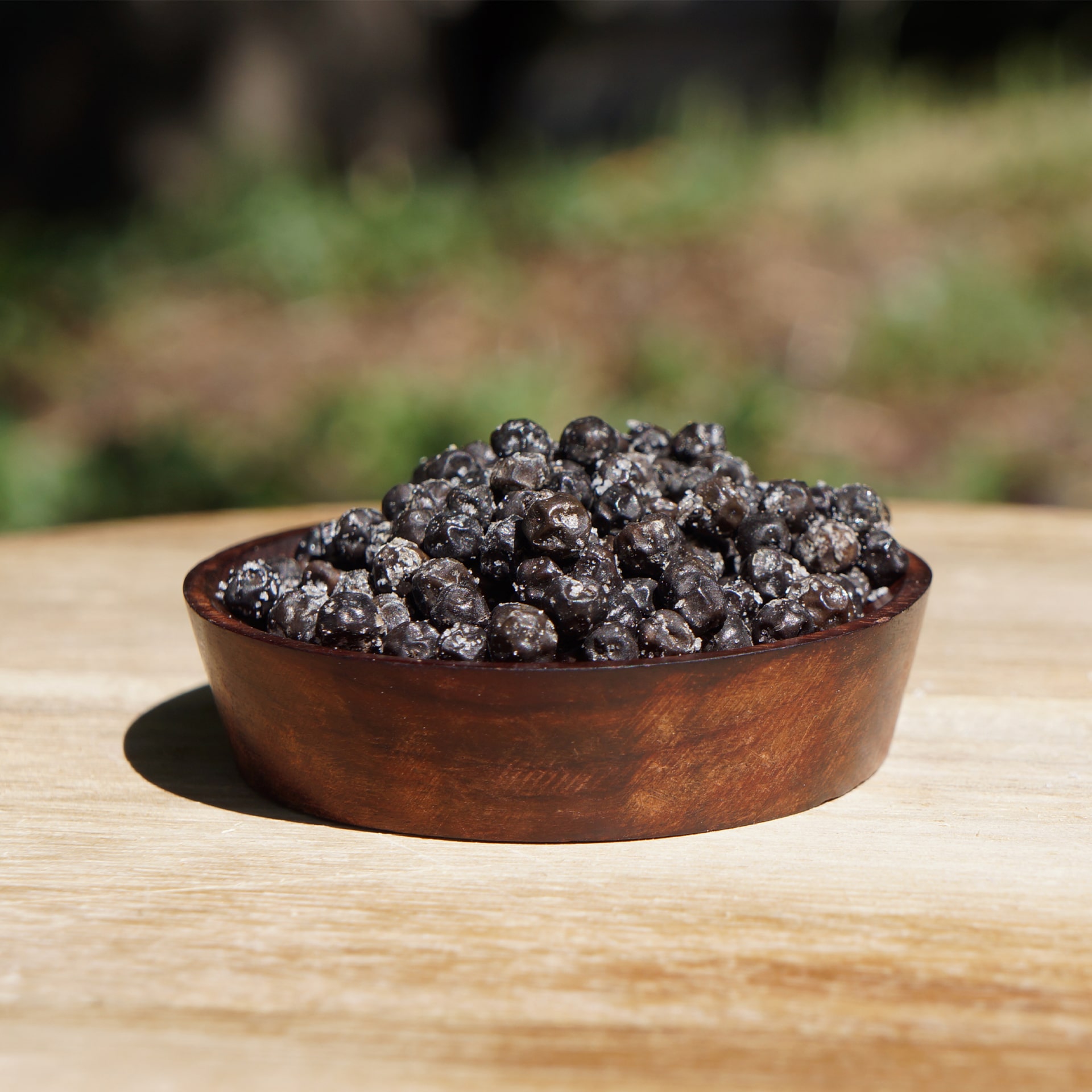
Salt fermented pepper is a little-known form of pepper, produced without any drying. Unlike black, white, or red pepper, the grain remains fresh, tender, and fleshy, fermented in a salt brine for several weeks. The result is a unique condiment: halfway between a pickled berry and a salty-umami seasoning, with no direct equivalent in the spice world.
What is salt fermented pepper?
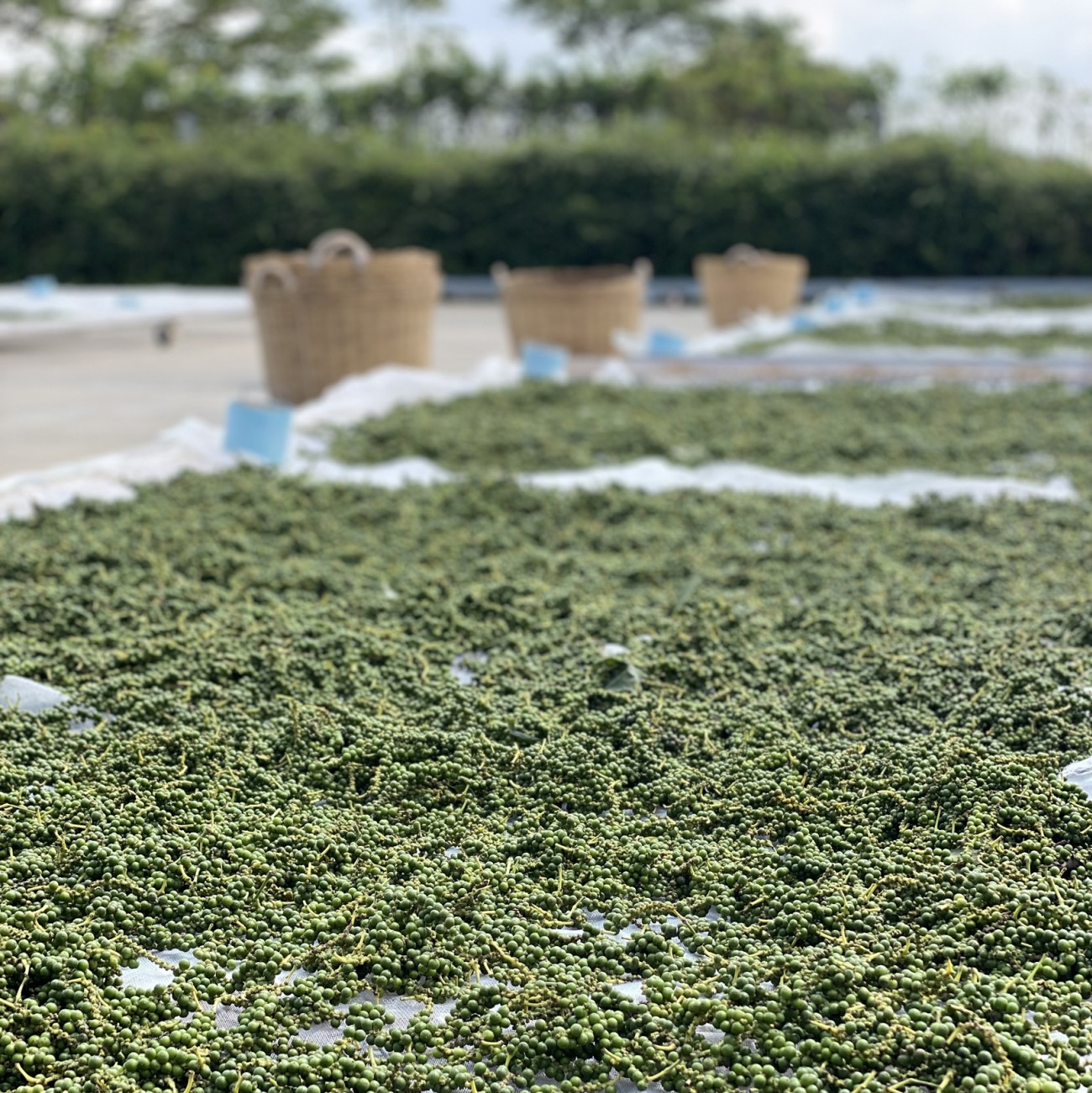
Salt-fermented pepper comes from the same plant as all other peppers: Piper nigrum. Black, white, red, and green peppercorns all come from this climbing vine, grown notably in the province of Kampot in Cambodia. The difference lies entirely in the stage of maturity at harvest and in the post-harvest treatment: sun-drying for black and green pepper, soaking and depulping for white pepper, shade-drying of ripe berries for red pepper.
Salt-fermented pepper follows a distinct path. The grains are harvested by hand at a precise stage of maturity, still green and tender, before the hard inner core forms. Fermentation takes place over several weeks. Through a salting process developed at the plantation, it gradually transforms the texture of the grain, which absorbs salt and develops deep umami aromas that drying simply cannot produce. The grain retains its heat, but gains a saline and fermented dimension that completely changes its character on the palate.
Salt-fermented pepper is made in 5 stages, all entirely manual:
Manual harvest of fresh clusters: the ripest grains are selected directly from the vine, one by one.
Hand-stripping and careful sorting: the grains are detached from the cluster and sorted to keep only intact grains, free of any defect or damage.
Immersion in Kampot fine salt: the grains are blanched, then mixed with Kampot fine salt and left to ferment.
Lactic fermentation: this gradually transforms the texture of the grain and develops the characteristic umami aromatic compounds of the finished product.
Packaging: jarred or vacuum-sealed to preserve freshness and texture until use.
The table below summarises the key differences between salt-fermented pepper and the four classic colours of Kampot pepper:
| Black pepper | White pepper | Green pepper | Salt-fermented pepper | |
| Harvest stage | Standard maturity | Advanced maturity | Before maturity | Before maturity |
| Processing | Blanching and sun-drying | Depulping and drying | Dehydration or freeze-drying | Fermentation in salt |
| Texture | Dry, hard | Dry, hard | Dry or slightly soft | Tender, fleshy |
| Aromatic profile | Intense, woody, pungent | Soft, floral, less pungent | Fresh, herbaceous | Saline, umami, peppery |
| Use | Ground during cooking | Ground during cooking | Whole or ground | Whole, crushed, or chopped — always off the heat |
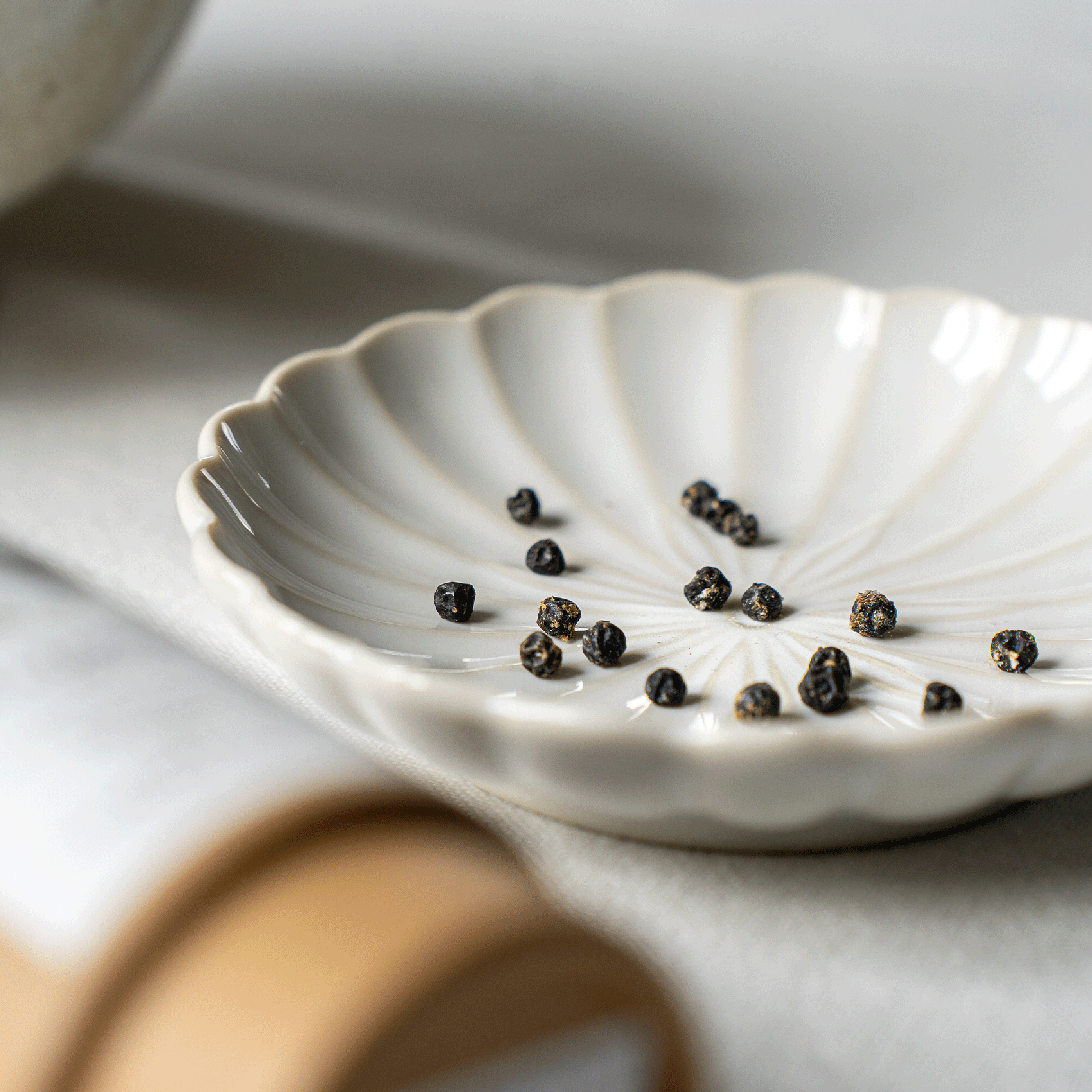
How to use Salt-fermented pepper in the kitchen?
This is the simplest and most effective use. A few whole grains placed just before serving preserve the tender texture and umami profile of the pepper, both of which would disappear with cooking. This technique suits a wide variety of dishes: fish or beef tartare, carpaccio, fried eggs, burrata, avocado toast, or a soup served hot in the bowl.
Salt-fermented pepper is incorporated into sauces off the heat or in the very final seconds of cooking. Prolonged heat would destroy its melting texture and delicate aromatic profile. A fermented pepper sauce is one of its most appreciated uses: cream, reduced stock, and butter, with a few crushed grains added off the heat. The natural salt of the pepper largely replaces the seasoning salt in the sauce. We recommend to always taste before adding any additional salt.
The salty-umami contrast of fermented pepper pairs remarkably well with soft and creamy cheeses. A few grains placed on a burrata, a brie, or a fresh goat’s cheese create an immediately convincing combination. A more elaborate technique: slip grains into the heart of a brie or camembert and leave to infuse for a few hours in the refrigerator, the cheese gradually absorbs the salty, peppery aromas. Fresh salted peppercorns also works very well on a smoked salmon board.
Salt-fermented pepper is particularly well suited to cold preparations. Its tender texture allows it to be roughly chopped and incorporated directly into a vinaigrette or cold marinade. A spoonful of crushed grains in an olive oil dressing replaces both the usual salt and pepper in a single move. It integrates naturally into gazpachos, tomato salads, ceviches, and fish tartares.
A few grains placed on scrambled eggs or an omelette at the end of cooking add a saline dimension that instantly elevates the dish. On a risotto or simple pasta with butter and Parmesan, salt-fermented pepper advantageously replaces classic salt and pepper in a single gesture. It is an original take on the cacio e pepe principle: the seasoning comes from the grain itself which is salty, peppery, and umami all at once.
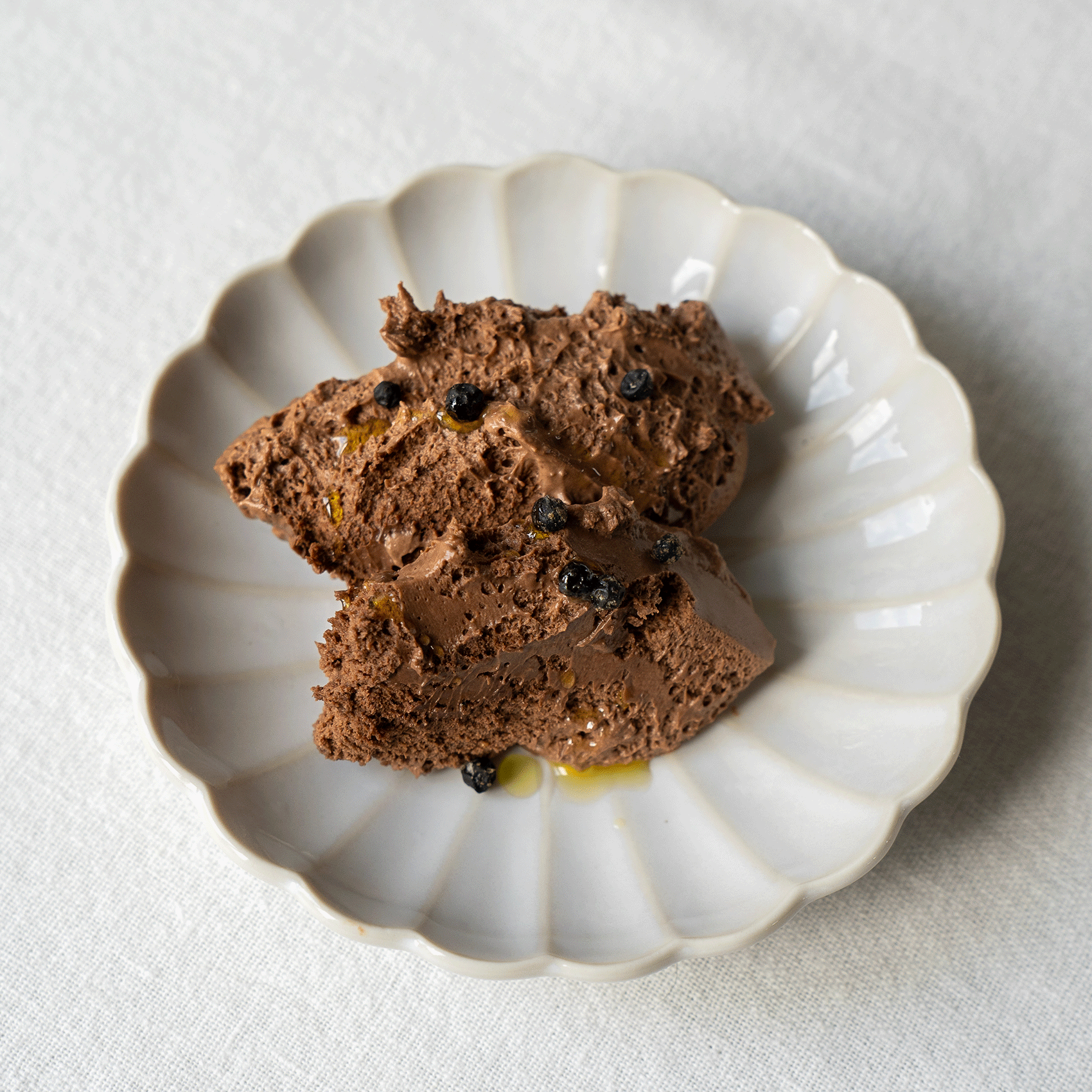
Salt-fermented pepper also works in the sweet register. Its umami dimension and natural salinity create an interesting pairing with dark chocolate. A chocolate mousse made with Kampong Thom fresh salted pepper is an excellent demonstration of this where the salt draws out the bitter aromas of the cacao and rounds them off.

How to prepare it before use?
Never use a pepper mill. The tender texture of the grain would damage the mechanism. There are 3 simple methods depending on the result you want:
FAQ
No, prolonged cooking is not recommended. Heat destroys the melting texture of the grain and erases the umami aromas developed through fermentation. Add it only as a finishing touch, off the heat, or in the very last seconds of a hot sauce.
Partially, yes. The grain contains a significant amount of salt absorbed during fermentation. When used as a finishing touch or in a sauce, it seasons simultaneously with salt and pepper. Always taste before adding any other source of salt to the dish.
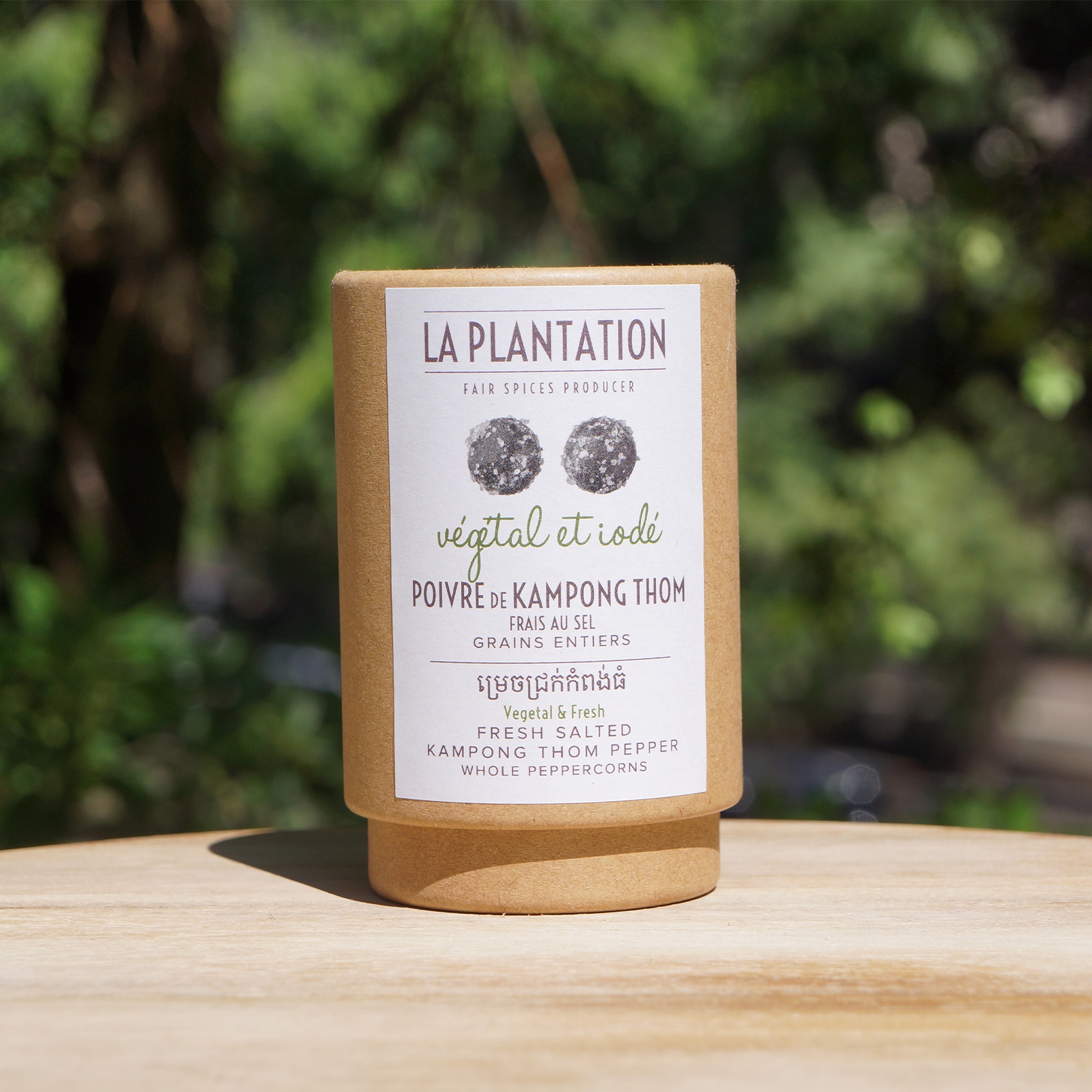
Both are produced using the same brine fermentation process, but their terroirs are distinct. Kampot pepper comes from the lateritic soils of southern Cambodia, with a fruity and floral profile. Kampong Thom pepper comes from a more inland region, with a wilder and more vegetal character. Both offer a different experience — worth trying according to the dish and personal preference.
Stored in the refrigerator after opening, fresh salted pepper keeps for several months. Keep it in its airtight packaging or in a sealed jar, and avoid storing it at room temperature once opened.


Subscribe to our Newsletter now
Get a free product for your first order!
Donation