Turmeric Benefits: Health properties and how to use It
Product
-
27.03.26
Suggestions
Annatto: the history, composition, and uses of this mysterious spice
Sommaire
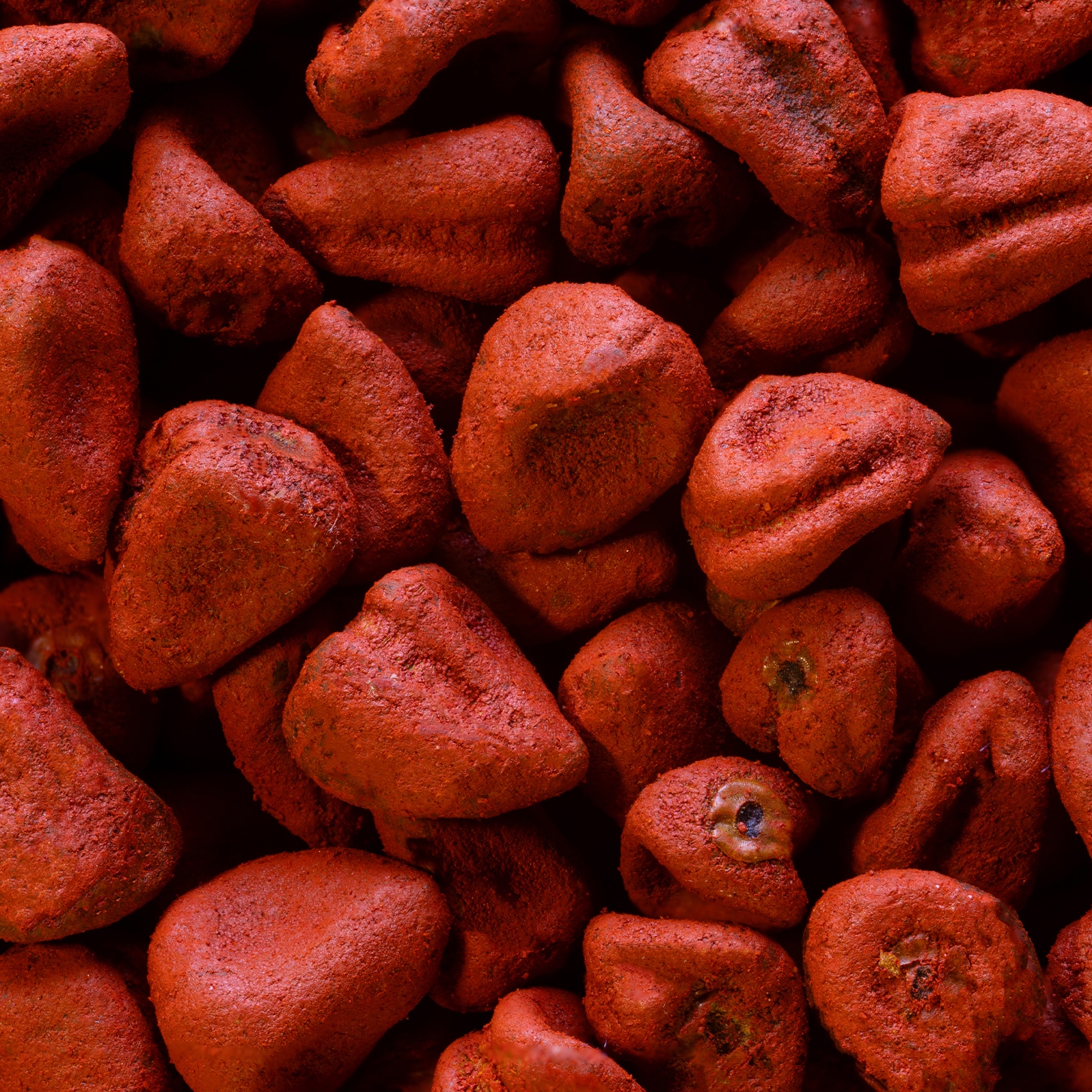
If you have ever eaten mimolette, cheddar, or smoked haddock, you have already consumed annatto without knowing it. This small red seed from the Amazon is one of the most widely used natural colourants in the world. Yet very few people know its name.
Key takeways:
|
Annatto, Rocou, Achiote: What is the real name of this spice?
Annatto is a spice with multiple identities depending on where in the world you encounter it. The same small red seed takes on very different names according to country, language, and context:
| Country / Region | Local name |
|---|---|
| France, French Guiana, Caribbean | Roucou / Rocou |
| Spain, Mexico, Latin America | Achiote |
| Brazil | Urucum / Urucu |
| USA, United Kingdom | Annatto |
| Germany | Orlean |
| Italy | Oriane |
| Venezuela | Onoto |
| Food industry | E160b (extracted colourant) |
Each name tells its own story, rooted in local traditions and history. The French term roucou comes directly from the Tupi-Guarani word urucú, the language of the first Amazonian Amerindian peoples. It is one of the very few spices whose French name is directly inherited from an Amerindian language.
| Did you know? The scientific name Bixa orellana honours Francisco de Orellana, one of the first European explorers of the Amazon in the 16th century. The English term annatto is believed to derive from a locality in Venezuela. And achiote comes from the Nahuatl word achiotl, the language of the Aztecs, who used this plant as a colourant, a medicine, and an offering. |
The origins of Annatto
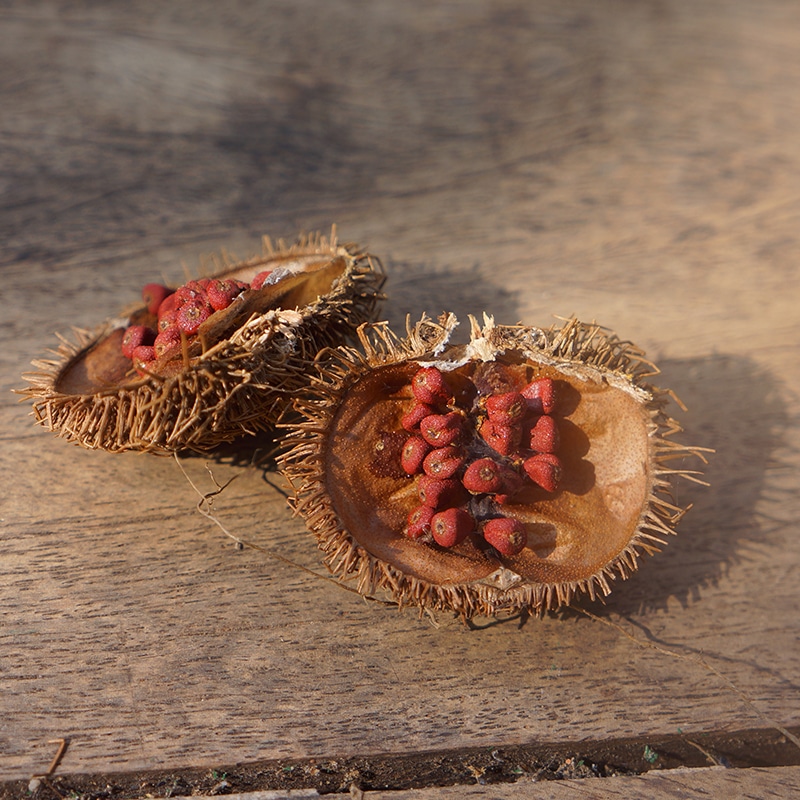
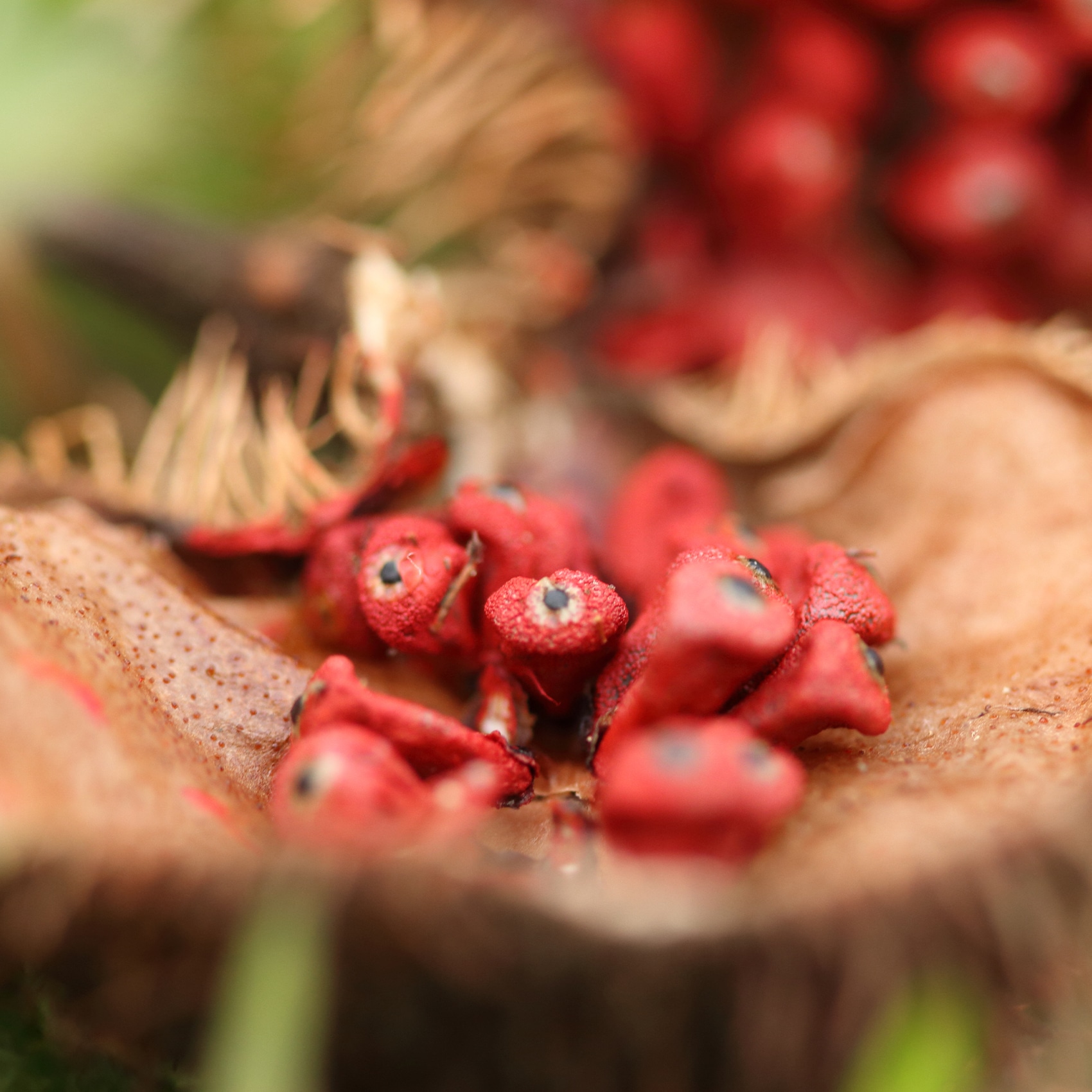
The earliest traces of annatto are found in the Amazon, most likely in the region spanning from the Guianas to the state of Bahia in Brazil. It comes from the Bixa orellana tree, a small tropical evergreen shrub between 2 and 10 metres tall, with delicate pink flowers and spiny red fruits that open at maturity to reveal the seeds.
The first known written description dates to 1500. In his famous letter recounting the Portuguese arrival in Brazil, Pero Vaz de Caminha describes Tupiniquim Indians painted with a red dye that water could not wash away. That dye was annatto, used since time immemorial as body paint and natural protection.
The Maya, the Aztecs, and the Incas used annatto long before the arrival of Europeans, as body paint, a food preservative, and a traditional remedy. Its use went far beyond the kitchen: it was a sacred plant, present in rituals, medicine, and trade.
The nickname “lipstick tree“ comes from this ancestral Amerindian practice: women coloured their lips and faces with the paste extracted from the seeds.
The Aztec civilizations already used it as a food ingredient: annatto could sometimes be added to the preparation of Xocolatl, the royal drink of the Aztecs and ancestor of our hot chocolate. Made from cacao, annatto, chili peppers, and other spices, this thick and spicy drink was reserved for warriors and nobles. The deep red color it imparted carried strong symbolic meaning.
Portuguese and Spanish colonists brought annatto to Europe in the 16th and 17th centuries. It was initially used as a textile dye but was fairly quickly abandoned, as the colour fades in light. It was in food and cosmetics that it found a lasting role.
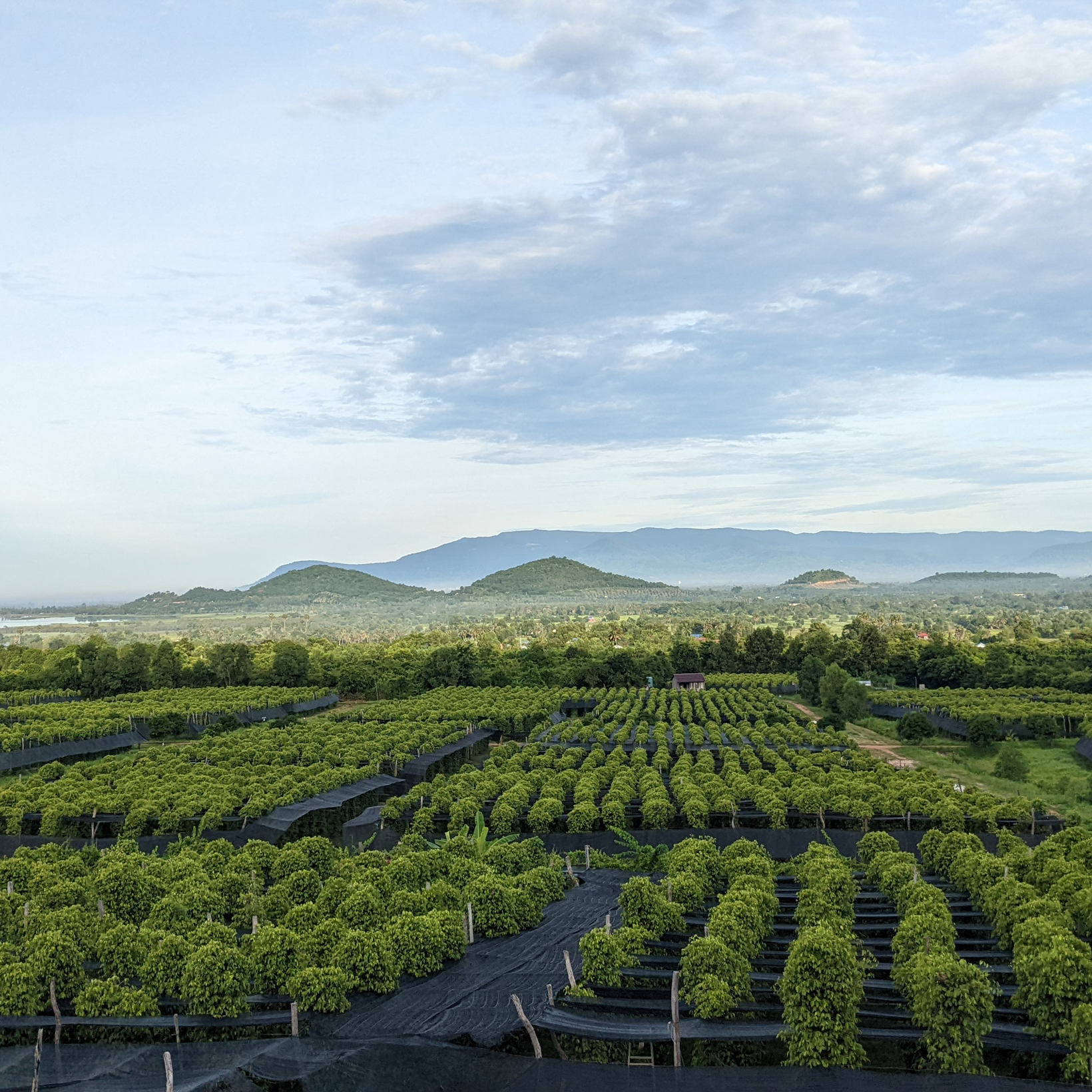
In the 17th century, it crossed the Pacific from Acapulco and established itself in South-East Asia, where it was rapidly integrated into the local cuisines of the Philippines and Indonesia. Today, annatto is cultivated across all tropical latitudes, India, Indonesia, East Africa, Central America. The plant has adapted perfectly to every warm and humid terroir in the world.
The composition of Annatto seeds
The colouring power of annatto comes from two main carotenoid pigments.
Bixin is fat-soluble it dissolves in oils and produces an intense deep red colour.
Norbixin is water-soluble, it dissolves in water and produces a softer yellow-orange tone. This distinction explains why annatto can colour both a fatty cheese and a water-based drink.
One important point to note: unlike the beta-carotene found in carrots, the carotenoids in annatto are not precursors of vitamin A. Their value is primarily antioxidant and colouring, they do not serve a nutritional function in the strict sense.
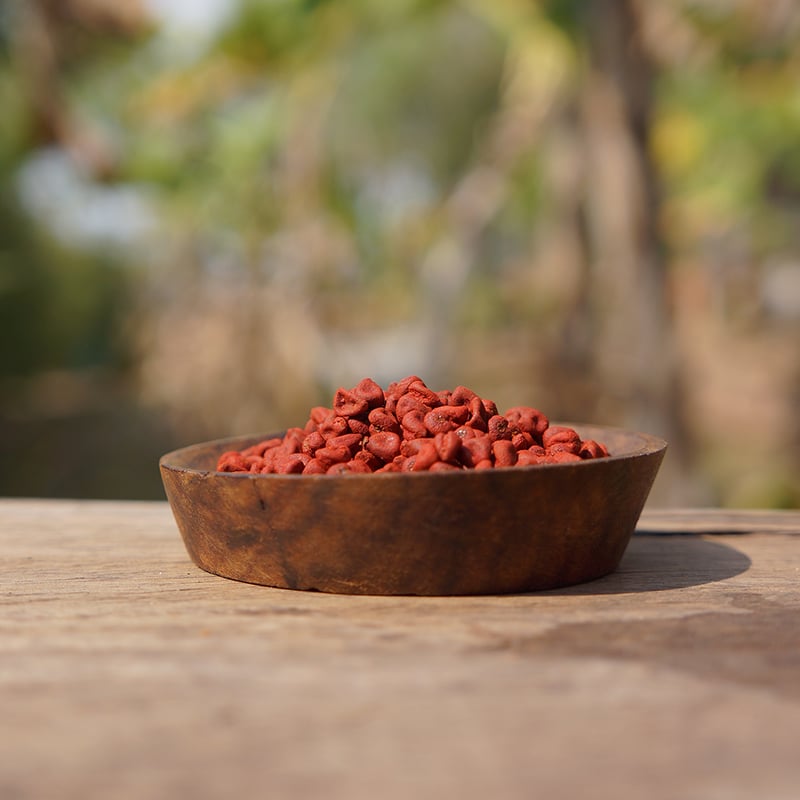
Annatto seeds are far more than simple colouring seeds. Their nutritional profile is remarkable, even though culinary use means quantities consumed are small.
| Component | Content | Benefit |
|---|---|---|
| Beta-carotene | Very high | 380x more than carrot (Ciqual data) |
| Vitamin E | High | Antioxidant |
| Magnesium | Present | Mineral balance |
| Calcium | Present | Bone health |
| Selenium | Present | Cell protection |
| Protein | ~13g / 100g | Non-negligible contribution |
The natural benefits of Annatto
Bixin and norbixin are recognised antioxidants (Source: analysis carried by Analytice). They may help neutralise free radicals, the unstable molecules that accelerate cell ageing and weaken the body. Annatto is considerably richer in beta-carotene than carrots, a well-documented asset for cellular protection. Antioxidants play a role in preventing premature ageing and certain chronic diseases, though studies specifically focused on annatto are still ongoing.
Preliminary studies (source: Frontiers Therapeutic potential of bixin on inflammation. 2023) suggest that annatto extracts may reduce certain pro-inflammatory cytokines. These findings are yet to be confirmed at scale, but they align with a well-documented traditional use: in Amerindian medicine, annatto has been used for centuries to treat burns, bronchitis, and to accelerate wound healing. Norbixin is also being studied for its protective effects against UV rays on the skin.
Annatto is one of the rare ingredients that bridges ancestral cosmetics and the modern industry. Annatto oil, rich in carotenoid pigments, is used as a natural self-tanner and sun preparation, it stimulates melanin production and promotes a naturally golden complexion. Amerindian peoples also used it as an insect repellent, a practice still common in French Guiana today. In the cosmetic industry, it appears in eyeshadows, lipsticks, and tinted powders, often without the consumer being aware of it.
Annatto in the World’s kitchens
Annatto is above all a culinary colourant. Its flavour is very discreet at normal doses, slightly peppery and musky at high concentrations. It is its colour that makes it interesting in cooking, far more than its aroma.
In Caribbean cuisine, it is the essential base of marinades, curries, and slow-cooked dishes, the characteristic golden-orange colour of many Caribbean plates owes everything to annatto.
In Mexico and the Yucatan, achiote is at the heart of cochinita pibil, a dish of pork marinated in an annatto paste, wrapped in banana leaves, and slow-cooked.
In Brazil, it colours feijoada and many rice dishes.
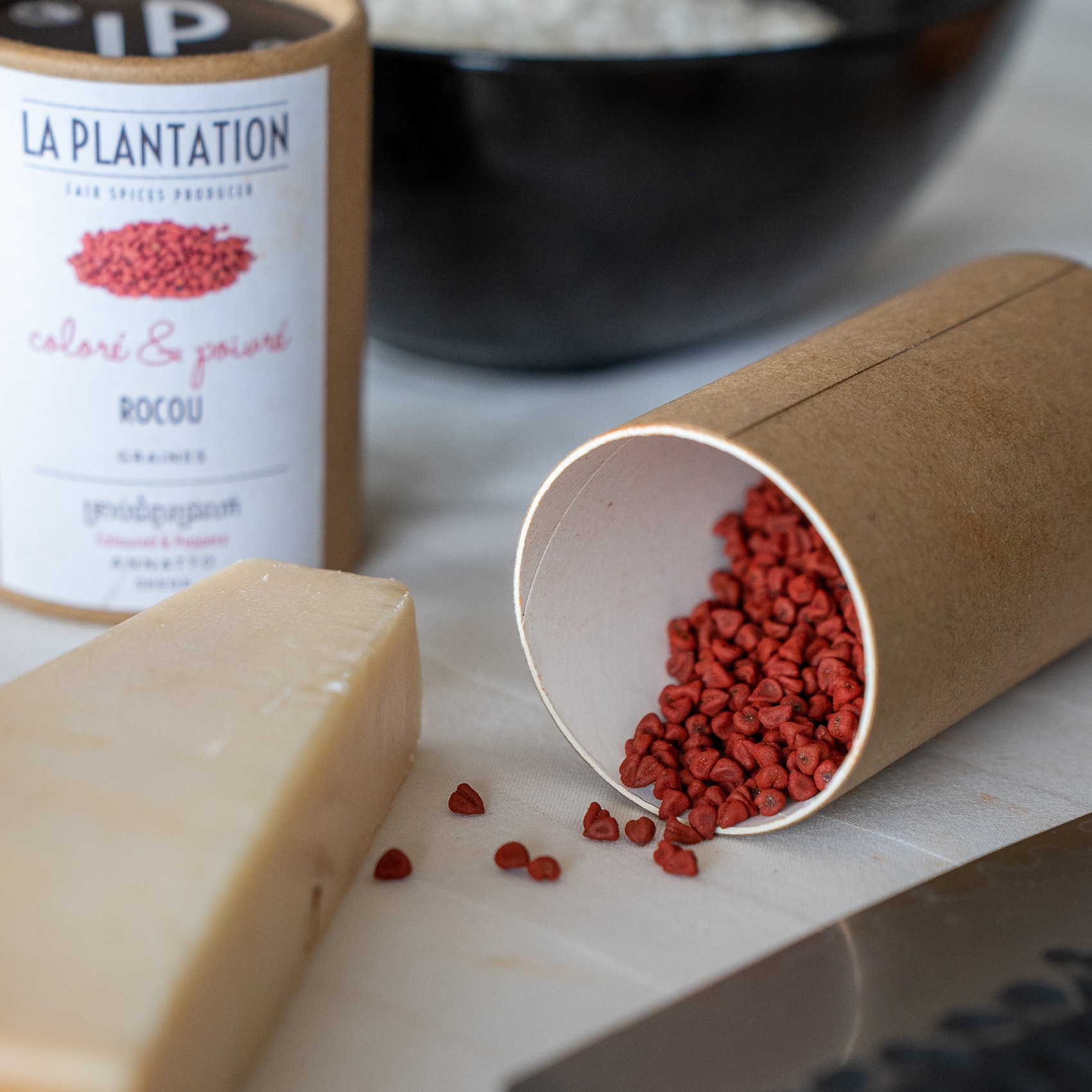
And in Europe? It is in the cheese. Mimolette, cheddar, Reblochon, Edam, and smoked haddock all owe their characteristic colour to annatto or to its industrial derivative, E160b.
Several spices can approximate it in the kitchen, without replacing it exactly.
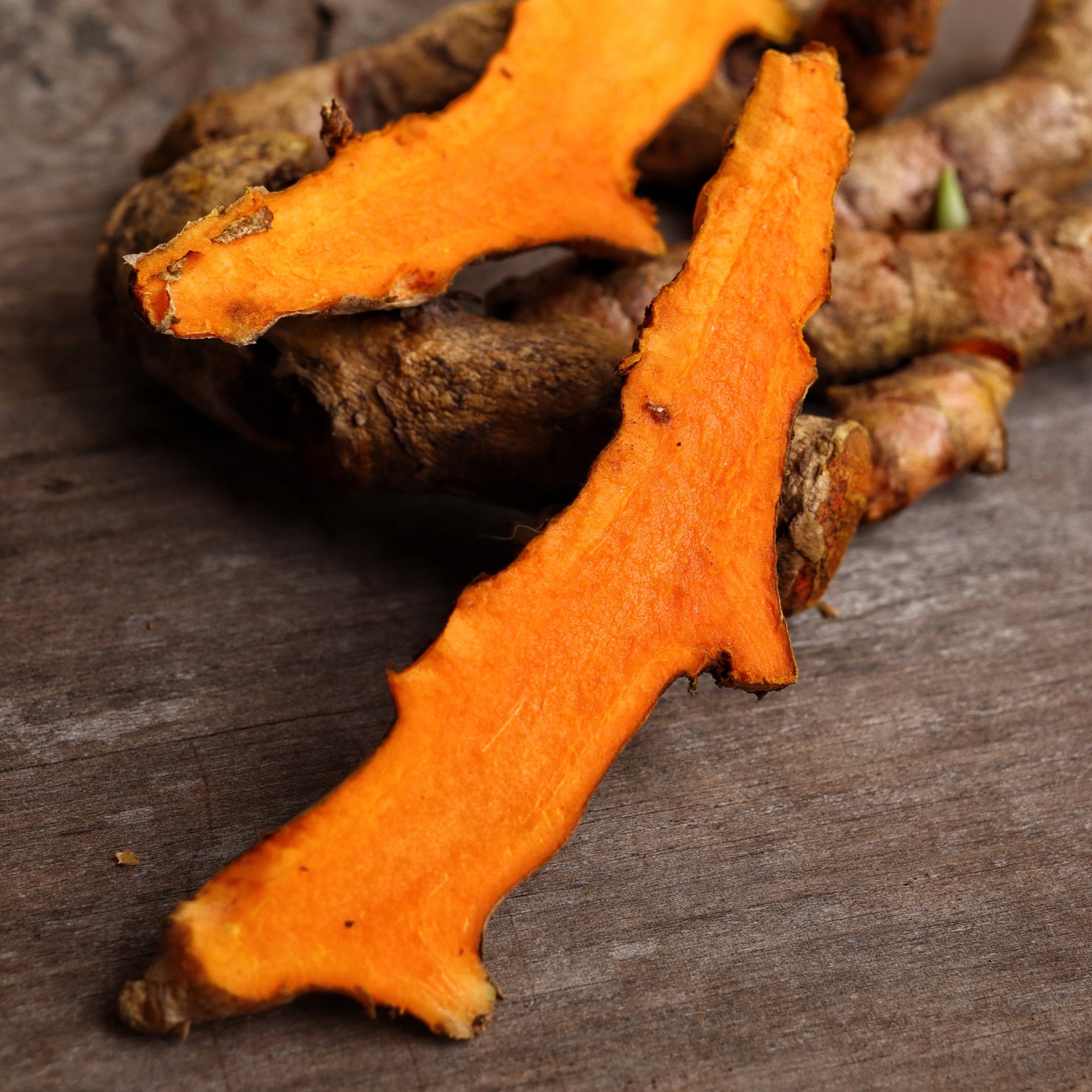
Turmeric is the most accessible substitute: similar yellow-orange colouring power, same use as a natural food colourant, and widely available.
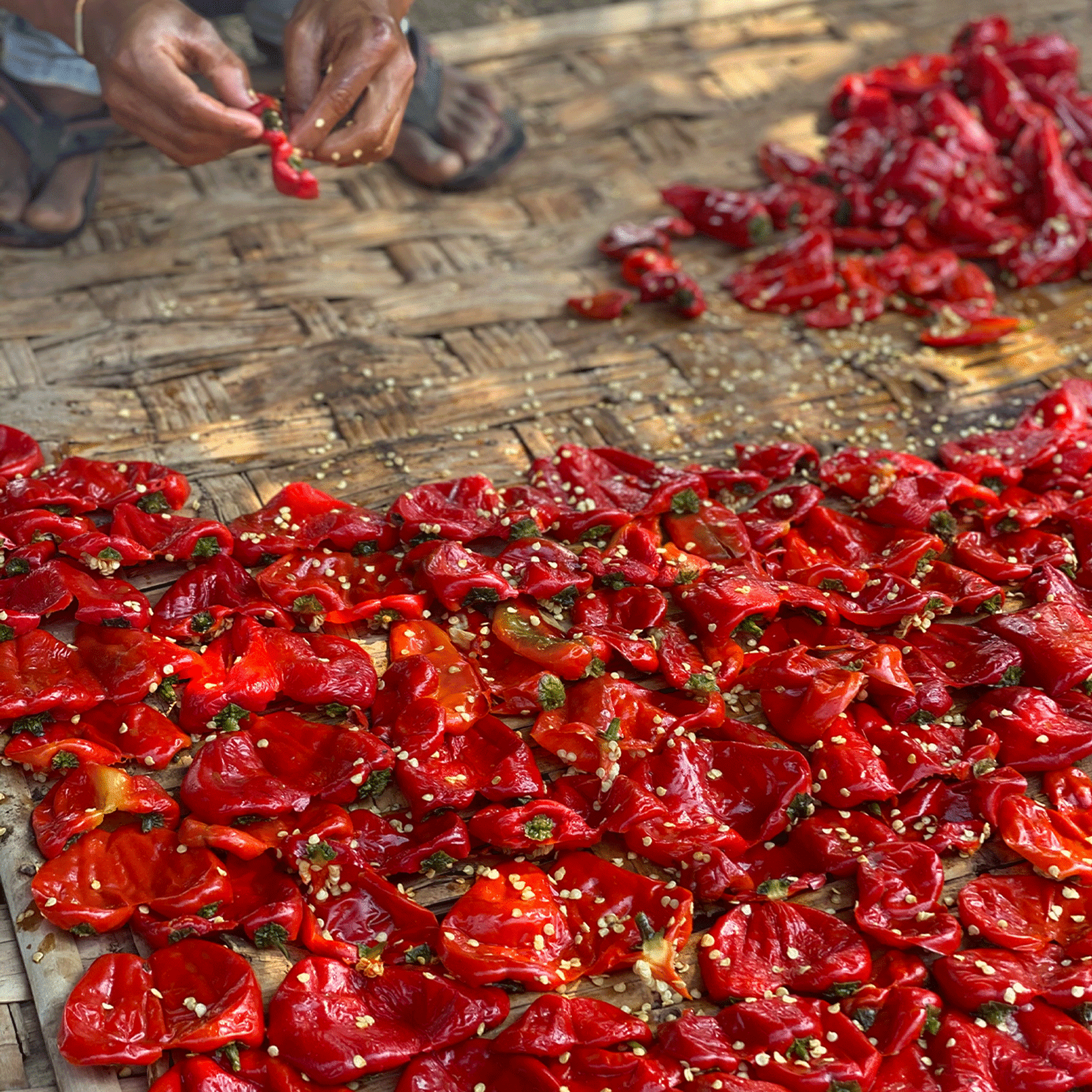
Paprika offers a comparable red-orange tone, but with a far more pronounced aromatic profile, it colours and flavours, where annatto simply colours.
Saffron is often presented as the noble equivalent of annatto: a powerful colourant, an intense hue, and a similar culinary use but at a price that bears no comparison.
The essential nuance: annatto is above all a colourant with a very neutral flavour. Turmeric and saffron both bring a pronounced taste. They are not quite the same thing.
FAQ: Questions about Annatto
Annatto seeds used whole in cooking are a 100% natural product. E160b, on the other hand, is an industrial food colourant chemically extracted from the same seeds. Both come from the same plant, but they are not the same thing. Consuming whole or infused annatto seeds is not the same as ingesting E160b in a processed product.
Turmeric is the most accessible substitute, with a slightly lighter yellow-orange colour and a similar use as a natural colourant. Paprika can work for the red-orange hue, but it adds more flavour than colour. For a very close tint and a completely neutral taste, annatto remains difficult to replace exactly.
Annatto seeds cannot be eaten raw. They must be infused in hot oil or warm water to extract the pigments and aromas, then removed before using the coloured liquid. You can also use annatto to make a lemon and annatto risotto, a simple and visually striking recipe that showcases its colouring power beautifully.
Subscribe to our Newsletter now
Get a free product for your first order!
Donation