History of Kampot Pepper and Its PGI
News
-
20.02.26
Suggestions
How does pepper grow? From the vine to the grain, step by step
Sommaire
Key takeways:
Kampot pepper is one of the only spices in the world to hold a double PGI certification, in Cambodia since 2010, recognised in Europe since 2016. This recognition rests on a precise combination of factors: a demanding plant, rare mineral soil, an entirely manual growing cycle, and expertise passed down through generations.
In this article, we describe that cycle from the inside. The plant, its needs, the terroir that suits it, the months that shape the agricultural year, the grain-by-grain harvest, and the transformation that gives birth to the different colours. At La Plantation, we observe this cycle on our farms in Kampot every year.
The pepper plant: a demanding tropical vine
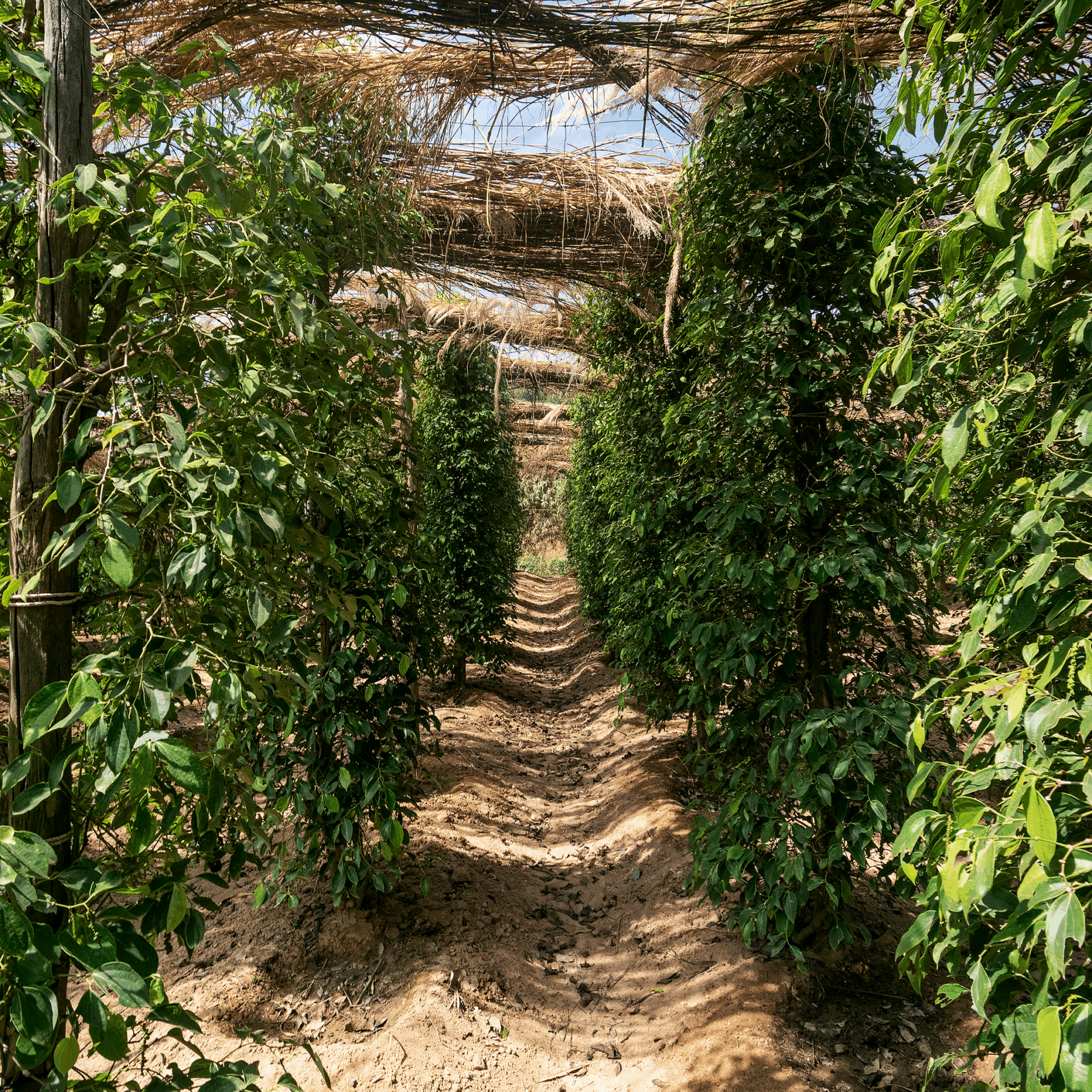
The pepper plant is not a shrub, it is a vine. Piper nigrum, from the Piperaceae family, originates from Kerala in India. Left to grow freely, it can reach 4 to 10 metres. On a plantation, it is staked at 3 to 4 metres to make harvesting easier and concentrate production.
Its leaves are alternate, dark green, broad, and slightly undulating, around 10 cm across. They are also usable in the kitchen, particularly in Khmer cuisine. The plant does not produce fruit before its third year. Full production is reached around the fifth or sixth year. A well-maintained pepper vine remains productive for 15 to 20 years.
The pepper plant is an understorey plant. It does not like direct sunlight and prefers partial shade. It needs a stable temperature between 20 and 30°C, below 15°C, the plant suffers. Its water requirements are significant during the growth phase, but it does not tolerate waterlogged soil.
Its root system is shallow, generally 50 to 80 cm. The soil must be well-drained, rich in organic matter, and well-aerated. At La Plantation, the pepper vines are fed with a blend of 100% natural fertilisers sourced from the region. This entirely manual operation mobilises the whole team for approximately two months after each harvest.
Why is the Kampot terroir so renowned?
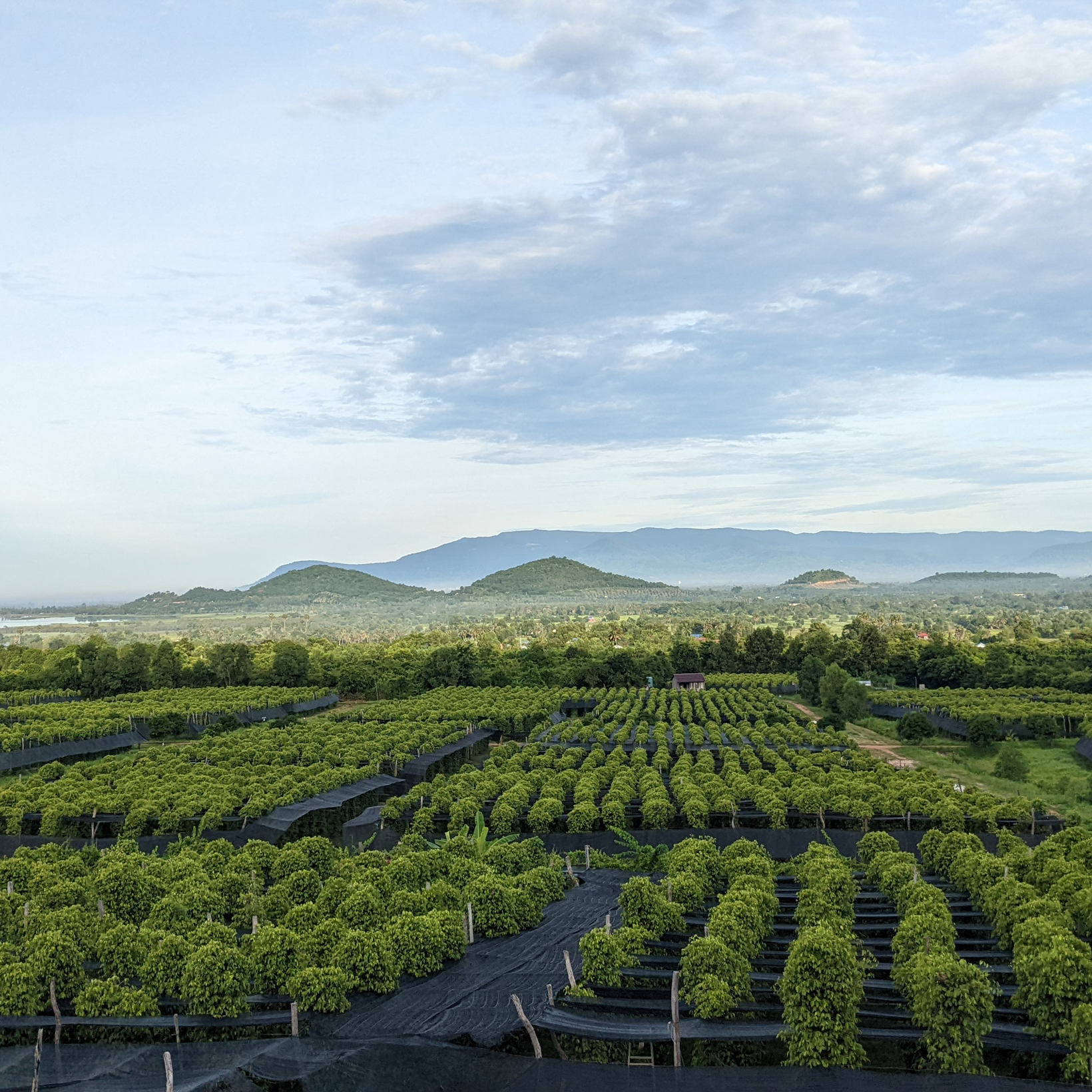
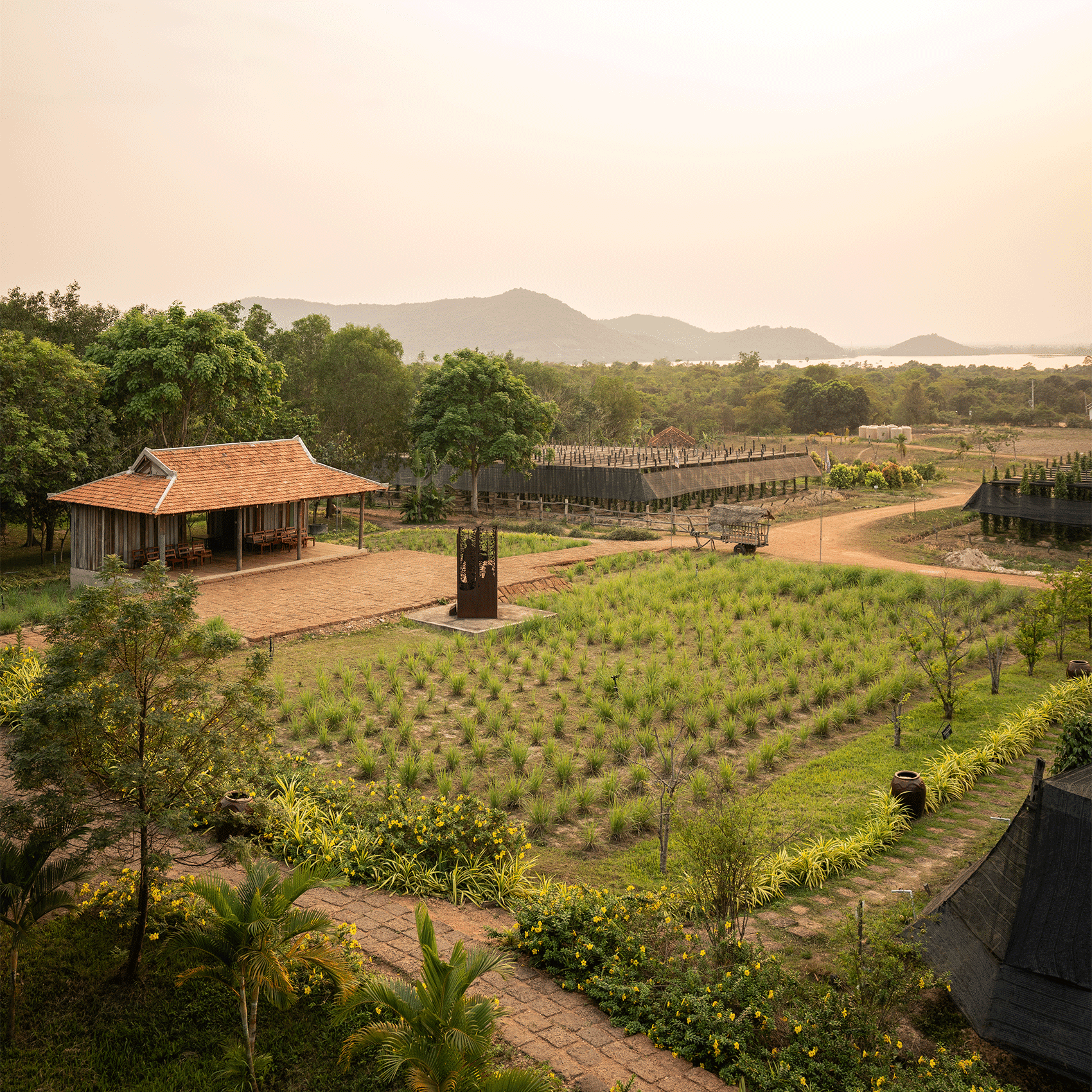
Kampot is located in the south of Cambodia, in the province of the same name and in the neighbouring province of Kep, wedged between the Gulf of Thailand and the Cardamom Mountains. The pepper vines grow at altitudes between 0 and 100 metres, exposed to the sea breezes from the Gulf that naturally regulate humidity and temperature.
The climate is structured by two distinct seasons:
The dry season runs from November to April
The rainy season runs from May to October
This regular, natural rhythm organises the entire growing cycle of the pepper plant, each phase of growth corresponds to a specific season.
The Cambodian terroir is defined by lateritic soils, which are rich in iron and minerals, particularly in the Kampot region. It is this soil that gives Kampot pepper its characteristic woody and fruity notes. The same Piper nigrum planted in the soils of neighbouring Vietnam, the world’s largest pepper producer, yields a noticeably different pepper.
The mineral composition of the soil is not the same. The aromatic profile cannot be the same. Terroir is not a marketing argument: it is a botanical reality.
Source: Kampot pepper farming specialist at La Plantation
The annual growing cycle: month by month
Once the harvest is complete, the foundational work starts. Each plant receives its blend of natural fertilisers: cow dung, bat guano, calcium, and burnt rice husks. The operation is entirely manual and mobilises the whole team for two months. This is the invisible investment that determines the quality of the following year’s harvest.
The first rains after the long dry season trigger the vegetative recovery. A new leaf and a new cluster appear simultaneously on the majority of stems. The tiny clusters lengthen by several centimetres within days. To protect the young clusters from insects, a natural repellent made from local roots and leaves is applied, a recipe passed down through generations in the farming families of the region.
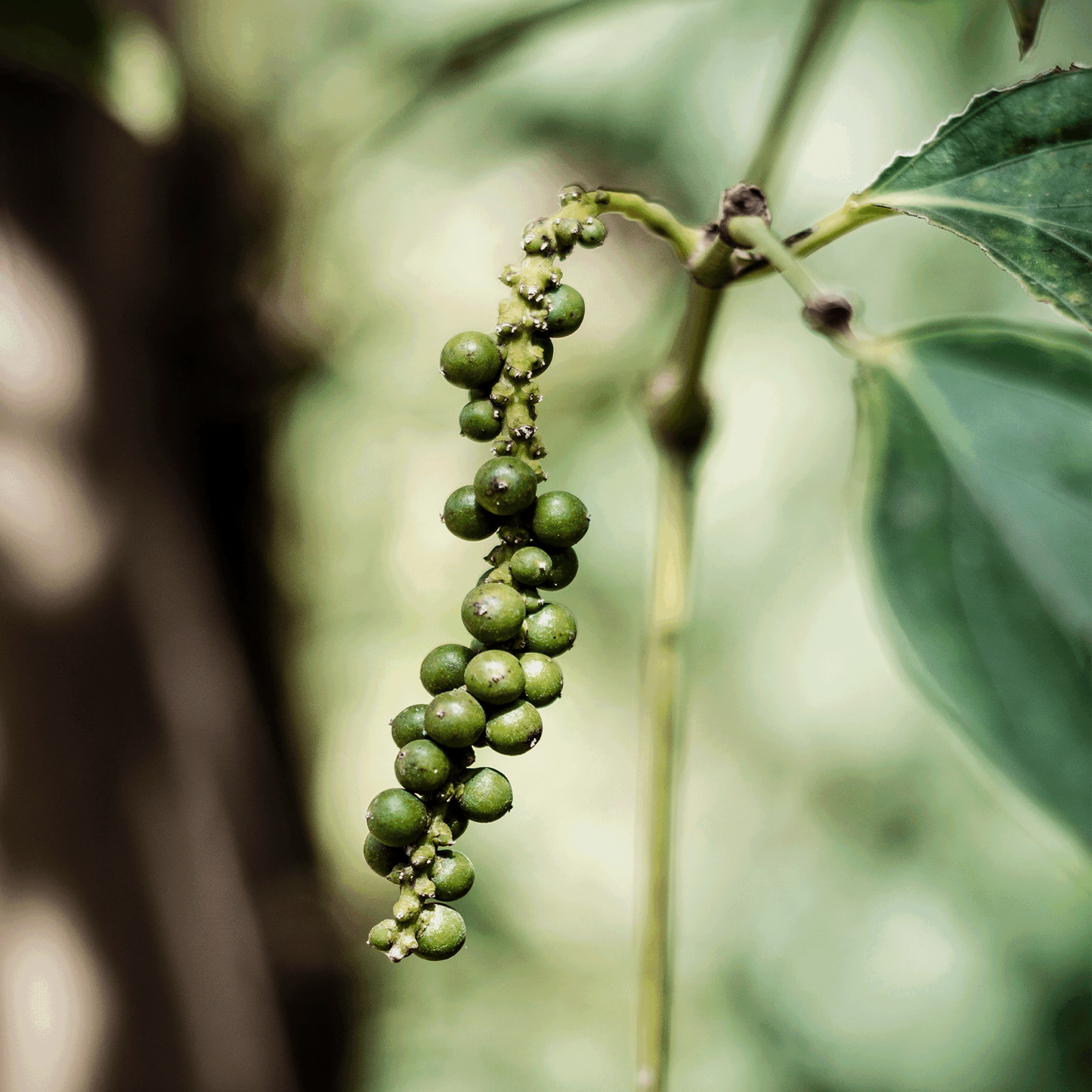
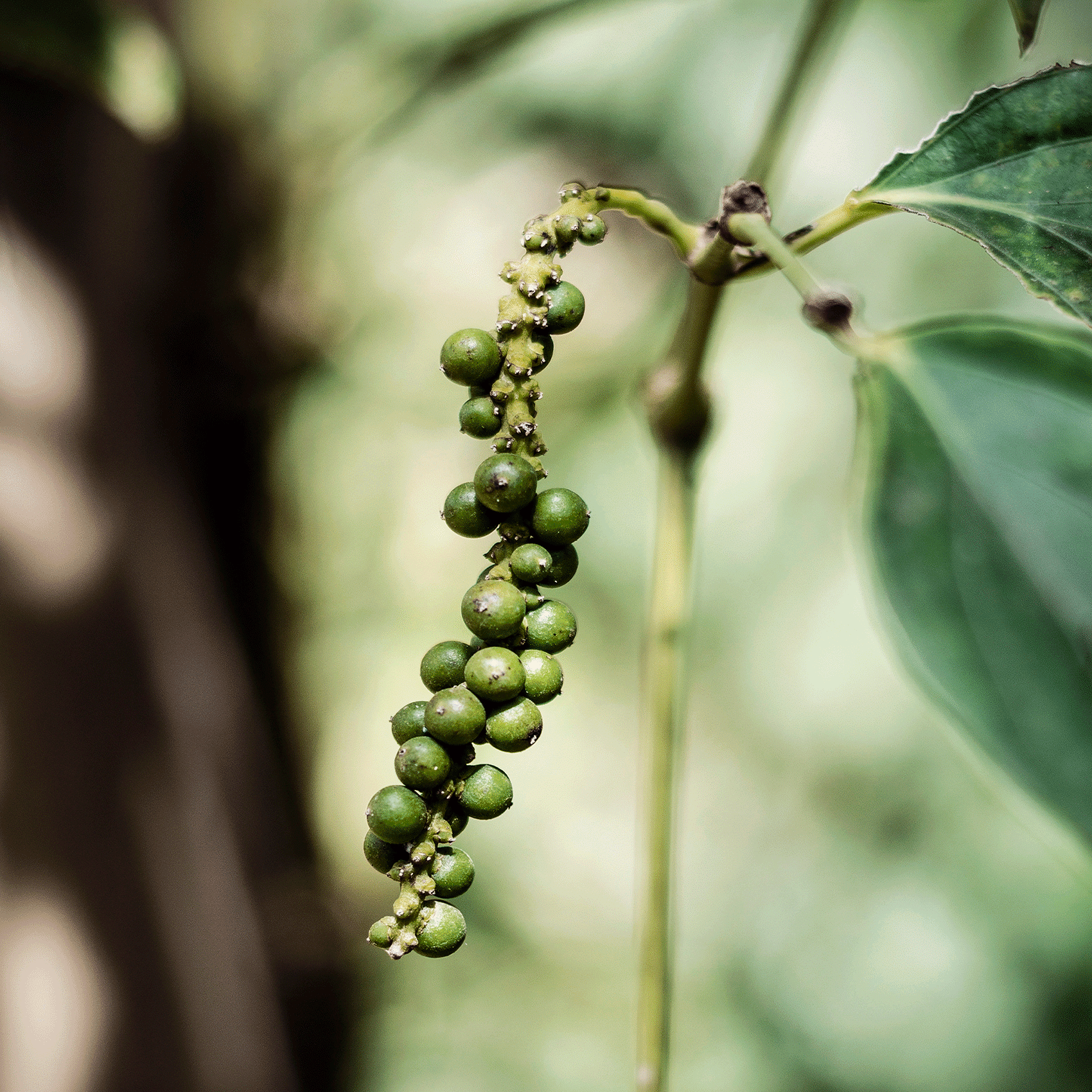
Tiny white flowers appear on each cluster. Each one will become a peppercorn. This is a delicate phase: pollination determines the year’s yield. It occurs naturally through rainfall. The clusters reach their final length at this stage: between 5 and 10 cm for the Kampot pepper variety.
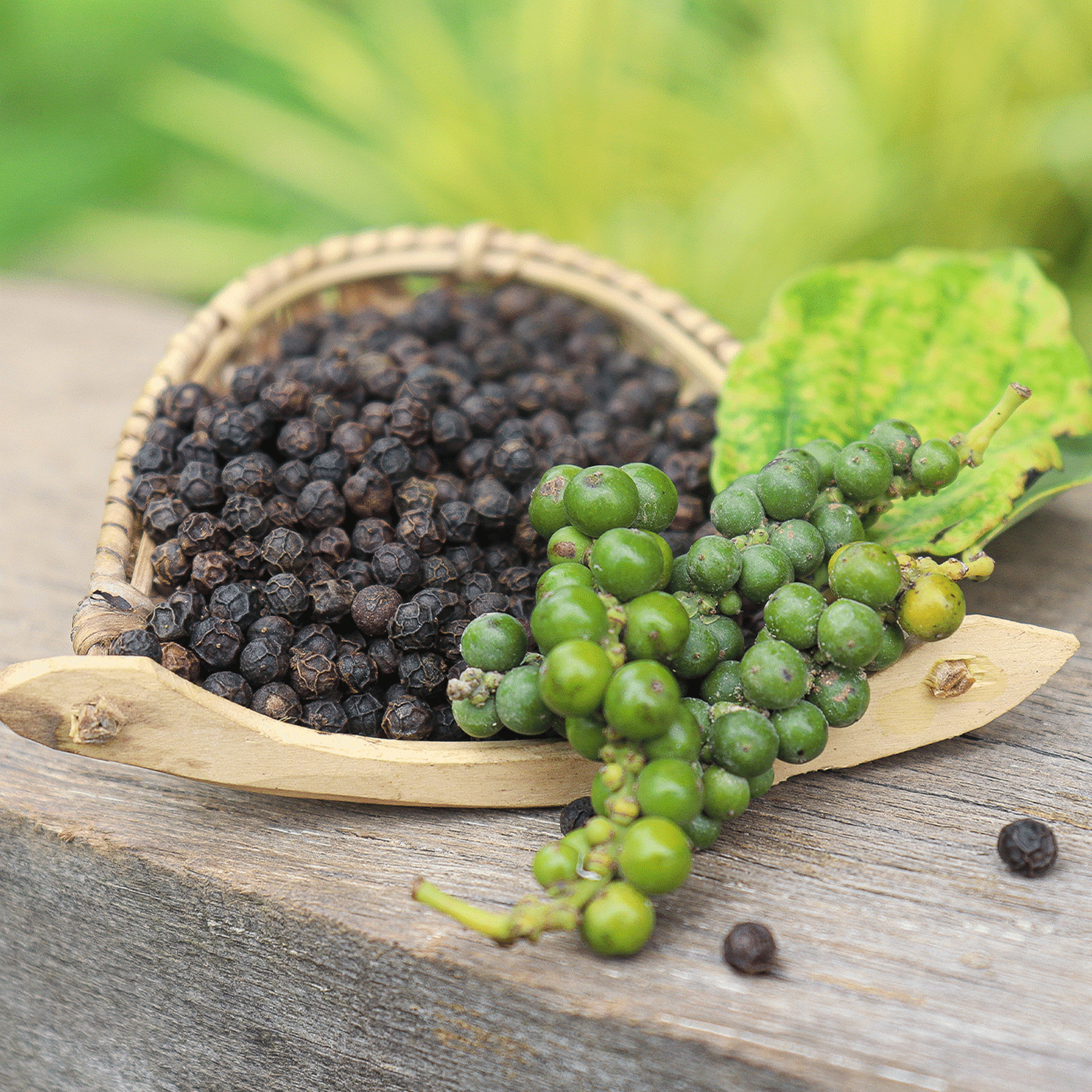
The peppercorns develop on the clusters, still tender, with no hard core yet formed. It is at precisely this stage, just before the hard inner core develops, that some clusters are harvested and hand-stripped to produce fresh salt-brined pepper or dehydrated green pepper. The remaining clusters continue their maturation. Each plant must be watered twice a week.
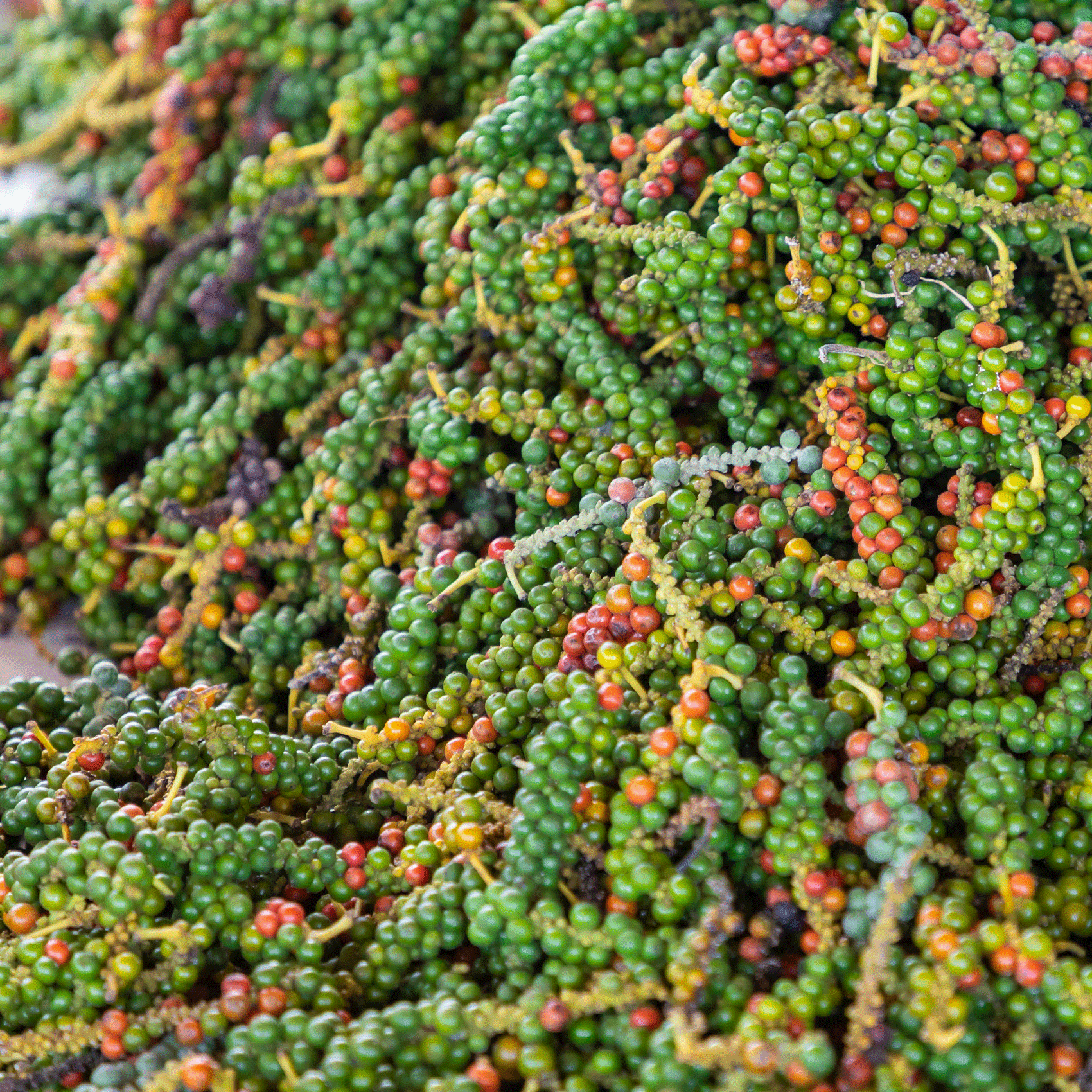
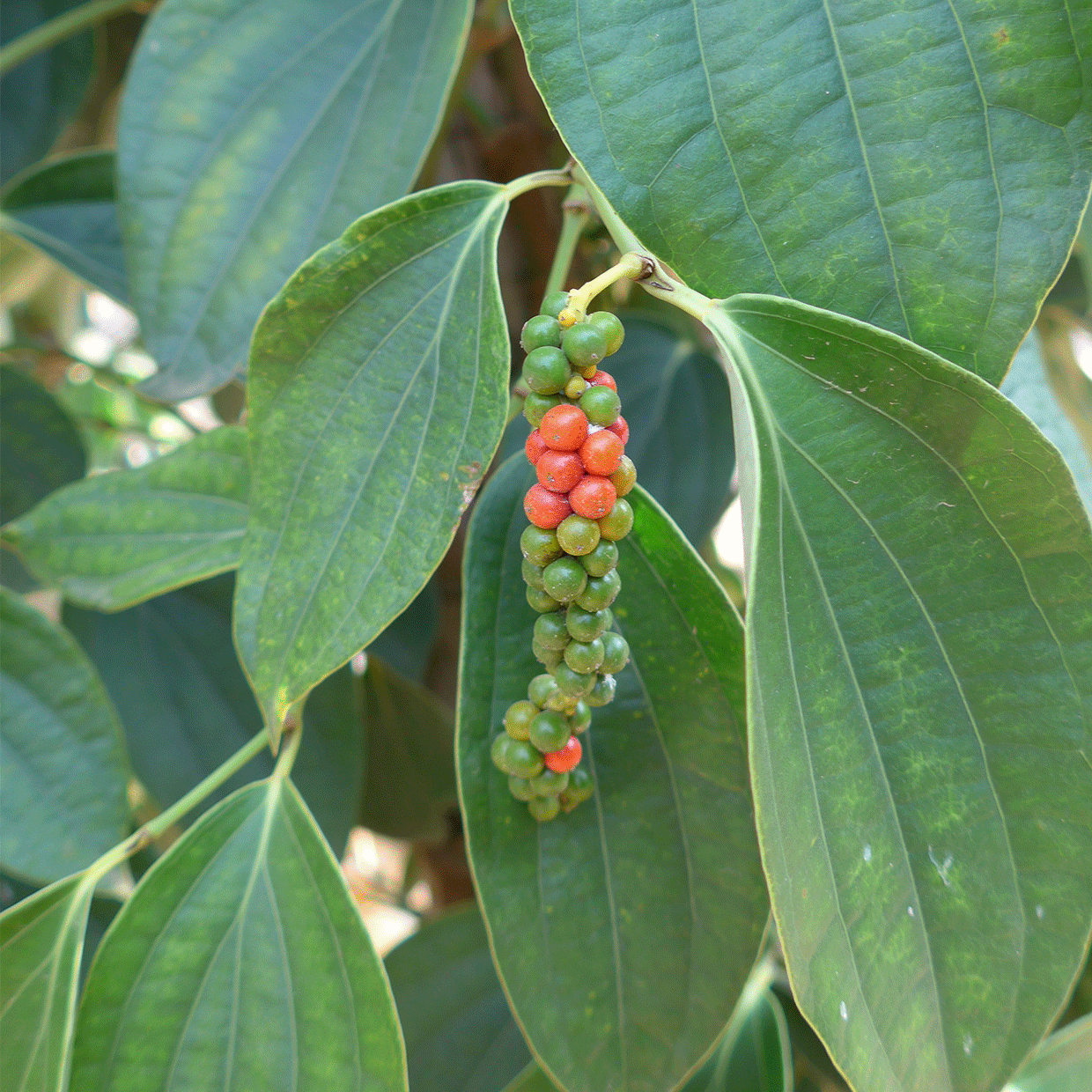
The grains gradually shift from deep green to red as they ripen. It is in the pericarp, the outer skin of the grain, that the aromas concentrate as the colour evolves. Monitoring is daily.
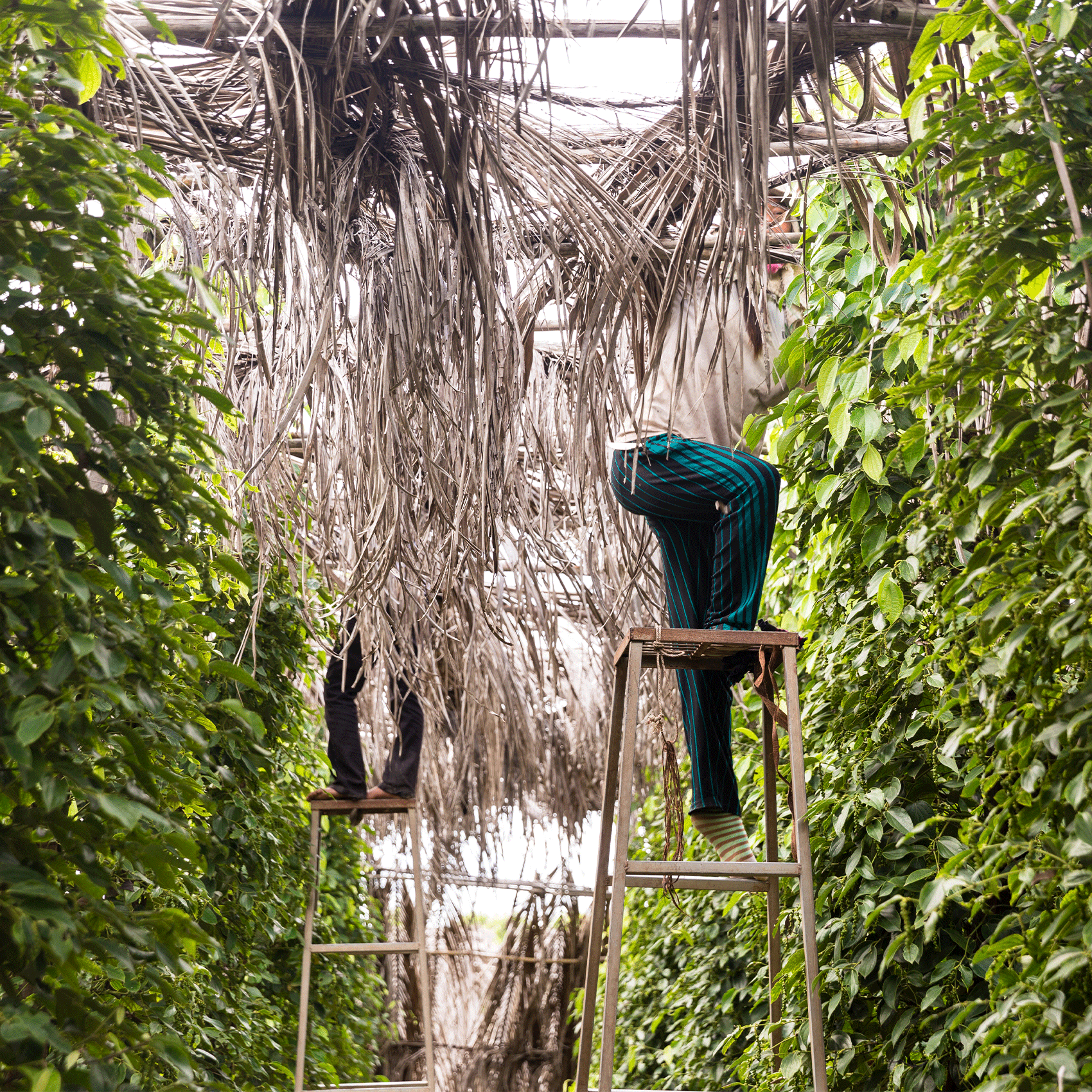
The pickers select, on each plant, the clusters that show the right balance between green and red grains depending on the colour being produced. They pass over each plot several times across the weeks. The harvest is 100% manual, cluster by cluster. No mechanisation is possible without degrading quality. An experienced harvester processes around 10 to 15 kg of clusters per day. The clusters are taken to the processing area on the same day to preserve freshness.
How are the different colours produced?
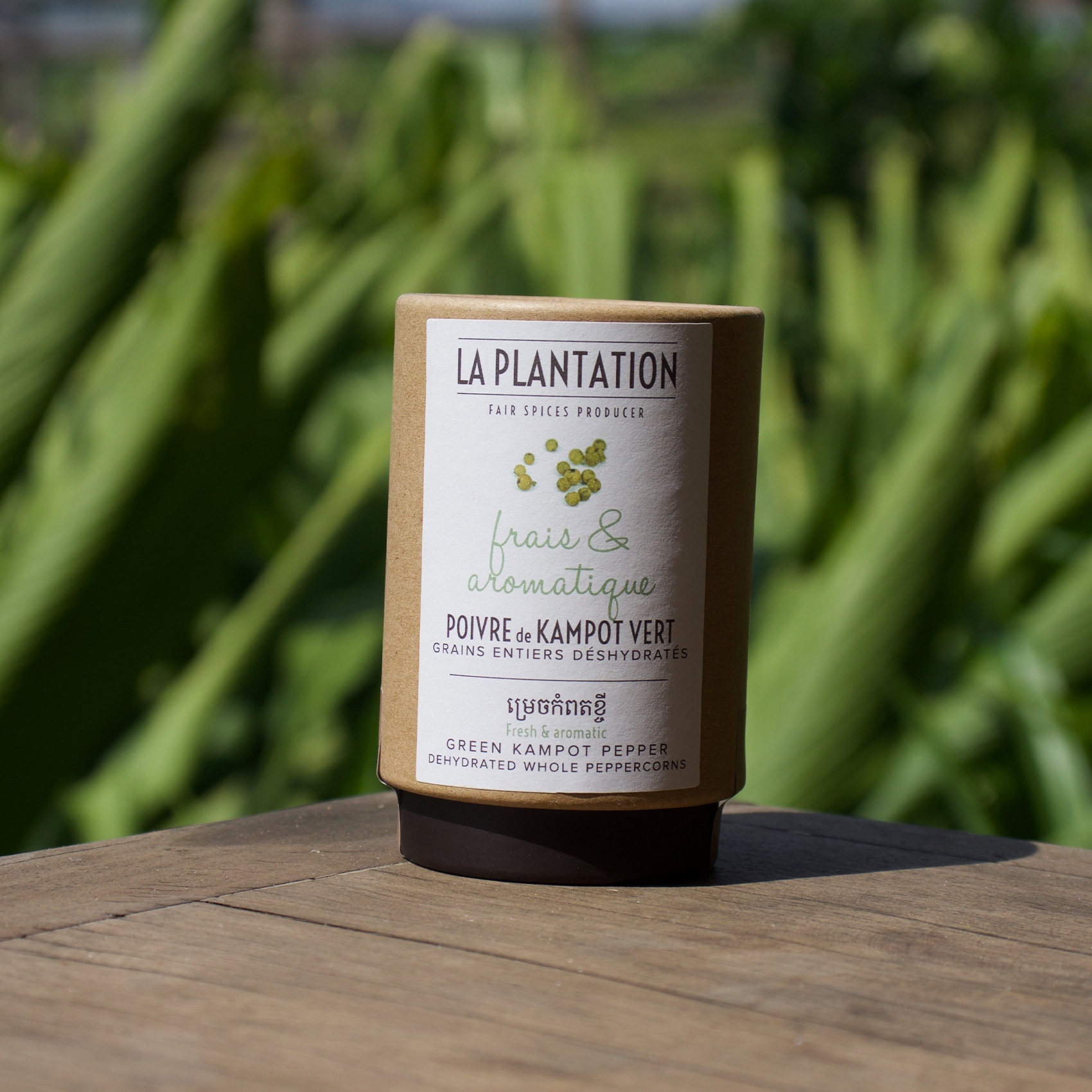
Green peppercorns are picked early, still tender and entirely green. They are preserved in salt for fresh green pepper, or dehydrated to retain the colour and freshness. Their aromatic profile is herbaceous, lightly spicy, and very fresh. Fresh green Kampot pepper is particularly prized by chefs for its lively, immediate character.
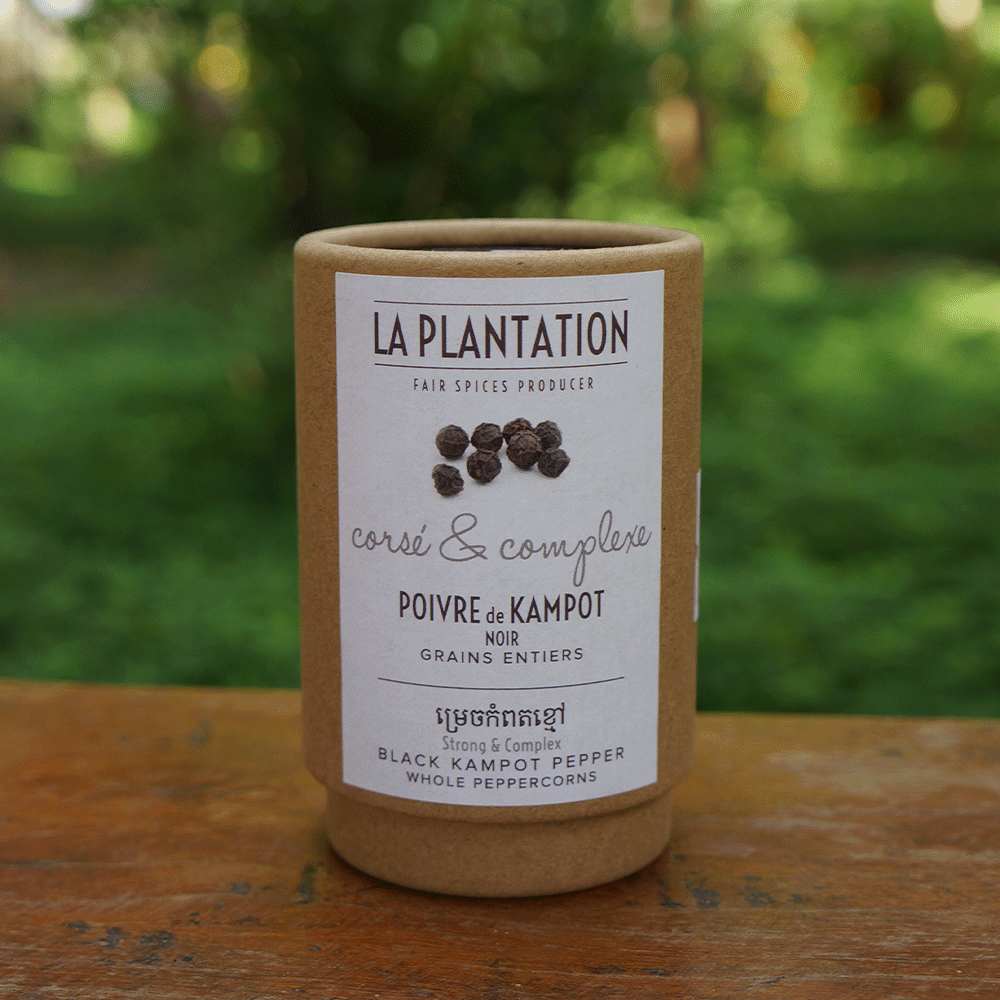
The grains are harvested at optimal maturity, still deep green on the cluster. They are briefly blanched to begin oxidation, then sun-dried for 2 to 3 days. The pericarp wrinkles and blackens during drying. Aromatic profile: intense, woody, spicy, with the characteristic fruity notes of the Kampot terroir.
Red peppercorns are picked at their maximum maturity. They are shade-dried to preserve the colour and delicate aromas. This is the most complex of the Kampot peppers: softer than black, lightly fruity and sweet, with a remarkable length on the palate.
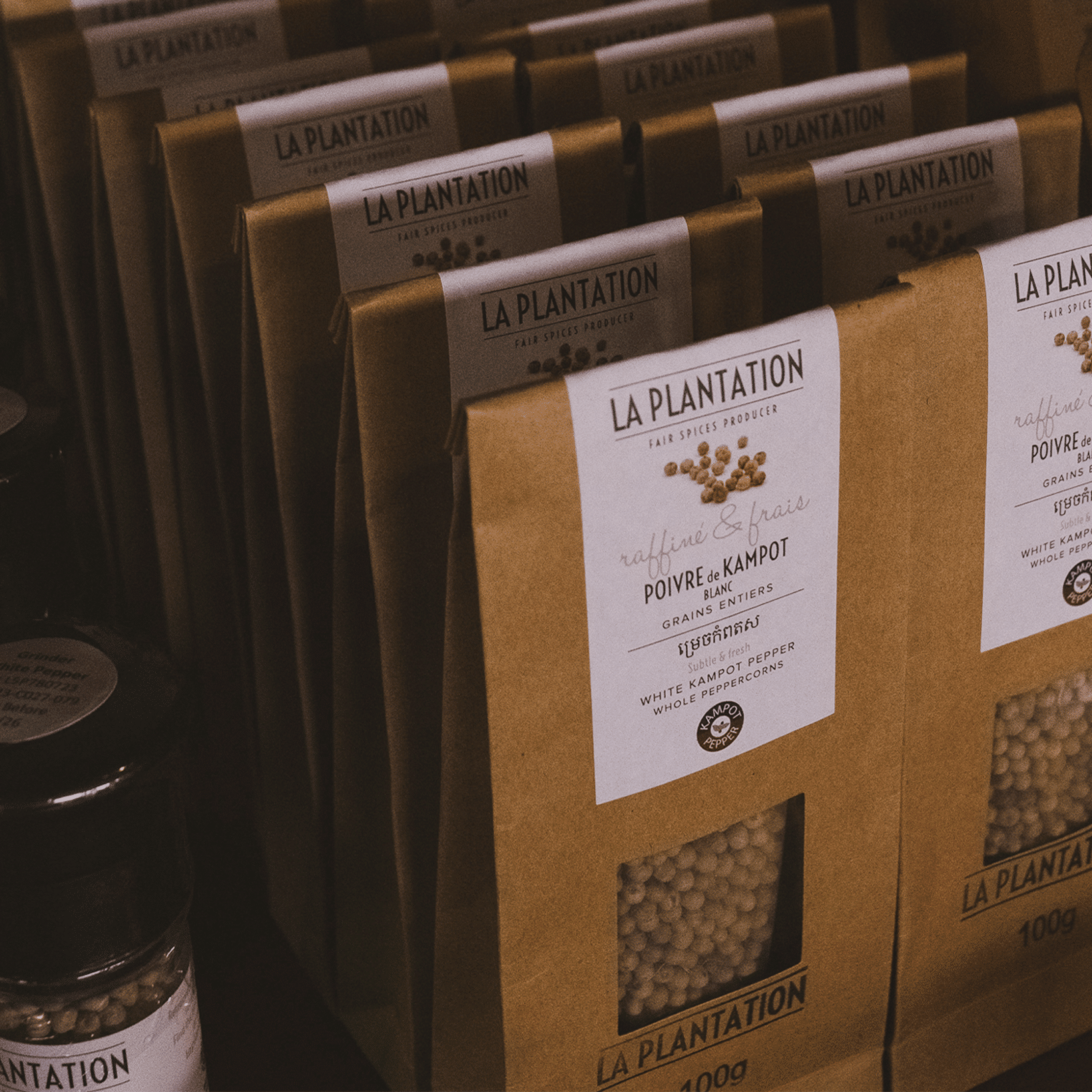
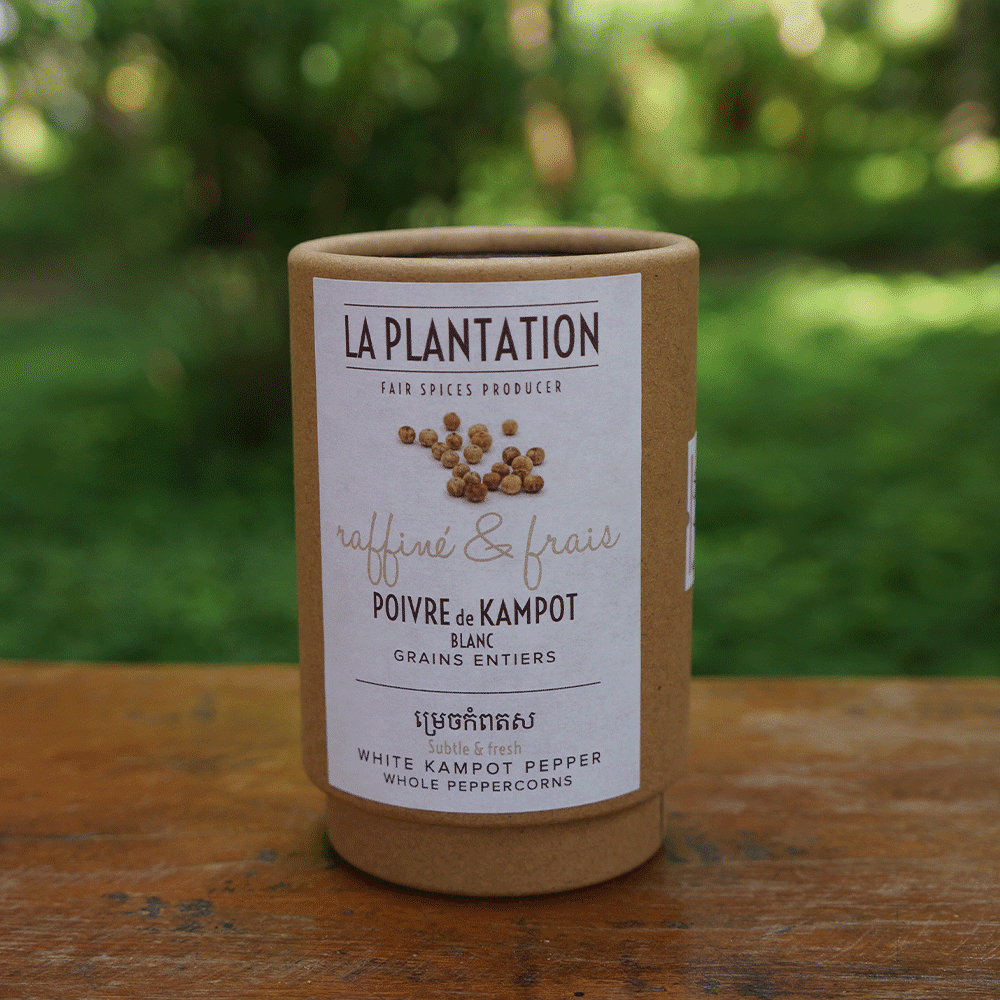
To produce the white Kampot peppercorns, the grains are harvested ripe, then soaked overnight in water to remove the pericarp by rubbing. They are then sun-dried. Aromatic profile: softer and less spicy than black pepper, with lightly citrusy and floral notes.
| Colour | Harvest stage | Processing | Aromatic profile |
| Fresh green | Before maturity | Salt preservation or dehydratio | Fresh, herbaceous, lightly spicy |
| Black | Standard maturity | Blanching and sun-drying | Intense, woody, fruity, spicy |
| Red | Full maturity | Shade-drying | Soft, fruity, complex |
| White | Advanced maturity | Depulping and sun-drying | Soft, citrusy, less spicy |
The PGI certification: what it actually guarantees
Kampot pepper received its PGI in Cambodia in 2010, followed by European recognition in 2016. It is one of the first Asian spices to hold this double certification.
In concrete terms, the certification imposes a strictly delimited production zone limited to the provinces of Kampot and Kep, defined growing methods that exclude all chemical inputs, a mandatory manual harvest, and complete traceability for every batch. The KPPA (Kampot Pepper Promotion Association) ensures quality control, traceability, and protection against counterfeiting. In 2026, it brings together 344 certified producers within the PGI zone.
Frequently asked questions about Kampot pepper cultivation
Yes, and it is an experience unlike any other. Fresh grains are perfectly edible. A fresh green peppercorn has a herbaceous, juicy flavour very different from dried pepper. Visitors to our farm in Kampot can try one during farm visits. This is actually how pepper is traditionally consumed in Cambodia, often alongside Kep crab.
Black pepper is obtained by harvesting the grains at standard maturity, still deep green on the cluster. They are briefly blanched to begin oxidation, then sun-dried for 2 to 3 days. It is during this drying process that the pericarp wrinkles and blackens, giving pepper its characteristic colour and texture.
A pepper vine planted from a cutting produces its first clusters after 3 years. Full production is reached around the fifth or sixth year. A well-maintained vine remains productive for 15 to 20 years.
Kampot pepper is distinguished by its terroir: lateritic soil rich in iron and minerals, a tropical climate regulated by the breezes of the Gulf of Thailand, and 100% manual and organic growing methods. The same Piper nigrum planted in Vietnam produces a different pepper, proof that the soil plays a decisive role in the final aromatic profile. The PGI certification protects that singularity.

Subscribe to our Newsletter now
Get a free product for your first order!
Donation