4 Recettes faciles de vinaigrettes maison
Recipes
-
12.12.25
Suggestions
Mustard Recipes: 6 Fresh and flavourful ideas for summer
Sommaire
Why is mustard a key ingredient in summer cooking?
Mustard contains mucilage, a natural substance that binds water and oil. This is precisely why a vinaigrette made with mustard is always better emulsified and creamier than one made without. In summer, it becomes the indispensable ally of every salad, crudité, and cold dish. A teaspoon is enough to stabilise a dressing and give it a coating, napping texture.
Mustard’s natural enzymes help to tenderise the fibres of meat and fish. Used in a marinade, it penetrates the flesh and prepares it to receive the spices and fats that follow. The result is tangible: juicier grilled meat, more tender fish fillets. Very few condiments can genuinely claim that effect.
Used as a crust on a piece of meat or a fish fillet, mustard creates a barrier that holds the juices inside. It is particularly effective on the barbecue or in the oven: the crust browns and lightly caramelises on the surface while keeping the moisture locked in. It is a simple technique that requires no special equipment, and it changes the result noticeably.
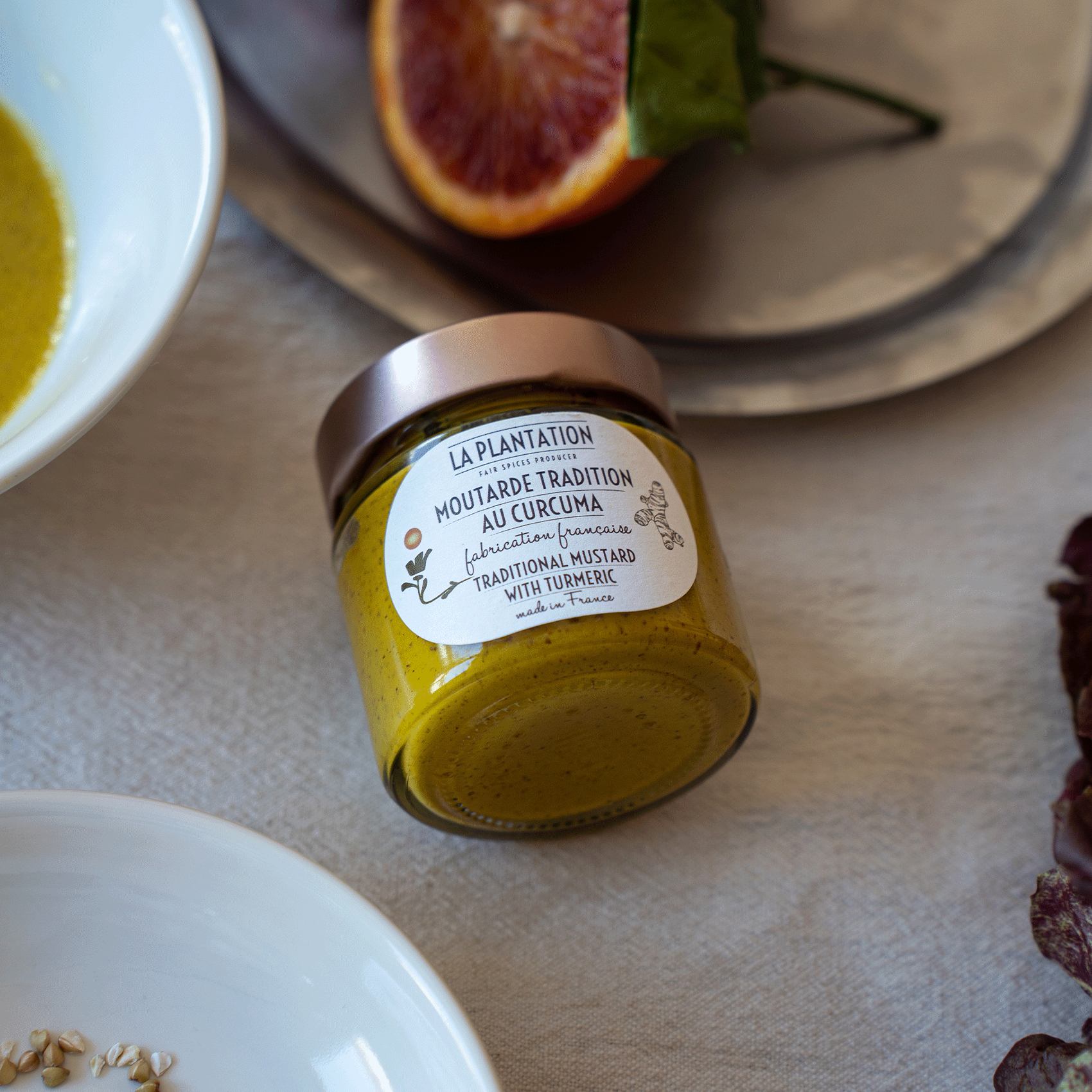
6 ways to use mustard this summer
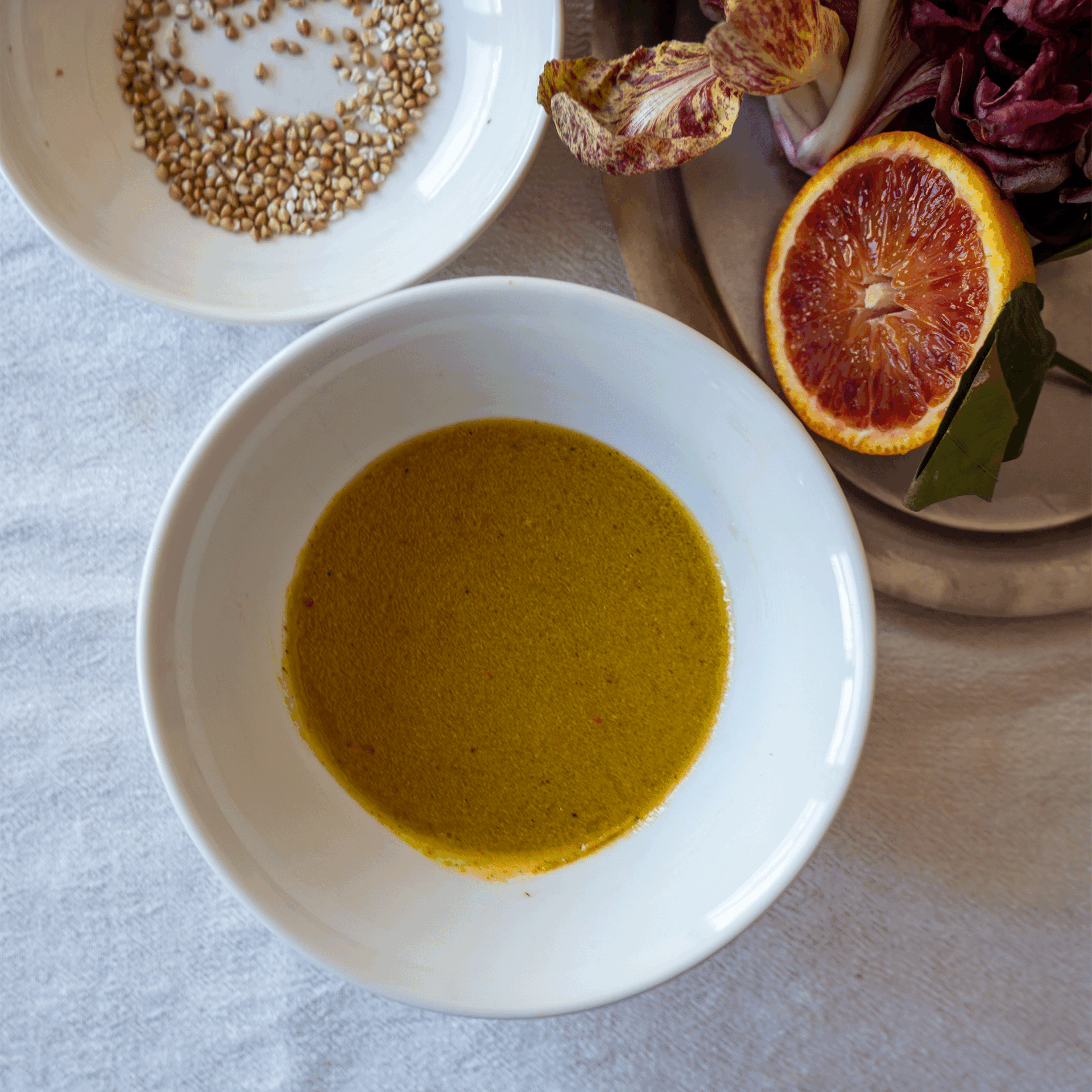
Mustard vinaigrette is the foundation of summer cooking. It is light, quick to prepare, and adaptable to every seasonal salad, tomatoes, cucumber, green beans, warm lentils, or composed salads.
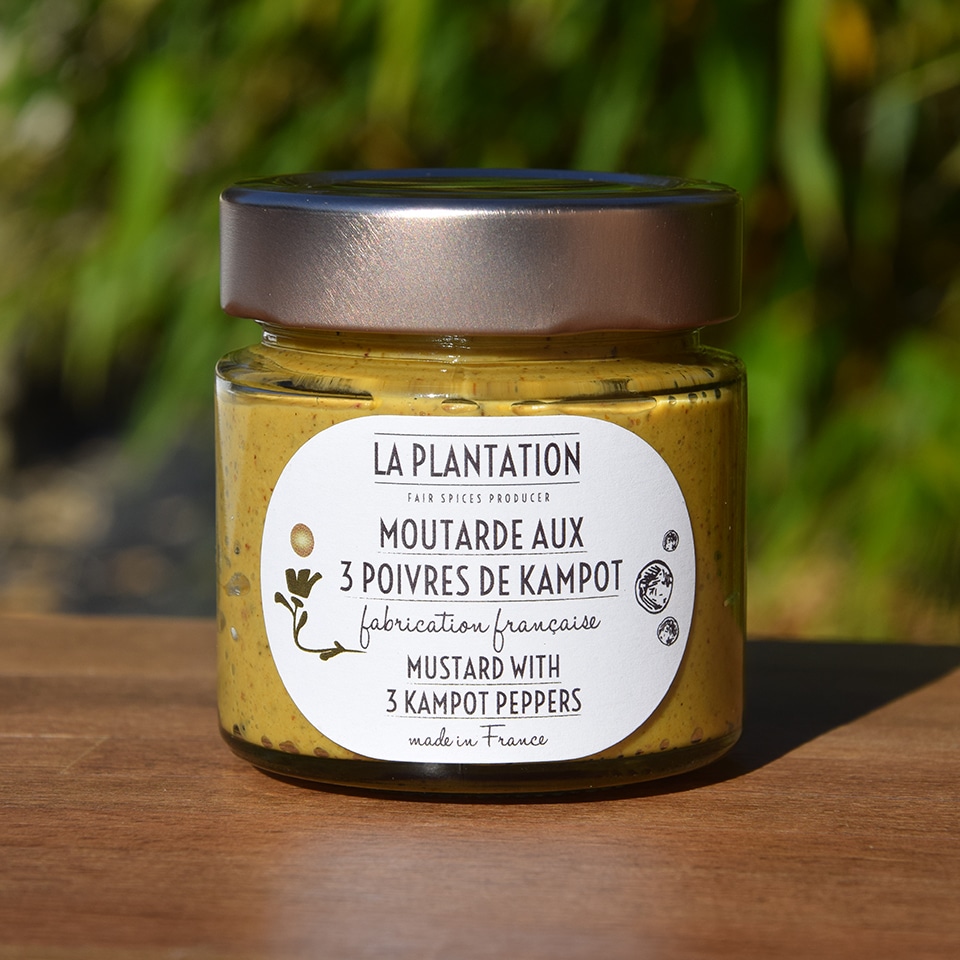
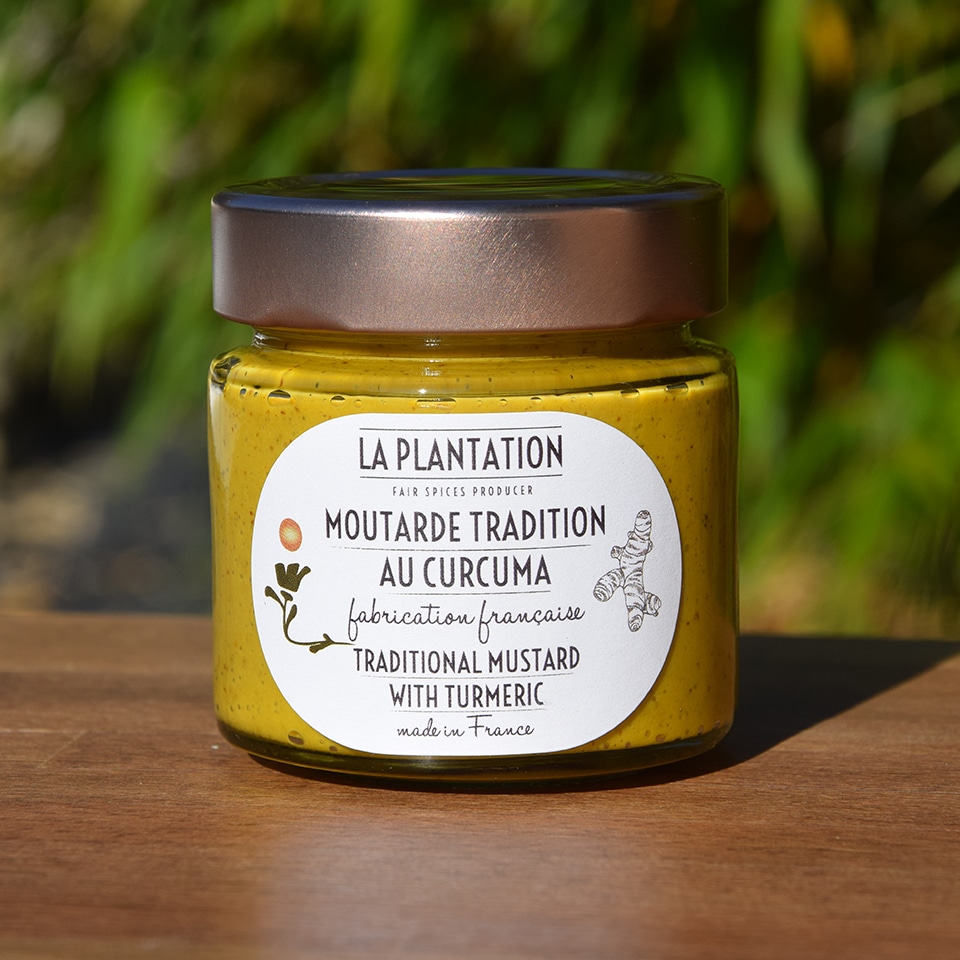
3 variations depending on the mustard: Turmeric mustard gives a golden vinaigrette with warm notes, perfect on rocket with orange slices or a grated carrot salad. Kampot pepper mustard produces a dressing with real character, ideal on crudités or a lentil salad. Bird’s eye chilli mustard lifts a cold pasta salad or a tabbouleh without weighing it down.
A mustard dip is the simplest and most effective aperitif condiment for summer evenings. It takes two minutes to prepare, keeps for 48 hours in the refrigerator, and works with everything on the board: crudités, grilled pitta bread, cold roasted vegetables, or vegetable crisps.
3 variations: Green curry mustard, yoghurt, and fresh coriander: an exotic, fresh dip, perfect with grilled prawns. Bird’s eye chilli mustard, crème fraîche, and lemon: a spiced dip for a charcuterie board. Turmeric mustard and butter: ideal for dipping radishes.
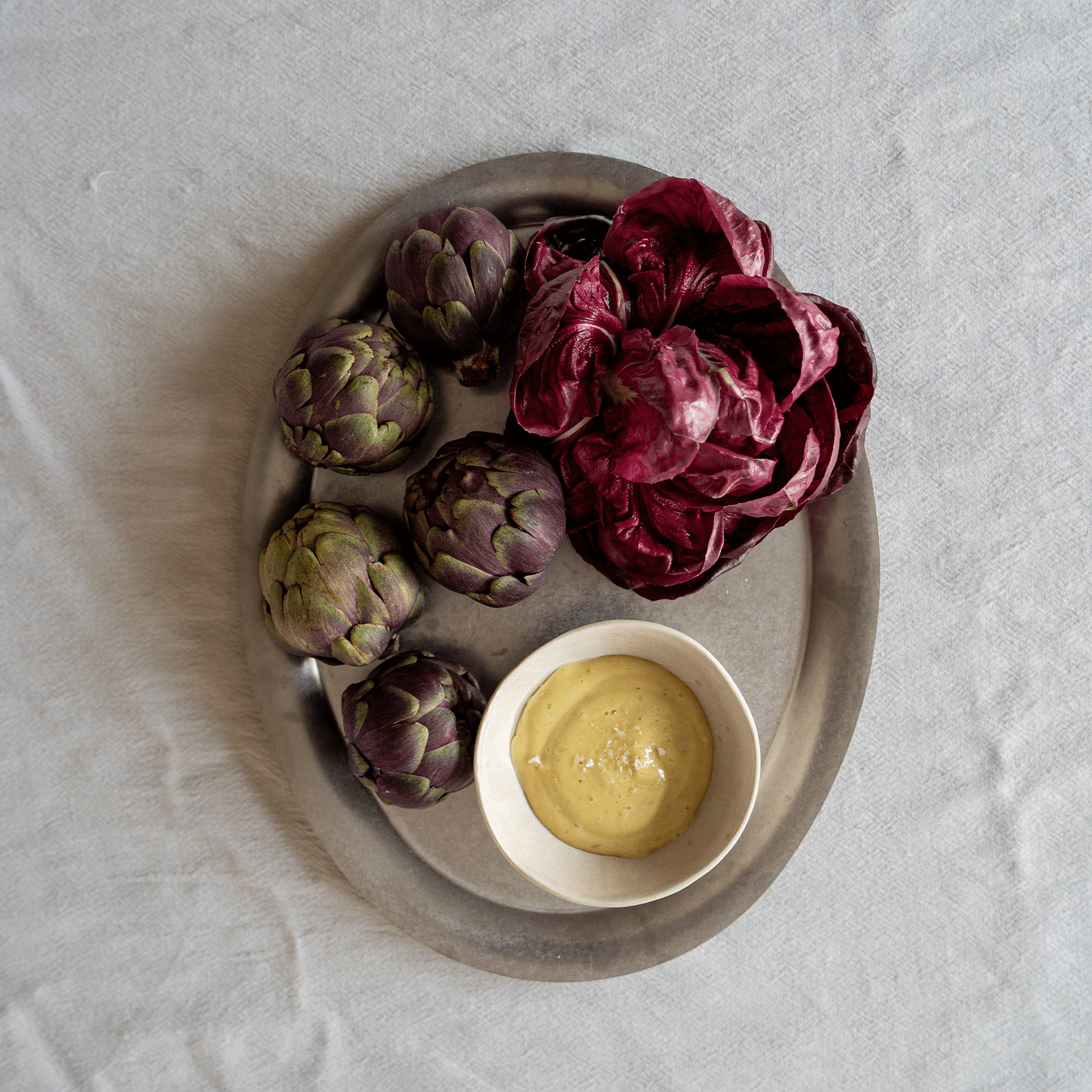
Homemade mayonnaise is the essential accompaniment to crudité boards, sandwiches, and summer seafood. It takes 5 minutes to make, and mustard plays a double role: emulsifier and primary flavouring. Its quality directly determines the final taste.
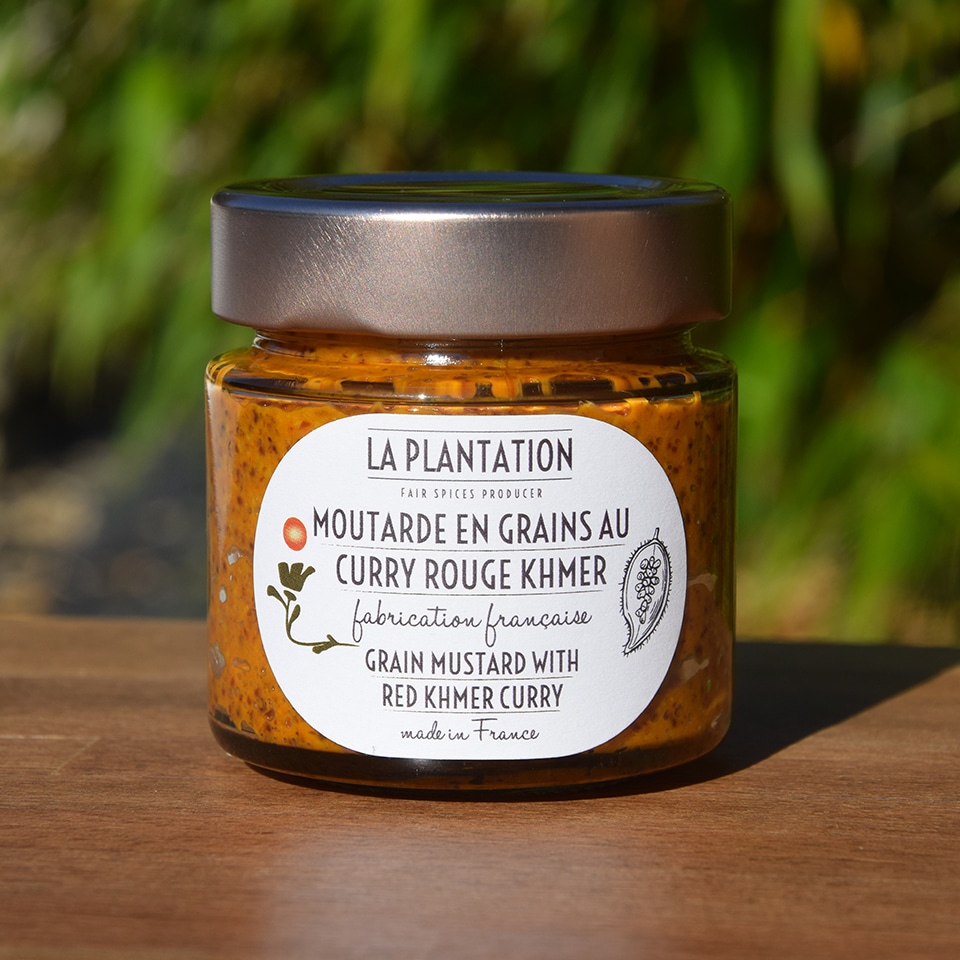
2 variations particularly worth trying in summer: Bird’s eye chilli mustard gives a spiced mayonnaise, perfect for chips, grilled prawns, or homemade burgers. Wholegrain red Khmer curry mustard produces a textured, lightly crunchy mayonnaise, original on a charcuterie board.
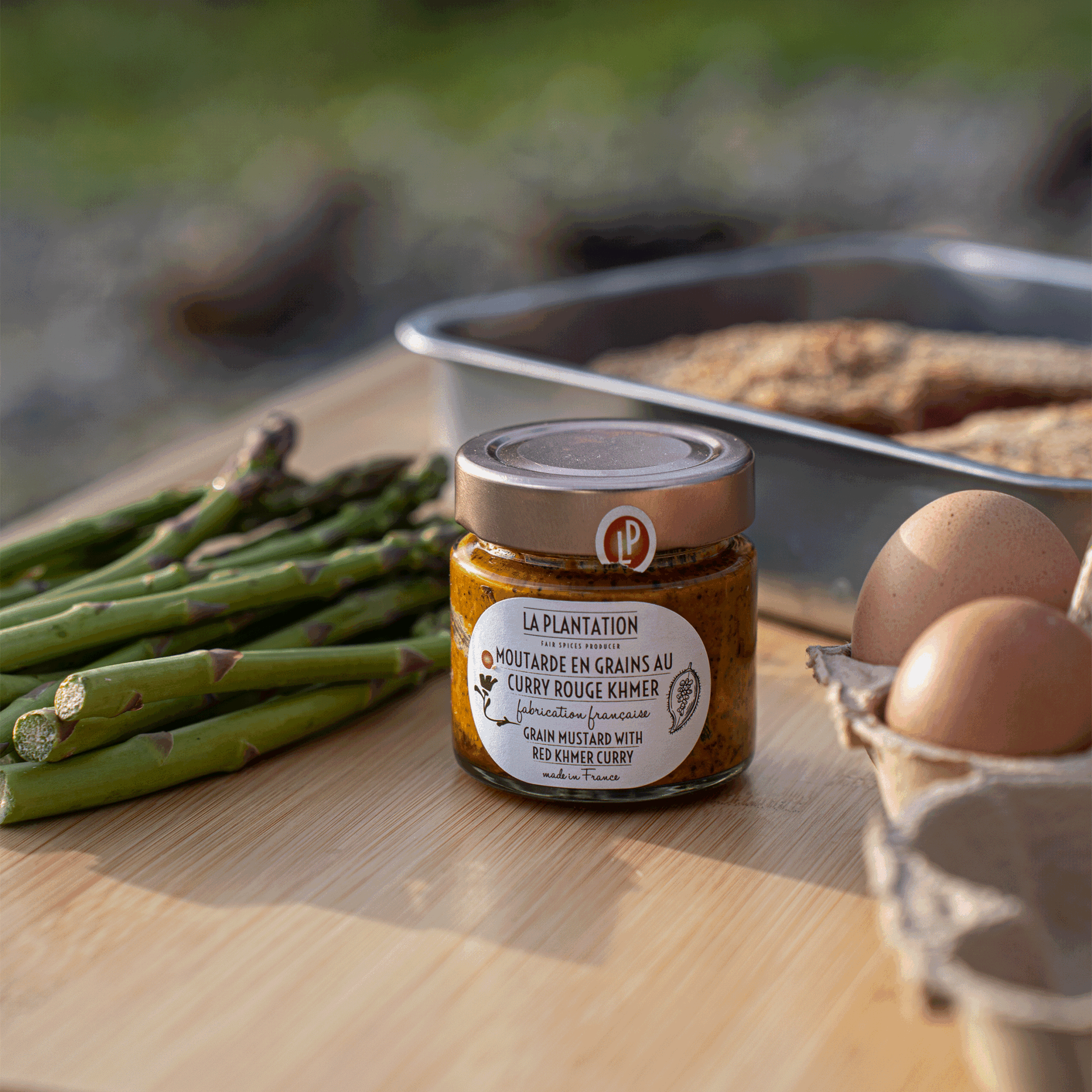
A vegetable tart with a mustard base is the quintessential summer dish, served warm from the oven or cold the following day. Mustard plays a key technical role here: spread over the pastry base before the filling, it creates a moisture barrier that prevents the pastry from going soggy while flavouring it at the same time.
3 summer tart ideas: Cherry tomatoes and pepper mustard, simple to make, striking, and very colourful. Courgettes, fresh goat’s cheese, and turmeric mustard, a fresh, golden, lightly tangy tart. Roasted peppers and bird’s eye chilli mustard, for character and a sweet-spicy warmth that pleasantly surprises.
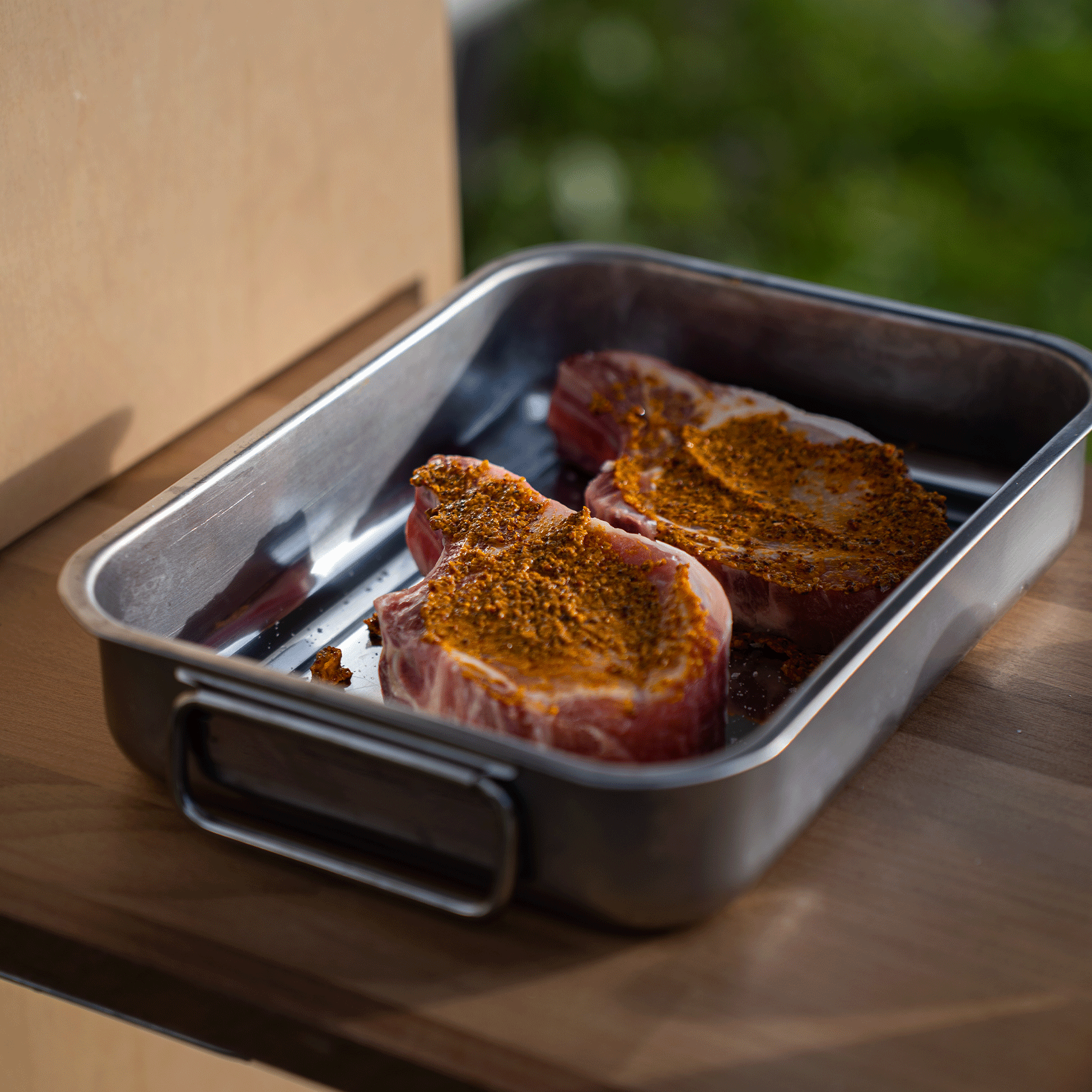
Mustard is one of the best marinade agents for the barbecue. It holds spices onto the meat, tenderises the fibres, and forms a caramelised crust under direct heat. Wholegrain mustard works particularly well on larger cuts: its rustic texture adheres well and holds up to high heat.
3 summer combinations: For chicken: Kampot pepper mustard, olive oil, garlic, and thyme. For lamb cutlets: wholegrain red curry mustard and honey, for a sweet-spicy crust that caramelises on the barbecue. For whole fish: green curry mustard, lime juice, and ginger, a fresh, citrusy marinade that respects the delicacy of the flesh.
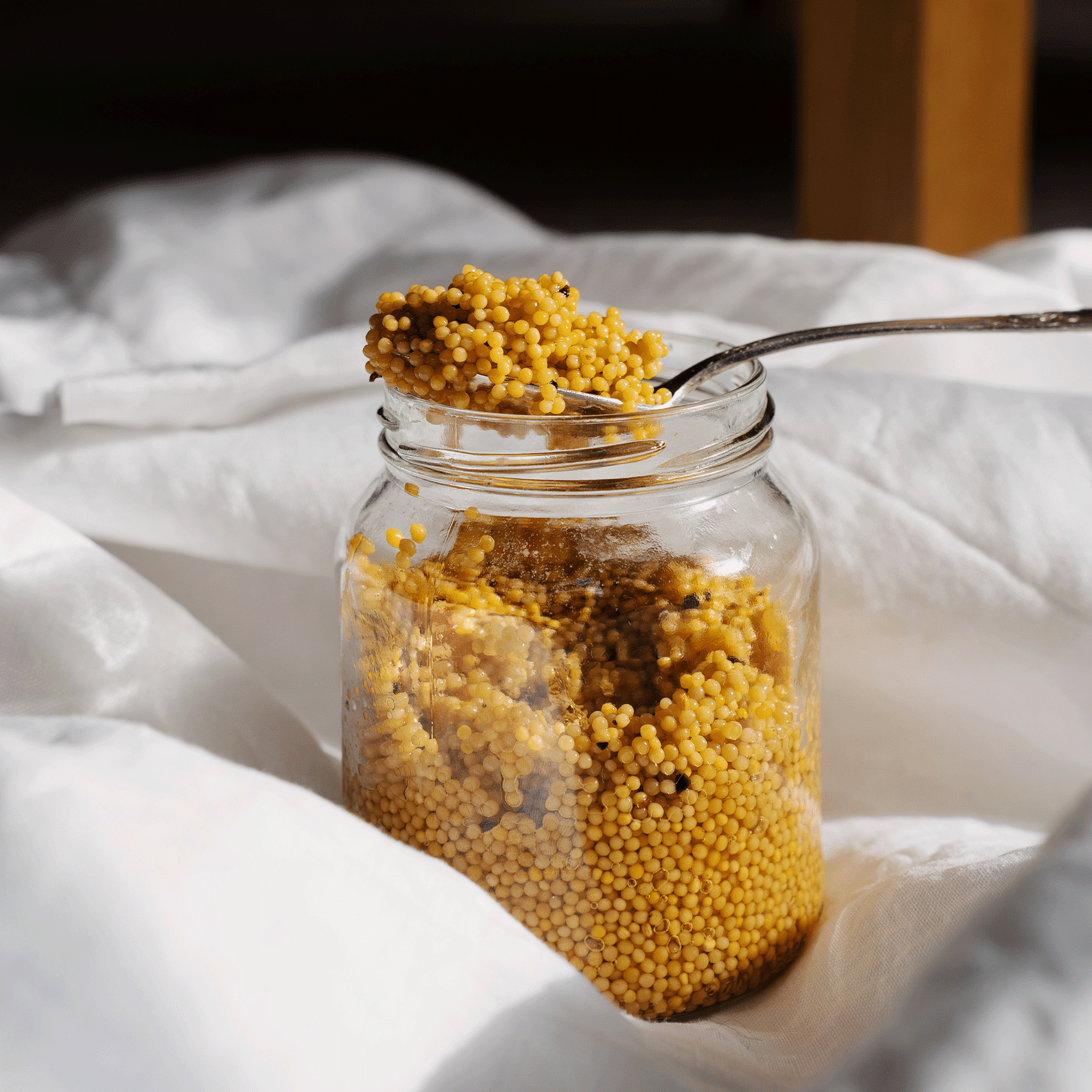
Mustard seed pickles can be prepared in advance and keep for several weeks in the refrigerator, ideal for outdoor meals, cheese and charcuterie boards, summer burgers, and sandwiches.
3 ways to use them in summer: On a cheese board with fig jam, the pickles bring a spiced, acidic note that balances creamy cheeses beautifully. In a homemade burger in place of classic mustard, they add texture and complexity. As a garnish for a rice bowl or composed salad, they add visual punctuation and a burst of flavour in every bite.
FAQ: your questions about mustard in cooking
Wholegrain mustard works anywhere you want texture alongside flavour. It is ideal in barbecue marinades, the grains adhere directly to the meat. In cream sauces, it scatters them with small crunchy pearls. In thick dips and vinaigrettes, it adds relief without weight. It also works very well as a crust on oven-baked fish or spread on toast.
Not quite. Wholegrain mustard is less pungent than smooth mustard: whole seeds release their aromas gradually and more gently. It primarily contributes texture and a light, progressive warmth. Smooth mustard is more uniform and penetrates liquid preparations more effectively. For vinaigrettes and emulsions, choose smooth mustard. For crusts, marinades, and dips, wholegrain mustard is often the more interesting option.
Yes, and for some of them, it is actually recommended. Vinaigrette keeps for 5 to 7 days in the refrigerator in an airtight jar. Homemade mayonnaise keeps for a maximum of 48 hours in the cold. Marinades benefit from resting overnight. Mustard seed pickles keep for several weeks in the refrigerator and improve with time.
Read the ingredient list. A quality mustard contains only a few identifiable ingredients: mustard seeds, vinegar, salt, water, and sometimes spices. Industrial mustards frequently contain thickeners, preservatives, and artificial flavourings. Artisanal mustards without preservatives must be stored in the refrigerator after opening.


Subscribe to our Newsletter now
Get a free product for your first order!
Donation