
Fair trade : Definition, principles and implementation at La Plantation
Our Commitments
-
14.03.25
Suggestions
What is Kampot fleur de sel and why is it different?
Sommaire
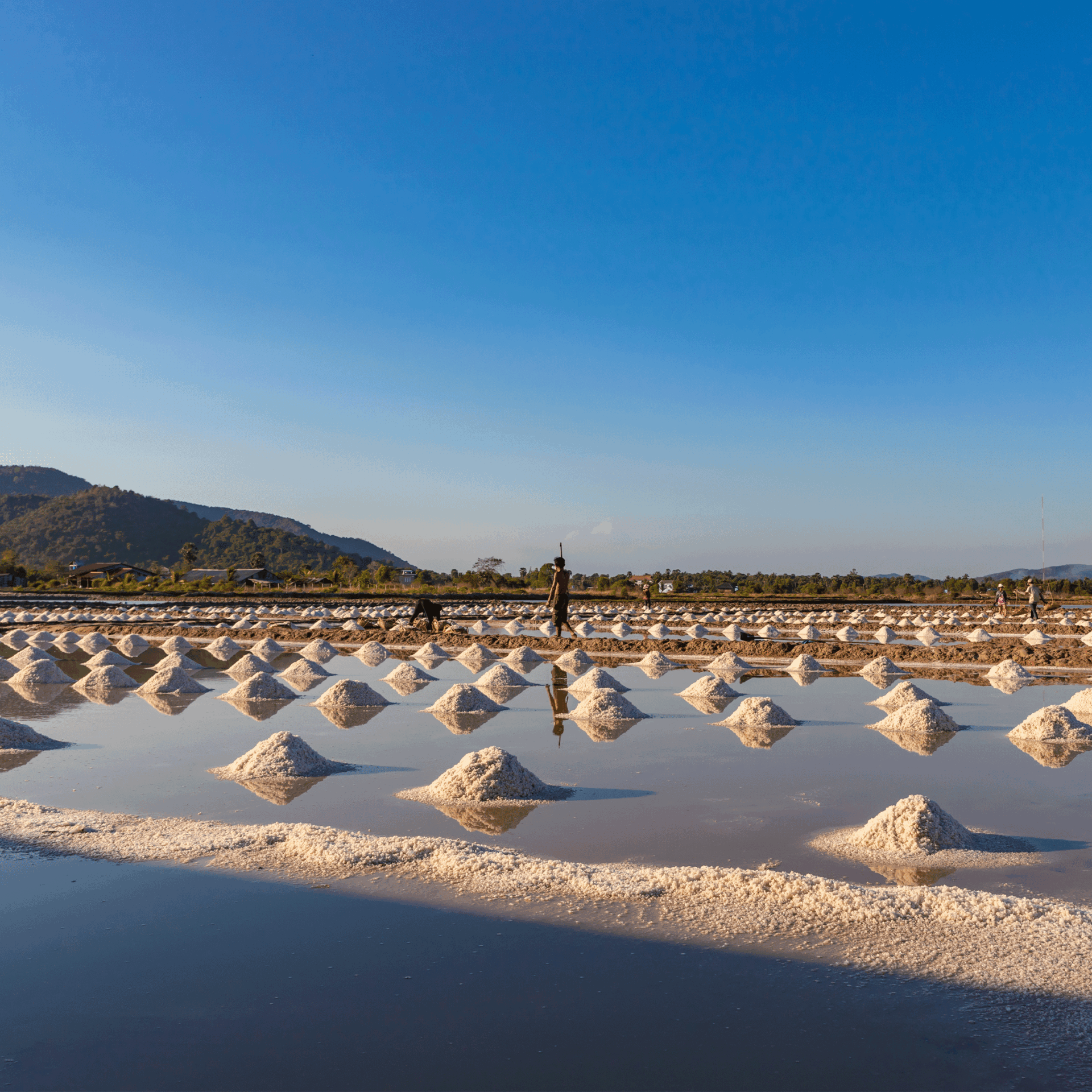
Kampot fleur de sel is not an ordinary salt. It is a rare product, hand-harvested in Cambodia, PGI-certified, and recognised by some of the world’s finest chefs. Yet it is often used like any everyday table salt, and that is where its full potential is lost.
This article explains what fleur de sel really is, why Kampot is its ideal terroir, what the PGI certification guarantees, how it differs from Guérande fleur de sel, and how to use it so it can offer everything it has to give.
What is fleur de sel? Definition and formation
Fleur de sel is the thin layer of white crystals that forms on the surface of salt marshes under the combined action of sun and wind. Unlike coarse salt, which is extracted from the bottom, it is harvested by hand with great care before it sinks. It stands out for its crunchy texture and its richness in trace minerals. It is used primarily as a finishing touch on a dish.
Fleur de sel forms on the surface of salt marshes. Under the combined effect of sun, heat, and a light breeze, a thin layer of white crystals rises to the water’s surface. This formation is ephemeral: it requires very precise weather conditions, intense heat, low humidity, and no strong wind. The slightest change, and the fleur de sel disappears before it can be harvested.
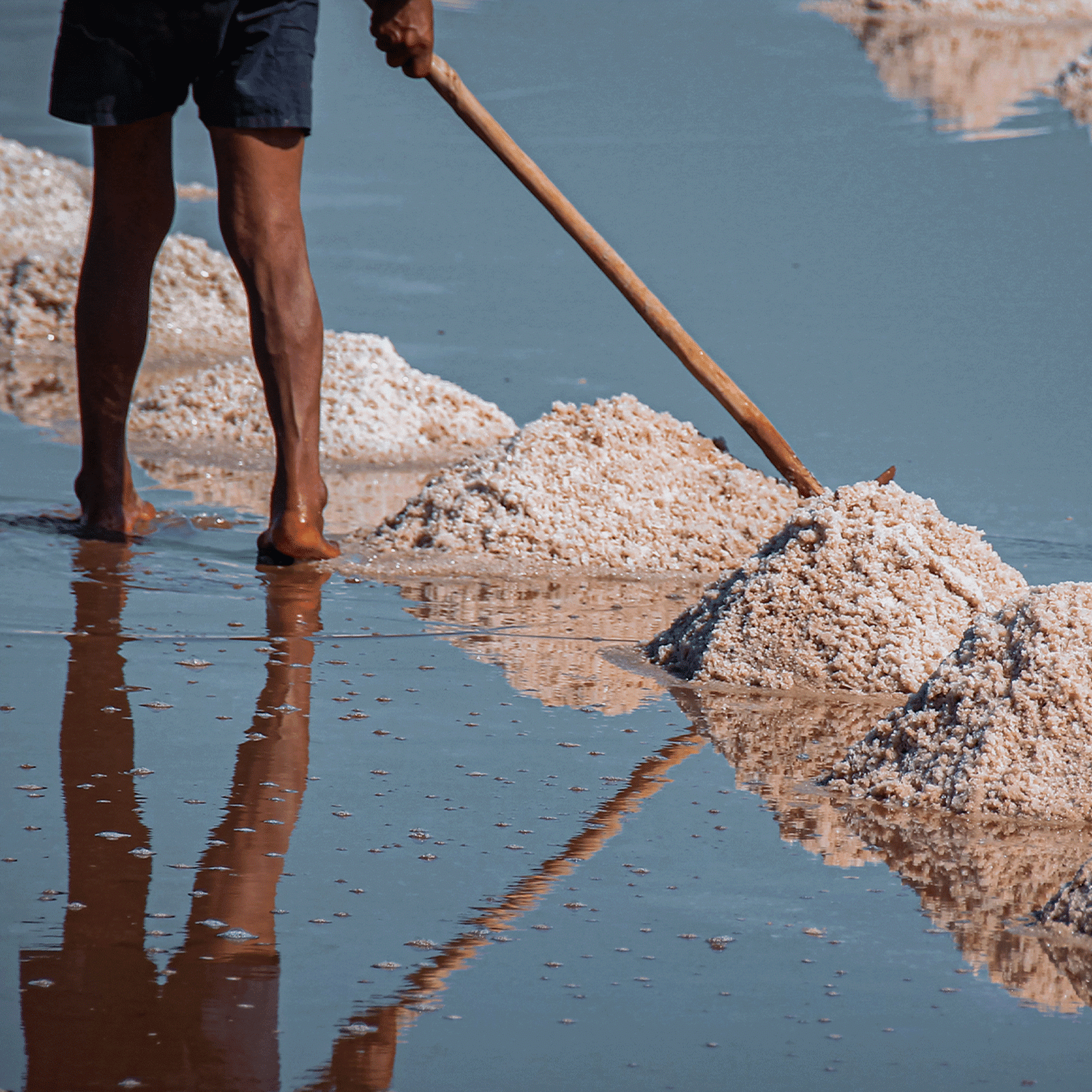
The harvest is carried out entirely by hand. The salt worker gently skims the surface of the water with a tool called a lousse, never touching the bottom. This precise gesture, repeated across generations, is what makes fleur de sel a rare product. A day of ideal conditions yields only a few kilograms, and that is precisely what justifies its price.
Fleur de sel is not simply salt harvested differently. Coarse salt and fine salt are fully extracted and then generally refined, a process that erases their mineral complexity. Fleur de sel, by contrast, is neither washed nor treated. Its crystals remain moist and tender, dissolving gradually on the palate rather than hitting all at once with an aggressive saltiness.
Its flavour is softer, more complex, less sharp. Its mineral richness, magnesium, calcium, potassium, remains fully intact. And its use is fundamentally different: fleur de sel is a finishing salt exclusively. It is not cooked. It is sprinkled at the very last moment, directly onto the plate.
Kampot: the ideal birthplace of fleur de sel
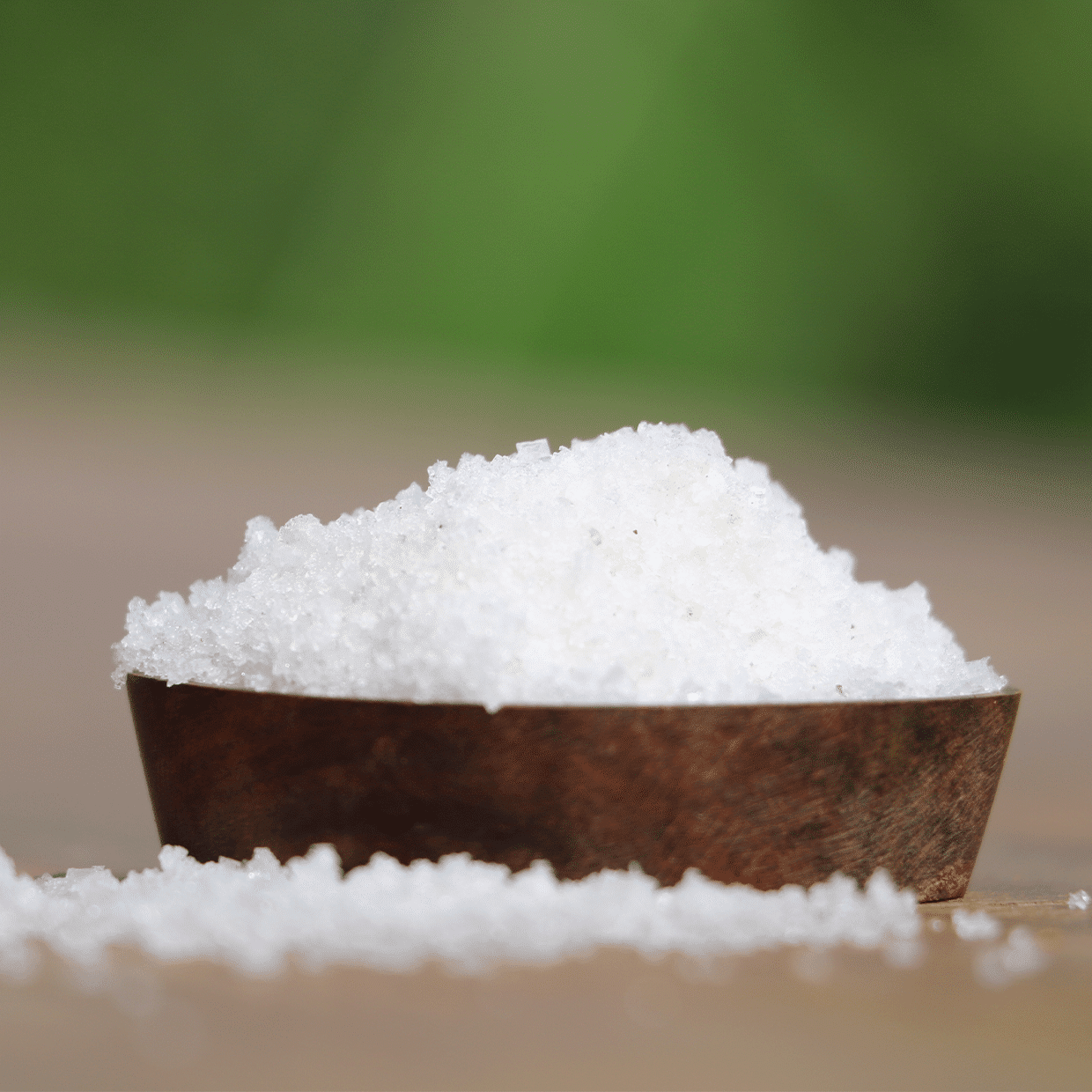
Kampot occupies a rare geographical position. Situated between the warm waters of the Gulf of Thailand and the foothills of the Cambodian mountains, the Kampot region benefits from a tropical microclimate that naturally brings together all the ideal conditions for fleur de sel to form. The vast coastal salt marshes are fed by waters naturally rich in minerals, which are transferred directly into the crystals during evaporation.
The harvest season is short: from April to May, during the hottest months of the year, when the sun is at its peak and weather conditions are at their best. This narrow window contributes to the rarity of the product and to the intensity of its aromas.
Salt-making techniques in Kampot have been inherited from centuries of practice. The harvest remains entirely manual: the delicate skimming of the surface layer demands precise gestures, a careful reading of weather conditions, and an intimate knowledge of the salt marshes that no machine can replicate.
This expertise was further enriched through a rare exchange: salt workers from Guérande came to Kampot to share their techniques with local producers. A dialogue between two traditions, two terroirs, two histories, one that Kampot fleur de sel carries to this day.
This is something you will not find on our competitors’ labels, and yet it is one of the keys to the exceptional quality of this salt.
The PGI certification: a guarantee of quality and authenticity
The Protected Geographical Indication is an official certification. It establishes a legally recognised link between a product and its territory of origin. It guarantees the consumer three things: the geographical origin of the product, compliance with defined and monitored production methods, and full traceability from harvest to sale.
The PGI certification imposes strict rules. The production zone is limited exclusively to the Kampot region. The harvest must be entirely manual, carried out on the surface of the salt marshes, with no washing or additives. Producers are subject to regular quality and traceability checks.
This certification has an additional dimension that is often overlooked: it also protects the Cambodian salt workers themselves, by preventing products of different origin from being sold under the Kampot name. The fleur de sel sold by La Plantation is PGI-certified, in the same way as Kampot pepper, which is also PGI-certified. A double recognition that makes Kampot one of the very few regions in the world to hold this dual certification.

Kampot fleur de sel vs. Guérande fleur de sel: the real differences
Guérande fleur de sel carries the imprint of the Atlantic: a slightly iodised, marine, mineral character, with fine, light crystals shaped by the Breton wind.
Kampot fleur de sel is something else entirely: softer, more floral, with larger, naturally moist crystals nourished by the tropical waters of the Gulf of Thailand. The difference comes down to the mineral composition of the saline waters in each region, distinct from one ocean to the next, from one climate to the next.
Despite their differences, both share what matters most: an entirely manual harvest, a status as finishing salts, and a PGI certification in their respective regions. And there is a historical connection, salt workers from Guérande who travelled across the world to share their craft with Kampot, that makes these two fleurs de sel not rivals, but heirs to the same artisanal tradition.
| Criterion | Guérande fleur de sel | Kampot fleur de sel |
| Origin | Brittany, France | Kampot, Cambodia |
| Flavour profile | Iodised, marine, mineral | Soft, floral, subtle |
| Crystals | Fine, light | Larger, moist |
| Harvest season | Summer (July–August) | Dry season (April–May) |
| Certification | PGI since 1994 | PGI (more recent) |
| Historical link | Global reference | Influenced by Guérande |
| Culinary use | Universal finishing | Finishing, sweet-savoury pairings |
The natural benefits of Kampot fleur de sel
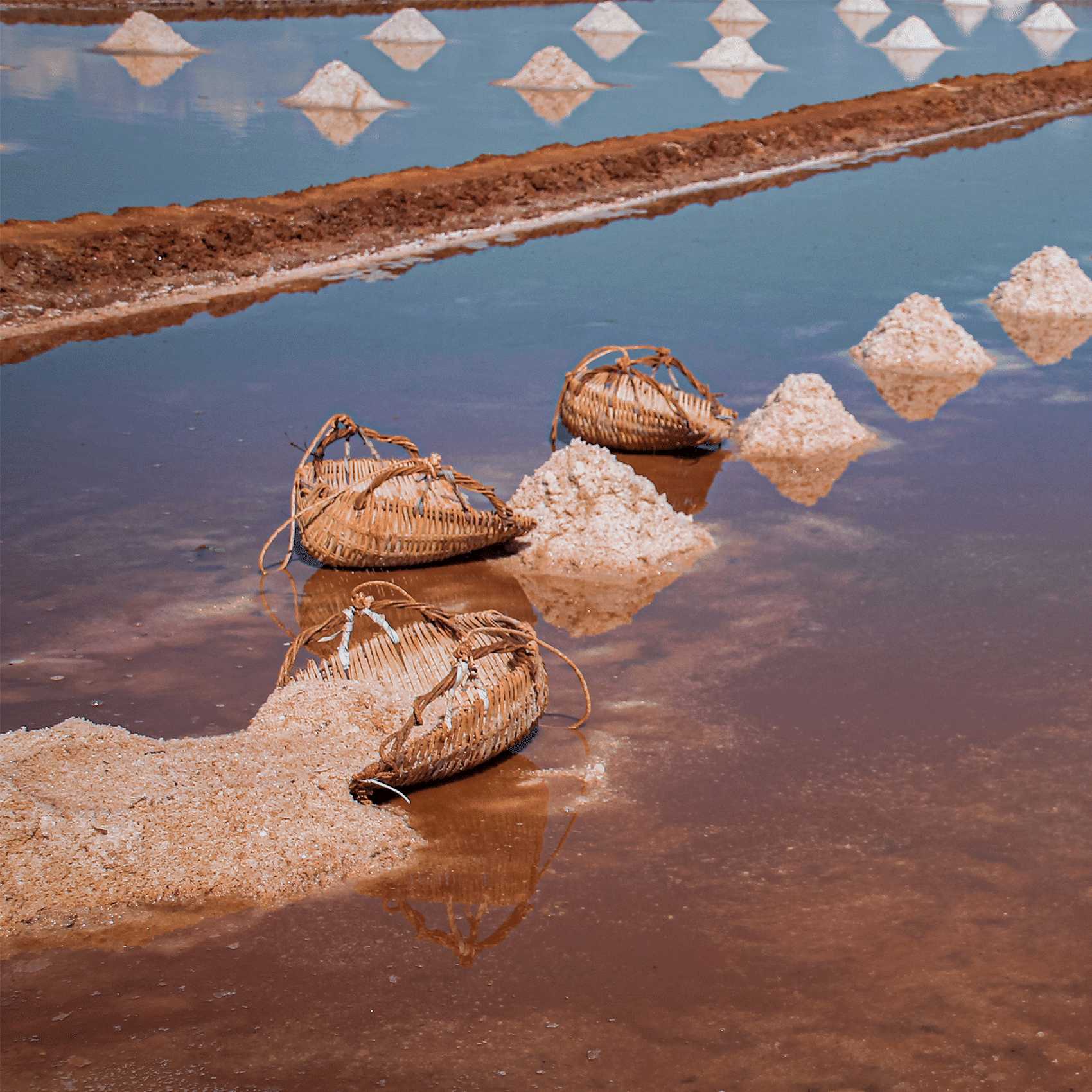
Kampot fleur de sel is neither refined, nor washed, nor treated. Its mineral richness remains fully intact: magnesium, calcium, potassium, and trace elements. These minerals play concrete roles in the body, supporting electrolyte balance, bone health, and blood pressure regulation.
This is not the case with ordinary table salt, which loses a significant part of these elements during the refining process.
Fleur de sel has a practical advantage that is often underestimated. Its crystals dissolve gradually on the palate, releasing salt in successive waves rather than in a single sensation.
The result: you naturally use less of it for an equivalent, or even superior, taste effect. A concrete argument for those watching their sodium intake without wanting to sacrifice pleasure. Like any salt, it should be used in moderation. But in this category, it is the most natural and least processed option available.
How to use Kampot fleur de sel in the kitchen
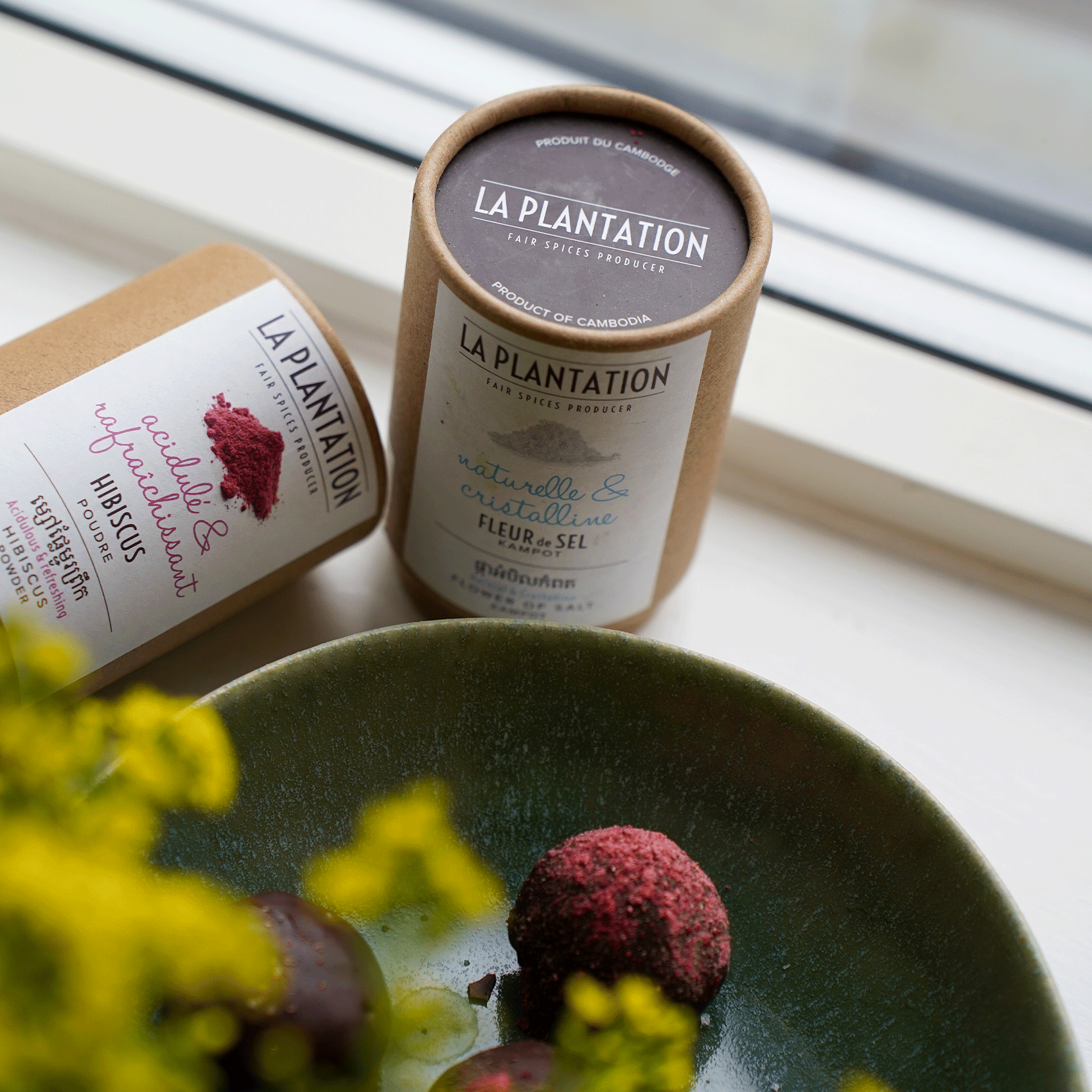
Kampot fleur de sel is not for cooking, that is the fundamental rule. The right approach is simple: sprinkle it at the very last moment, directly onto the plate or the freshly plated dish. Heat dissolves its crystals, destroys its crunchy texture, and reduces its flavour to that of an ordinary salt. Everything that makes it interesting disappears.
On grilled or roasted meat, fleur de sel plays on the contrast between the crunch of the crystals and the tenderness of the flesh. A pinch at the moment of serving transforms the dish. On fish and seafood, the pairing is natural: the soft, mineral notes of Kampot salt extend the marine flavours without ever overpowering them. On steamed vegetables or raw crudités, it brings a minimalist, elegant finish. On fresh cheese, a burrata or a runny goat’s cheese, a few crystals change everything.
This is perhaps where Kampot fleur de sel reveals its singularity most clearly. On dark chocolate, the pairing has become a classic: salt draws out the bitter aromas of the cacao and rounds them off. In a homemade salted butter caramel, it replaces any ordinary salt to great advantage, bringing a texture and depth that fine salt simply cannot deliver. On fresh fruit, strawberries, watermelon, mango, a light pinch brings out unexpected aromas.
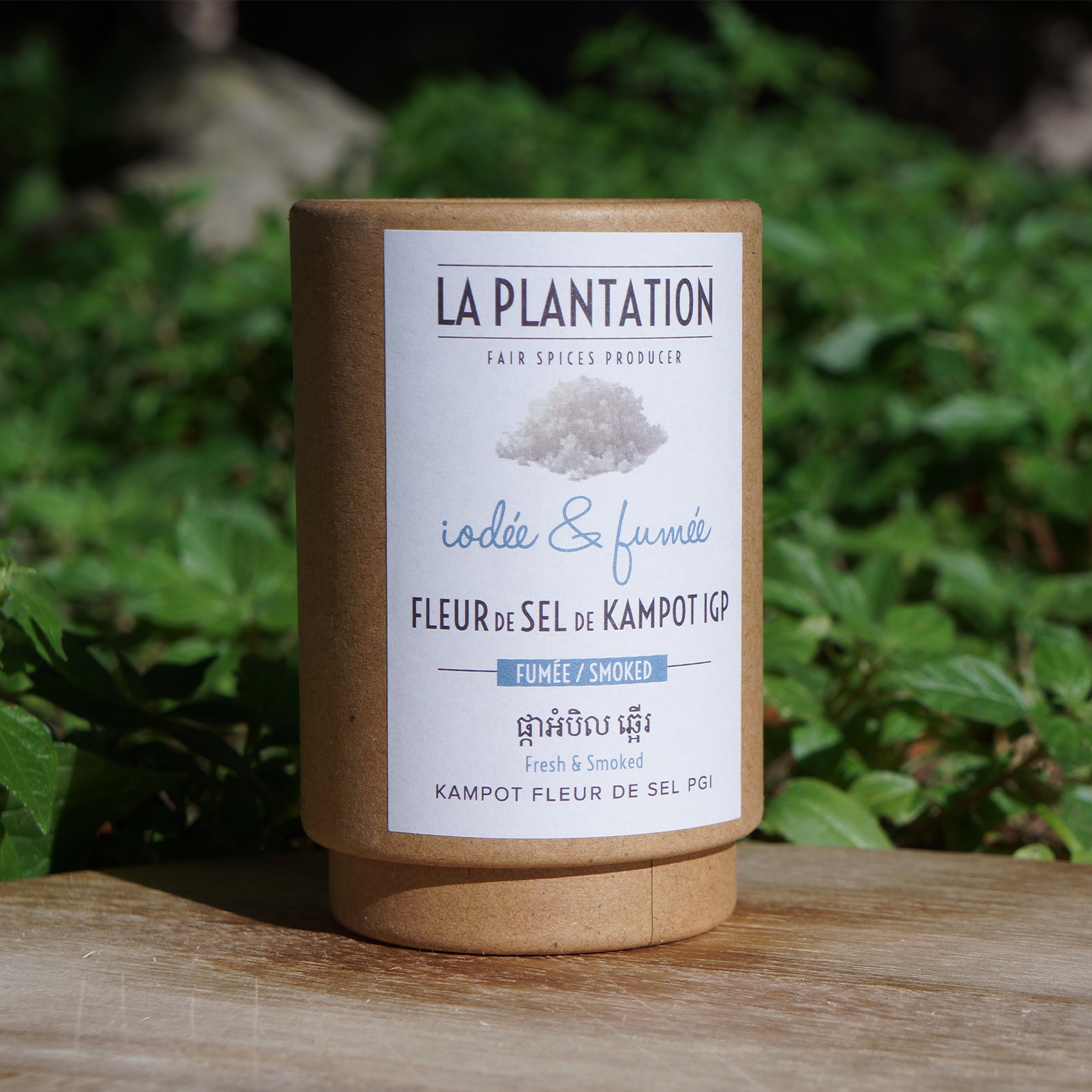
At La Plantation, we wanted to go further by creating a Smoked Kampot Fleur de Sel. Hand-harvested and cold-smoked, it offers woody and marine aromas, perfect for lifting your dishes and adding a touch that is both salty and smoky in a single pinch. It pairs beautifully with grilled meats, scrambled eggs, sautéed potatoes, and is even worth trying on popcorn or with chocolate.

FAQ: your questions about Kampot fleur de sel
Can fleur de sel be used for cooking?
No. Fleur de sel is not for cooking. Heat destroys its crystals and causes it to lose both its crunchy texture and its subtle aromas. It is used exclusively as a finishing salt, sprinkled at the very last moment onto the plate.
Is fleur de sel saltier than fine salt?
No, it is often perceived as less aggressive. Its moist crystals dissolve gradually on the palate, releasing salt in waves rather than in a single sensation. You therefore naturally use less of it for an equivalent taste result.
What is the difference between regular salt and fleur de sel?
Ordinary salt is extracted and then refined, a process that strips away its mineral complexity. Fleur de sel is simply the thin layer of crystals that forms naturally on the surface of salt marshes, hand-harvested under precise conditions. It is richer in minerals, untreated, and reserved exclusively for finishing dishes.
What makes Kampot fleur de sel special?
Its unique tropical terroir, the waters of the Gulf of Thailand and Cambodia’s climate, gives it larger crystals and a soft, floral flavour profile that is distinct from Guérande fleur de sel. Its dual PGI certification alongside Kampot pepper makes it a rare product, rooted in a singular and preserved culinary heritage.
Does fleur de sel pair well with spices?
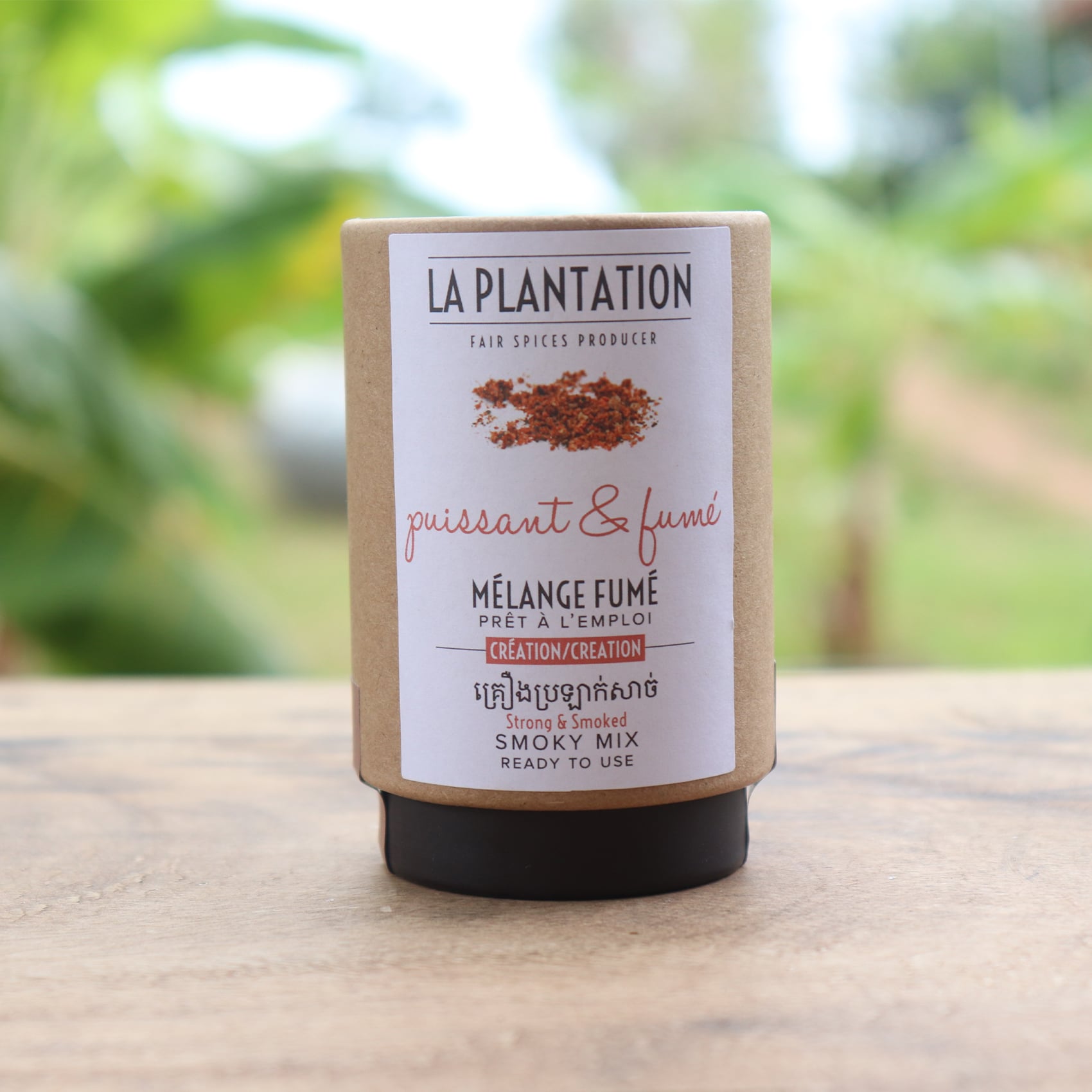
Kampot fleur de sel pairs very well with smoky, floral, and citrus aromas. A smoked blend of fleur de sel and paprika adds a rich depth, particularly suited to meats and eggs. A blend featuring kaffir lime and fleur de sel is ideal for fish and seafood. These blends, created by La Plantation, also contain a significantly lower salt content (50%) than comparable commercial blends.
Subscribe to our Newsletter now
Get a free product for your first order!
Donation