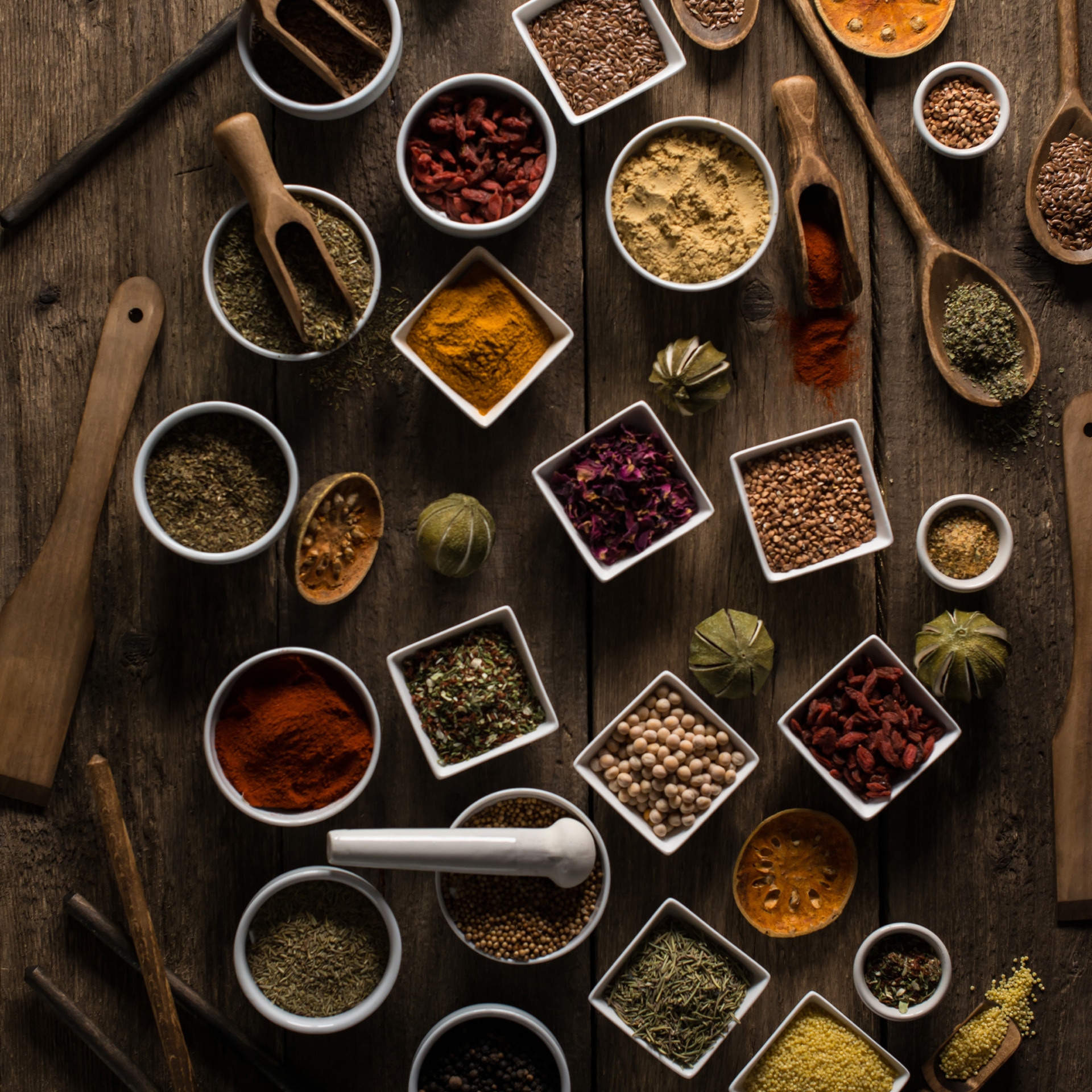
Complete Guide: How to pair Spices in cooking
Our Tips
-
18.04.25
Suggestions
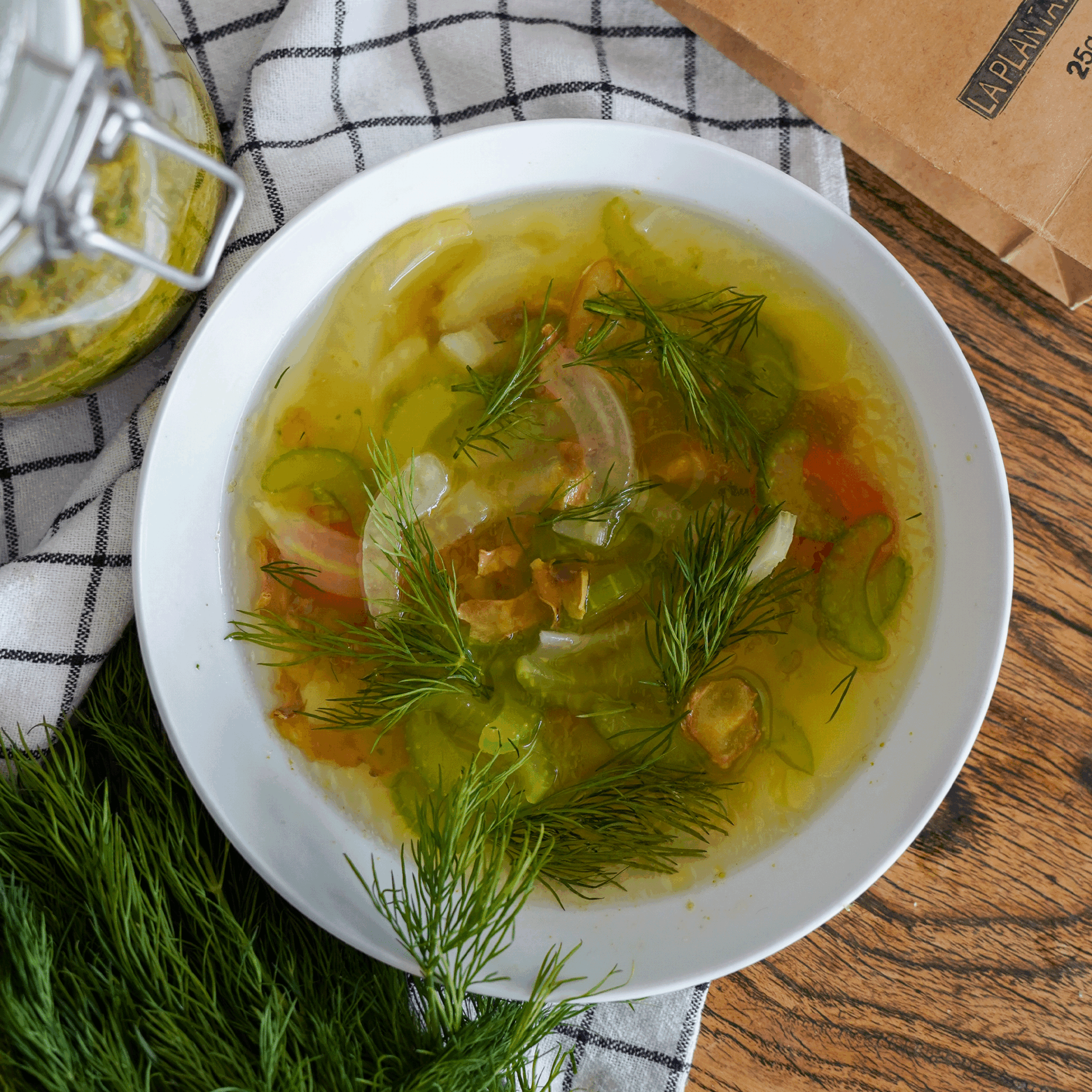
Which spices to use for a savoury and healthy stock or broth?
Sommaire
Spices play a key role in creating a homemade broth that is rich, fragrant and naturally tasty. They boost aroma, shape the culinary base and turn simple simmering water into a nourishing and comforting stock. In winter cooking or daily meals, preparing your own broth becomes a simple, healthy and mindful kitchen ritual.
At La Plantation, we consider spices as true culinary ingredients, far beyond basic flavour correction. A balanced broth depends on the quality of the ingredients, the precision of the spices and the right cooking time. Fresh, well-sourced spices grown with care create aromatic, authentic and flavourful broths with real depth.
Key takeways:
|
Why use spices in a broth?
Using spices does much more than add flavour. Making your own broth gives you full control over the ingredients and helps you avoid additives, flavour enhancers and preservatives commonly found in industrial stock cubes.
A homemade broth prepared with fresh vegetables and quality spices becomes a nutritious base. It adapts to your needs. It respects your taste. It follows the seasons. Preparing your own stock also allows you to personalise it easily by adding more or fewer spices depending on your preferences.
The other advantage lies in the natural benefits of homemade broth. Spices such as ginger, garlic and turmeric can help support the immune system while adding flavour. In winter, when the body needs more support, some spices become real allies. Ginger is known for its anti-inflammatory properties. Turmeric, paired with pepper, provides antioxidant compounds. Garlic and onion help maintain overall balance in the body.

What are the different types of broth?
A vegetable broth offers a light, digestible and naturally fragrant base. It is ideal for vegetarian or vegan diets and relies on spices to gain warmth, depth and a long finish.
To create a successful broth, use fresh vegetables such as carrots, leeks, celery, onions and garlic. Add the spices at the very beginning of cooking so they can infuse gently: lemongrass, ginger, turmeric and galangal work especially well.
| Tip: Cut the vegetables into large chunks for better texture during cooking and let the broth simmer slowly for a clear and aromatic result. You can enrich the flavour with bay leaves, coriander seeds or mild white pepper to build structure. |
A poultry broth needs gentle cooking to preserve the delicate taste of the meat. Use a chicken carcass or pieces rich in collagen, and always start with the classic trio: onion, garlic and carrot.
The ideal spices add warmth and depth without overpowering the broth. Long pepper, ginger, cardamom and fresh turmeric give structure and a mellow heat.
| Tip: skim the broth regularly to keep it clear. |
You can reinforce the aroma with thyme, bay leaves or a touch of star anise for a rounder and more balanced flavour.
A beef or bone broth needs long cooking time to release collagen and deep flavours. Lightly roast the bones first to create a richer, darker base. Then add vegetables such as carrot, celery and onion, and let the broth simmer for several hours.
Stronger spices work best here, especially red long pepper, Ma Khaen pepper, cinnamon and bay leaves. These spices support the natural intensity of the broth.
| Tip: Once cooled, let the broth rest in the fridge and remove the fat layer for a cleaner, more balanced finish. |
Asian broths rely on a subtle balance between freshness, citrus notes and aromatic warmth. The traditional base often includes onion, garlic, lemongrass and ginger, sometimes supported by kaffir lime leaves or galangal.
Key spices include: lemongrass, galangal, ginger, star anise and cinnamon sticks. Let the whole spices infuse, then strain the broth for a clean and bright result.
Fresh herbs like coriander, Thai basil or spring onion added at the end bring a lively and refreshing aroma.
The spices to use for a savoury broth
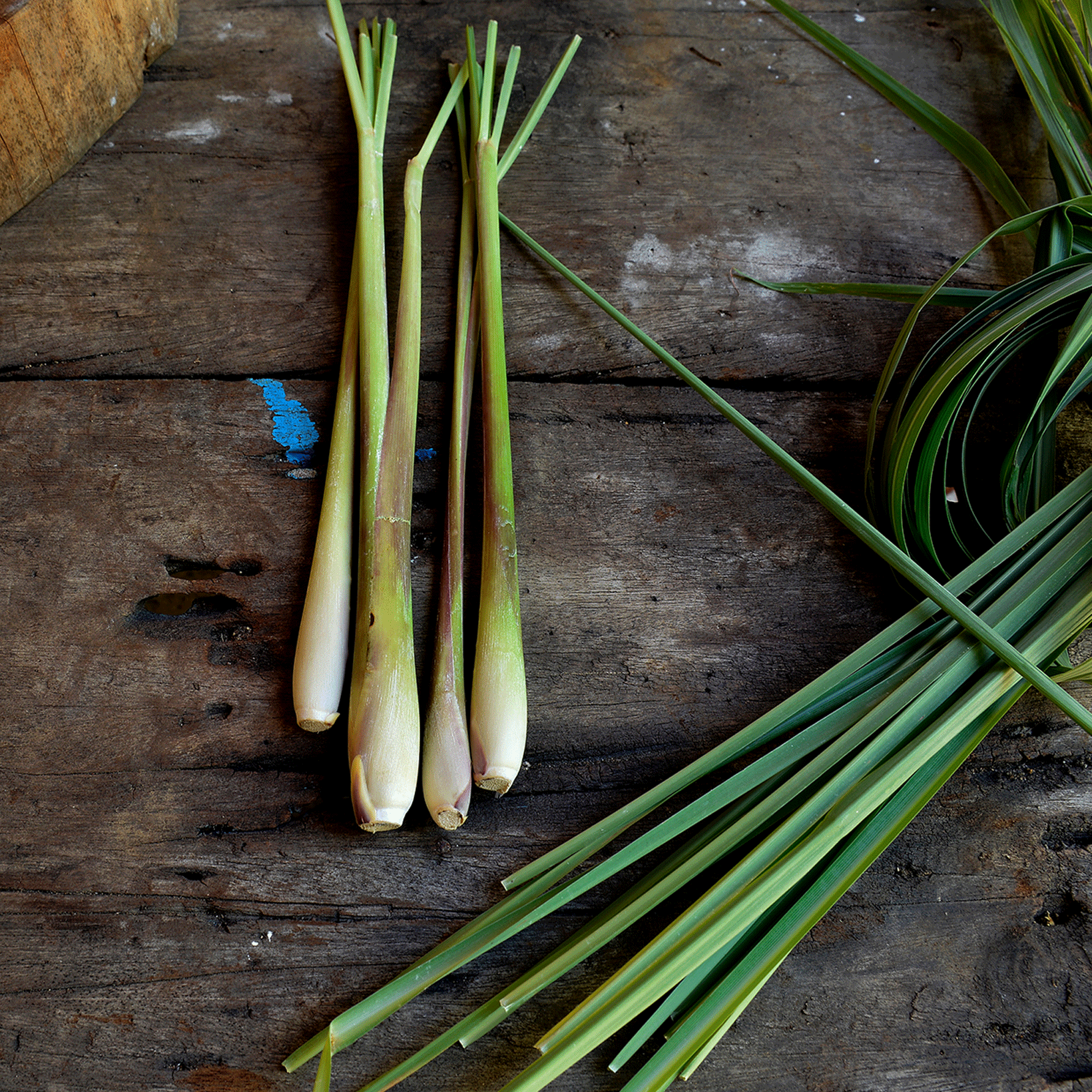
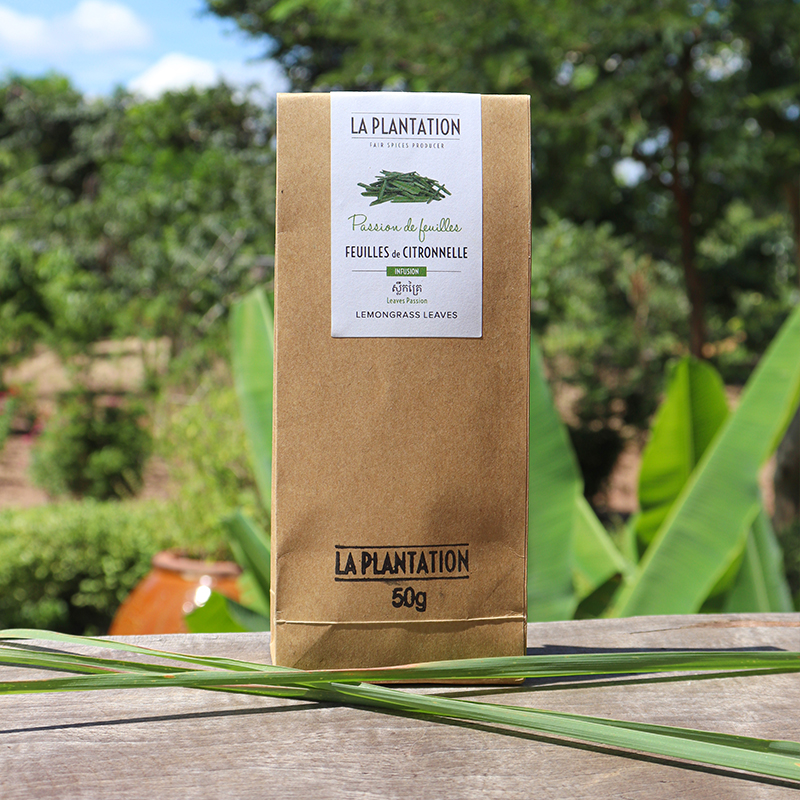
Lemongrass brings a fresh, citrusy and slightly sweet flavour. It is widely used in Cambodian soups and adds a bright, exotic touch to vegetable and bone broths. Cut the stalks and bruise them lightly so they release more aroma during simmering.
Kaffir lime leaves provide a vivid, aromatic and intensely citrus note. In Cambodia, many families grow their own tree. When dried immediately after harvest, they keep their exceptional freshness. Add them at the end of cooking to preserve their delicate fragrance.
Galangal offers notes of mild pepper and mustard, making it a powerful natural flavour booster. Ginger brings warmth and energy to slow-cooked dishes. In their wild form, both spices develop even stronger aromas, ideal for creating expressive and structured broths.
Turmeric adds colour, warmth and a gentle bitterness. It pairs beautifully with orange vegetables such as carrot or pumpkin. Always combine turmeric with pepper to support the absorption of its active compounds.
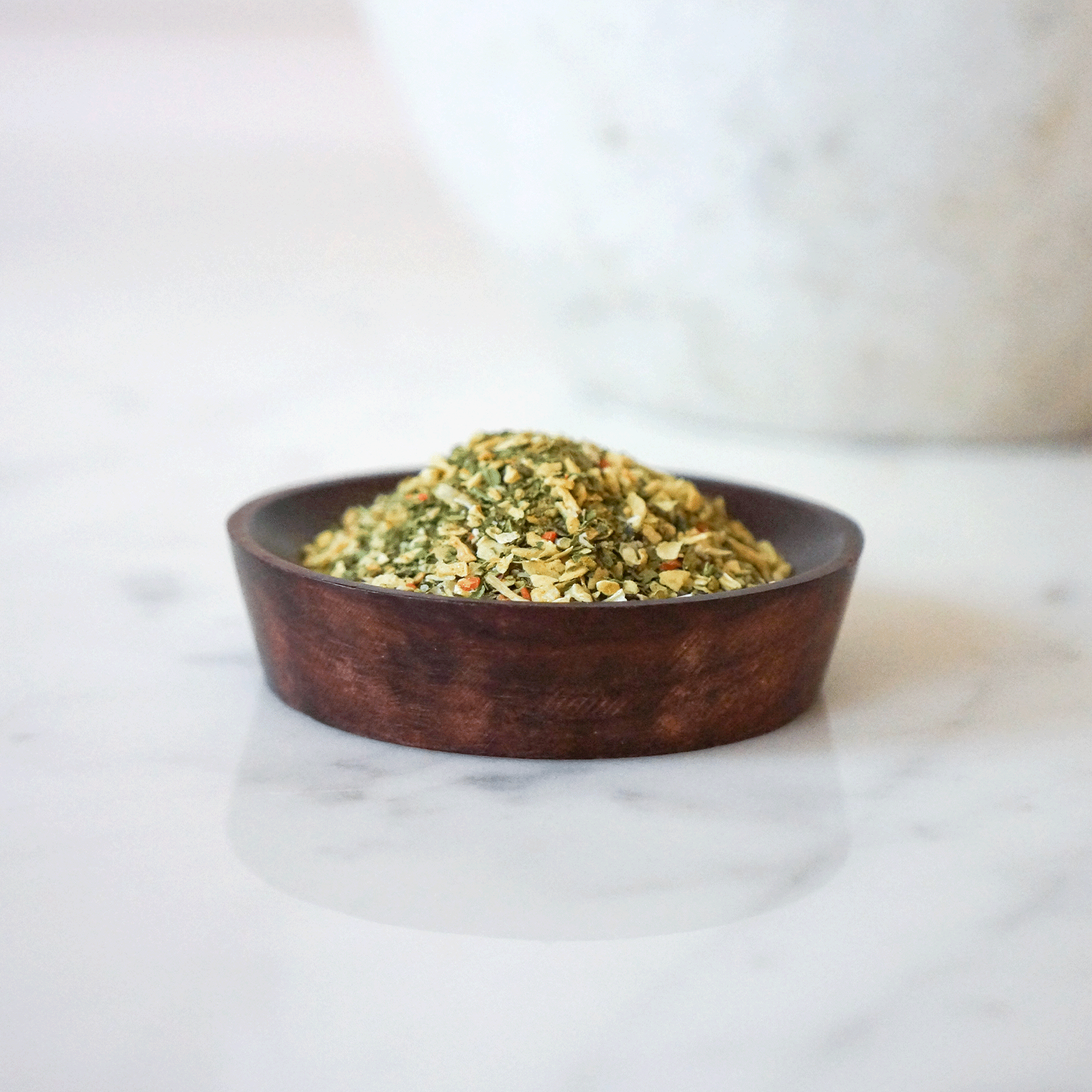
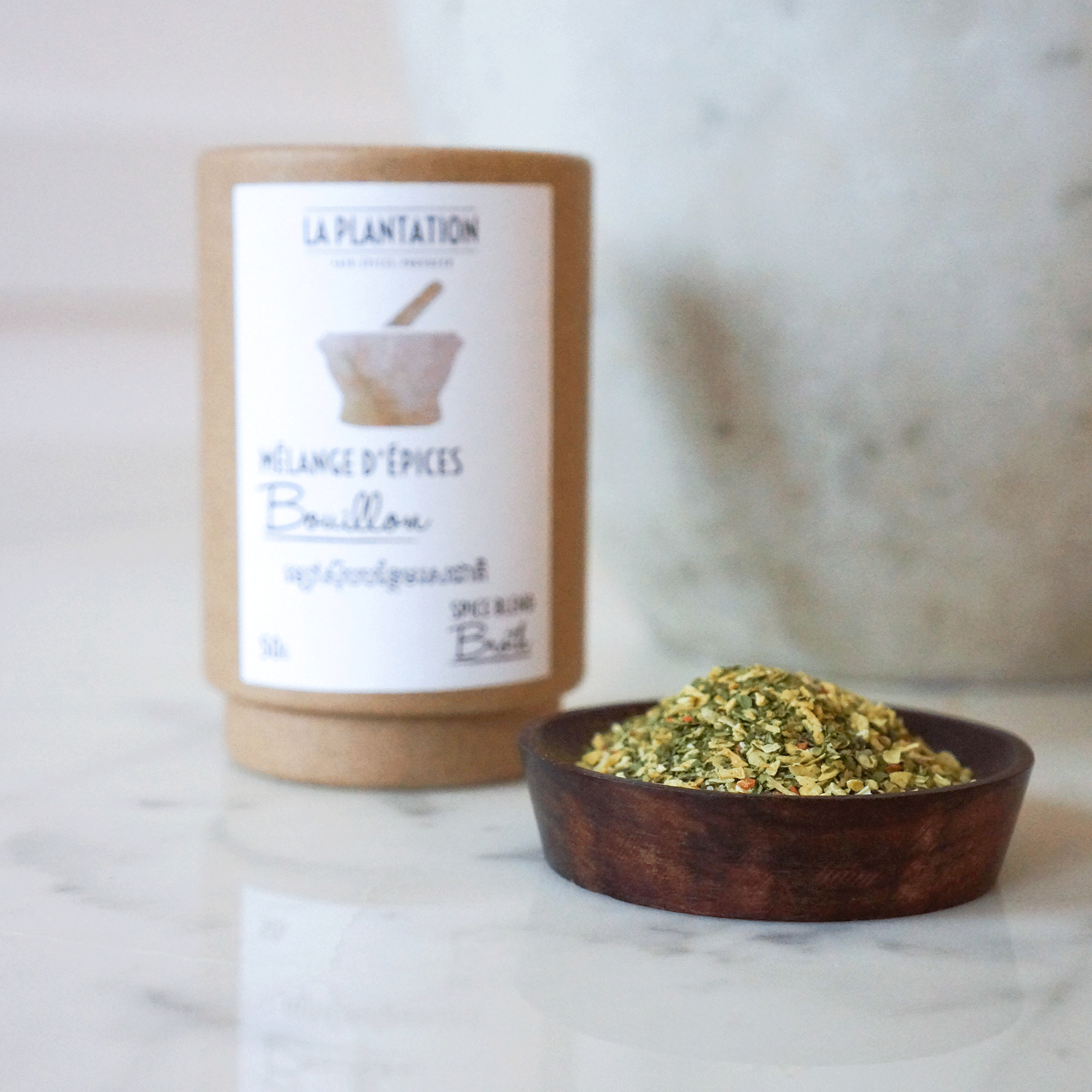
A ready-to-use spices blend is a natural alternative to supermarket stock cubes. The mix used at La Plantation includes lovage leaves, onion, garlic, dried carrot, shallot, Kampot turmeric, cloves, Kampot black pepper and sea salt.
This blend creates a consistent, balanced and aromatic vegetable broth with no hidden additives, no artificial flavour enhancers and no added sugar. It offers a clean, simple and natural composition.
Vadouvan is an Indian-inspired blend, softer and more complex than curry. It combines toasted spices with dried onion and garlic in a base of subtle vegetable oils. Used as a topping on a soup or velouté, it adds a gourmet and intense dimension without overpowering the dish.
Pairing the right spices and herbs is essential for a balanced and aromatic broth. Each type of broth has its ideal combinations to enhance depth without masking the base ingredients.
| Type of broth | Ideal spices | Recommended herbs |
| Vegetable broth | Lemongrass, ginger, turmeric, galangal, coriander seeds, white pepper | Bay leaf, parsley, fresh coriander, kaffir lime leaves |
| Poultry broth | Long pepper, cardamom, ginger, fresh turmeric, star anise | Thyme, bay leaf, celery leaves, spring onion |
| Beef or marrow broth | Red long pepper, cinnamon, cloves (small amount) | Rosemary, bay leaf, parsley, chives |
| Asian-style broth | Galangal, lemongrass, ginger, star anise, cinnamon, mild dried chilli | Thai basil, coriander, kaffir lime leaves, Asian chives |
These combinations help the broth reveal its natural depth. They support the vegetables and proteins without masking their flavour, allowing you to build harmony in every preparation.
How to use a vegetable broth?
A ready-to-use vegetable broth makes cooking easier and guarantees a fragrant, quick and well-balanced result. You simply add it directly to your recipe to bring rich aromas without extra effort. This type of broth gives you an immediate aromatic base, ideal when you are short on time but still want natural, healthy and flavourful cooking.
A spiced vegetable broth is versatile and suits a wide variety of dishes. It structures a recipe without making it heavy and replaces water in many preparations to bring flavour naturally. A ready-to-use version also saves time while keeping a deep and expressive profile.
You can use it in several simple ways. You can pour it straight into a pan to prepare a quick soup. You can use it as a base for risotto, ramen or slow-cooked dishes. You can dilute it to adjust the aromatic intensity according to the recipe. You can also add it at the end of cooking to lift a dish that feels too mild.
| Tip: Always warm the broth before adding it to a recipe. This avoids thermal shock and helps keep cooking even and smooth |
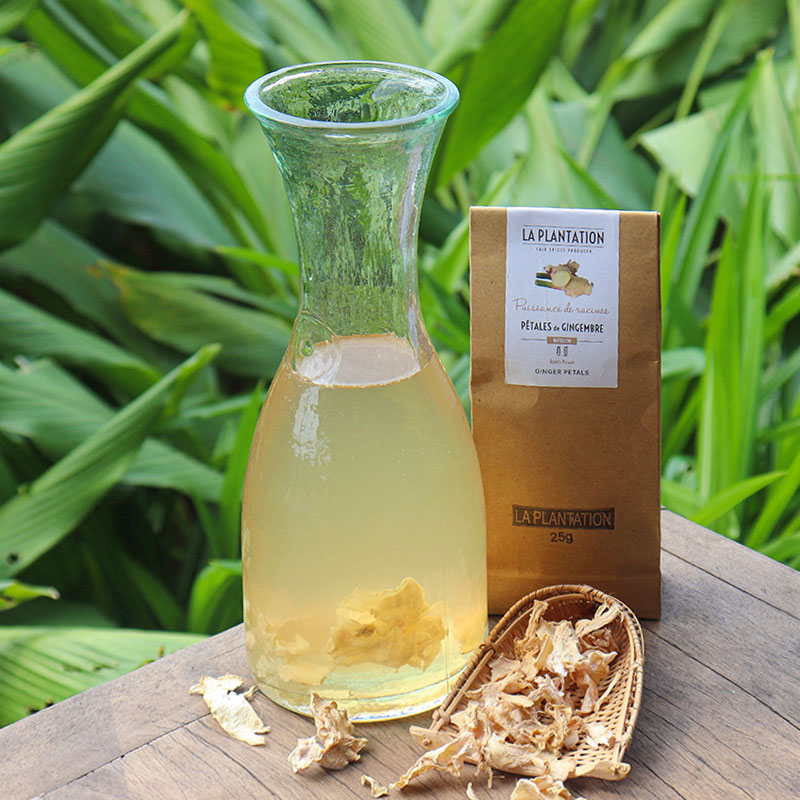
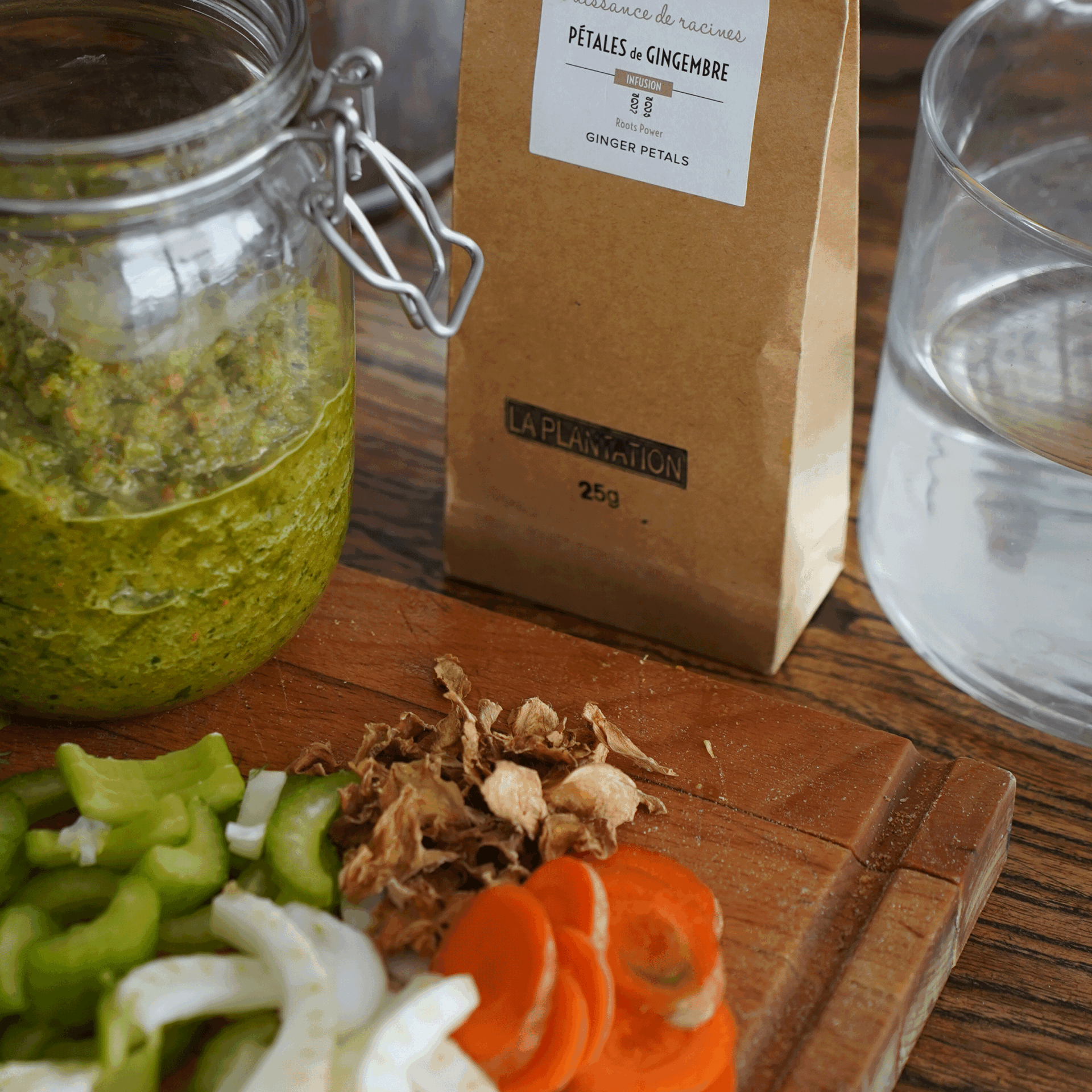
This ginger-based vegetable broth uses mixed vegetables stored in jars to create a ready-to-use aromatic paste. It is simple, quick to use and ideal for everyday cooking.
Ingredients
The method is easy and inspired by traditional broth preparation. After creating the broth base, you add thinly sliced vegetables such as fennel, celery or carrots. You then perfume the broth with ginger petals, which bring warmth and brightness.
The broth simmers gently until the vegetables become tender. You can serve it with fresh herbs and a drizzle of olive oil for extra depth and freshness. The result is a light, fragrant and nourishing broth, perfect for winter meals or daily cooking.
FAQ – Everything about preparing and using broth
How do you add flavour to a broth?
To add flavour to a broth, start by using fresh spices at the very beginning of cooking. Spices need time to infuse gently and release their full aroma. Let the broth simmer slowly so each ingredient can develop its depth.
How can you replace a stock cube?
You can replace a stock cube with a natural spice blend designed for broths. This type of seasoning contains no additives or artificial flavour enhancers. It offers rich, authentic aromas while remaining healthier and more transparent than industrial cubes.
How long does homemade broth keep?
Homemade broth keeps 3 to 5 days in the fridge when stored in an airtight container.
For longer storage, freeze it in individual portions so you can use them easily when needed.
How can you use broth as a soup base?
To use broth as a soup base, heat it gently before adding vegetables, noodles, grains or legumes. The broth replaces water and immediately enhances flavour. Let the soup simmer until the ingredients become tender and absorb the aromatic base.


Subscribe to our Newsletter now
Get a free product for your first order!
Donation