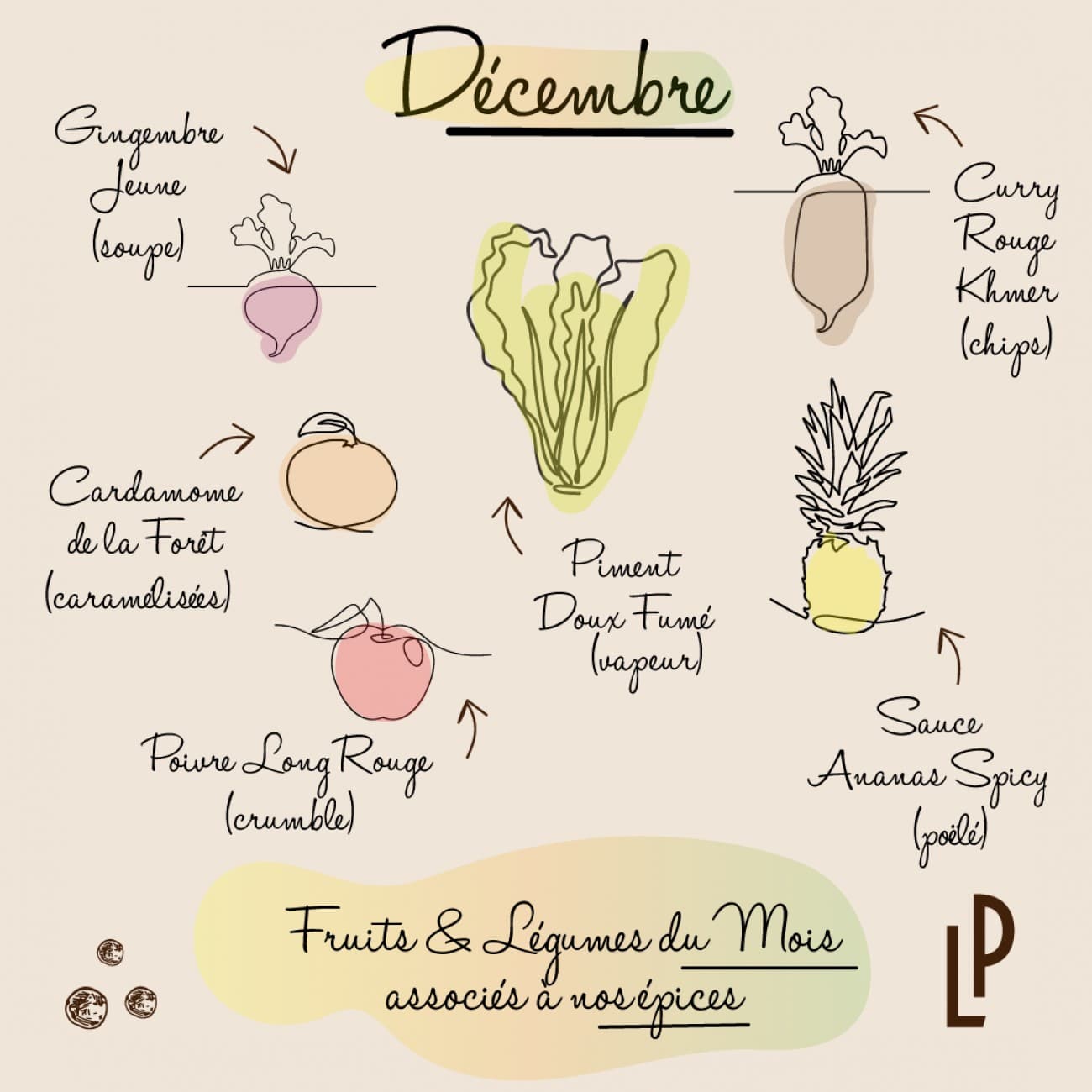
How to pair our spices with seasonal fruits and veggies ?
Seasonality
-
03.12.21
Suggestions
How to flavour butter with spices: the Complete Guide
Sommaire
Key takeways:
|
A flavoured butter is one of the simplest and most transformative gestures in cooking. A round slice melting over a grilled steak, a piece of fish fresh from the oven, steamed vegetables in a matter of seconds, the dish takes on an entirely different dimension.
Behind this simple gesture lies a precise aromatic logic. Butter is one of the best aromatic carriers there is. Spices, mostly fat-soluble, express themselves fully in fat and release progressively with heat. A few minutes of preparation, days of flavour.
How butter carries spice aromas
Most aromatic molecules in spices are fat-soluble. They dissolve and express themselves fully in contact with a fat, not in water. This is why pepper ground into a stock or broth stays on the surface, while the same pepper incorporated into butter progressively releases all its aromas with heat. Butter acts as both a fixative and an amplifier: it captures the essence of the spice and releases it slowly, with every mouthful.
Butter should never be melted to prepare a compound butter. Heat separates the fats and destroys the texture. It must be taken out 1 to 2 hours before at room temperature, until it reaches a pliable but not liquid consistency. This is the only state in which spices incorporate evenly and saturate the fat throughout.

The best spices for flavoured butter
Pepper is the oldest pairing with butter, and one of the most direct. Its aromatic primarily compounds: piperine and a family of terpenes, which are perfectly fat-soluble: butter captures them and releases them gently with the heat of the dish. The profile changes with the variety chosen: black pepper offers a universal, woody character; red pepper a fruity note and gentle warmth; long pepper woody accents with a lightly sweet finish.
Red Kampot pepper PGI illustrates this balance well: it perfumes without ever dominating, making it a reliable choice for a first compound butter. Red long pepper, more assertive, pairs particularly well with caramelised meat.
Recommended uses: steak, duck breast, fresh pasta, risotto.
Green pepper brings a vegetal freshness and a discreet heat that diffuse gently through the butter. Harvested before maturity, it is far less intense than black pepper which is precisely what makes it such a delicate and lasting pairing on refined ingredients like steamed fish, vegetables, or roast poultry.
Crush the dehydrated green peppercorns roughly in a mortar before incorporating. This releases the aromas without losing the texture. It pairs particularly well with wild garlic, whose vegetal notes naturally extend its freshness.
Recommended uses: steamed fish, poultry, asparagus, toast. Dosage: 1 teaspoon of crushed green pepper per 100g of butter. Grind or crush at the last moment before incorporating, to preserve the most volatile aromas.
Wild garlic brings a fresh, vegetal garlic note, noticeably softer than classic garlic. Its sulphur compounds bind to the butter without ever being aggressive, giving a delicate and lasting result rather than a sharp garlic punch. It is a seasonal plant, available fresh from March to May only: outside that window, the freeze-dried version of wild garlic butter gives a very close result and allows this butter to be made year-round.
Recommended uses: entrecôte, asparagus, omelette, sourdough toast. Dosage: 1 teaspoon of freeze-dried wild garlic, rehydrated in a little olive oil, per 100g of salted butter.
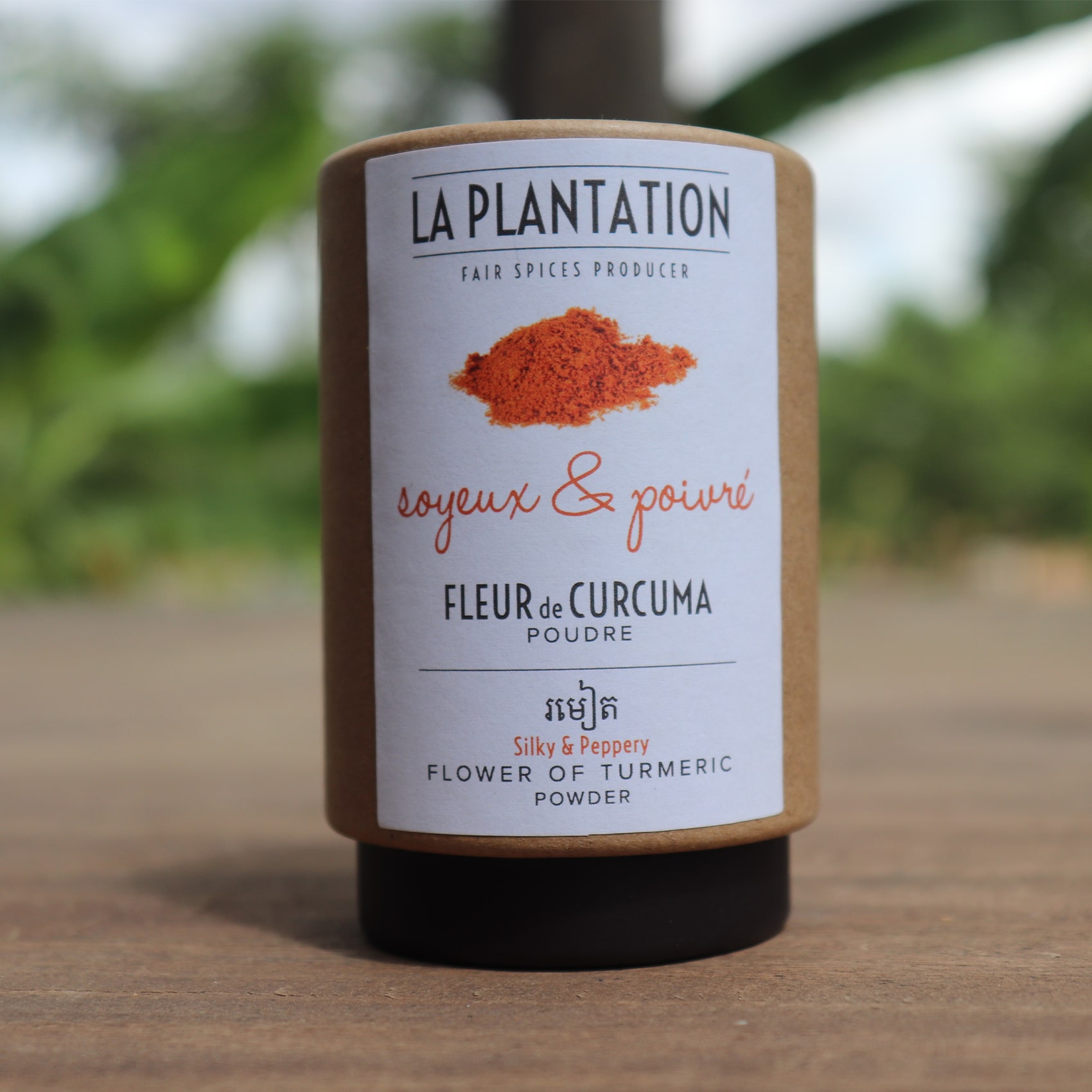
Turmeric is both a spice and a natural colourant. Its active compound called Curcumin is fat-soluble by nature: without a fat to carry it, it remains largely inactive in the mouth. In butter, it is released fully and tints the fat with an immediately striking golden yellow. One detail worth knowing: always pair turmeric with a pinch of black pepper, indeed the piperine in pepper significantly enhances the absorption of curcumin.
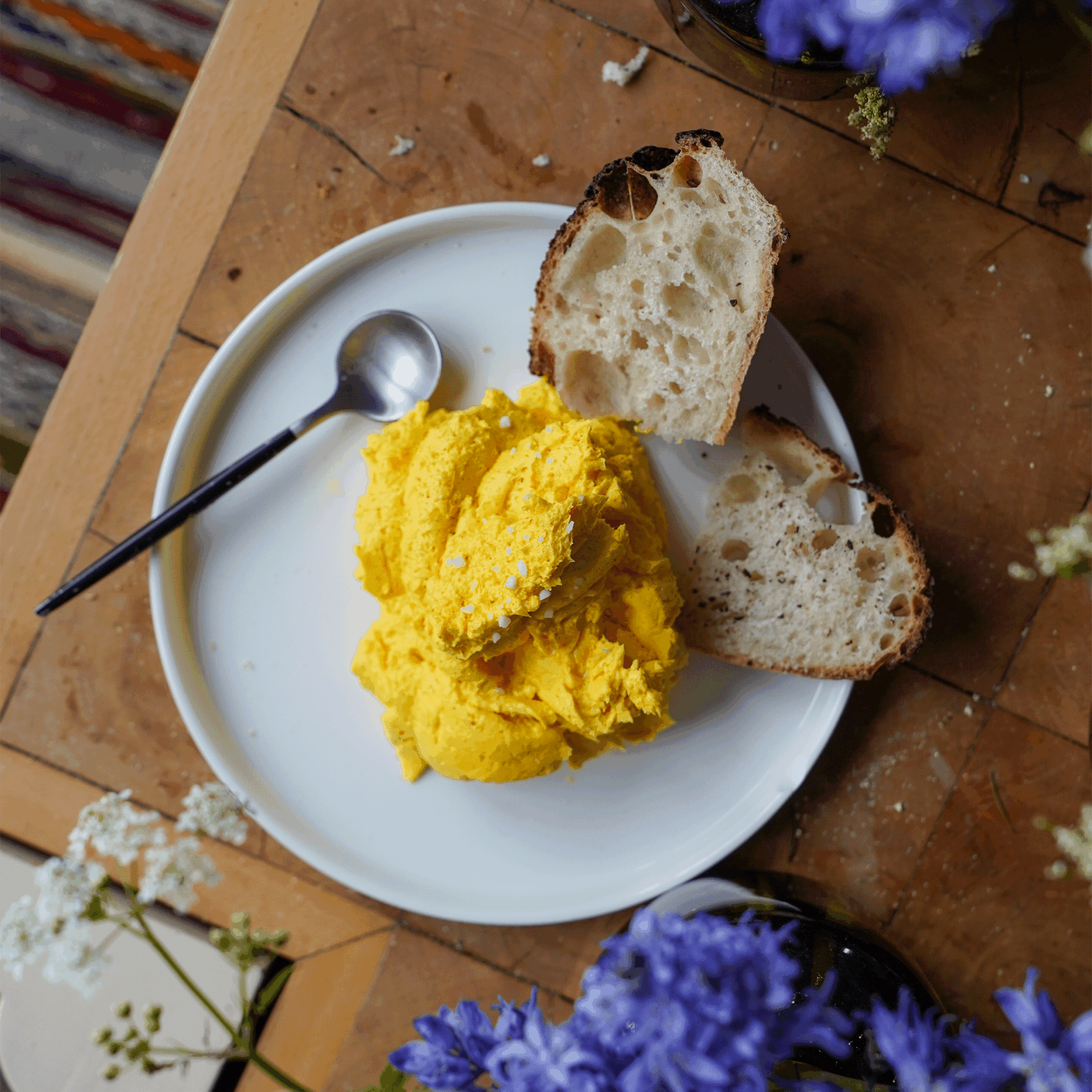
To make turmeric-flavoured whipped butter, simply mix a knob of butter with milk and 1 teaspoon of turmeric powder for every 100 g of butter.

Smoked paprika transforms butter into a cooking condiment. Its carotenoid pigments and smoky molecules dissolve perfectly in fat and colour ingredients from the very first seconds of heat. The effect is as much visual as gustatory: a brilliant red-orange tint that is immediately appetising.
Recommended uses: roast poultry, pan-fried prawns, steamed potatoes, risotto.
Dosage: 1 teaspoon of smoked paprika per 100g of butter.
Zaatar is one of the spice blends that pairs best with butter. The toasted sesame and herbs in the blend, which includes thyme, sumac, oregano, it infuse progressively into the fat, creating a complex and persistent condiment.
This pairing has gained significant recognition in artisanal butter-making circles with Maison Bordier: proof that the world of high-end butter is paying close attention to spice.
Recommended uses: warm pitta bread, poultry, grilled halloumi, roasted Mediterranean vegetables.
Dosage: 1½ teaspoons of zaatar per 100g of unsalted butter.
Butter and mustard form one of the most classic pairings in French cooking. Incorporated into softened butter, mustard brings acidity, relief, and a lightly granular texture when using a wholegrain version. The result is a complete condiment, both creamy and characterful.
Wholegrain red curry mustard works particularly well in this role: the grains bring crunch and a progressive warmth, the red curry brings an aromatic depth that turns the butter into an exceptional condiment. On red meat, roast chicken, or simply spread on warm sourdough, it is immediately convincing.
Recommended uses: red meat, poultry, toast, roasted vegetables.
Dosage: 1 teaspoon of wholegrain mustard per 100g of unsalted butter.
Espelette pepper has a distinctive profile: fruity heat, with a flavour closer to sweet pepper than classic chilli. Its capsaicin, present in small quantities, diffuses through the butter without ever being aggressive. The result is not a flash of fire but an enveloping, regular warmth that accompanies the dish rather than dominating it.
Recommended uses: scrambled eggs, grilled corn, shellfish, Basque-style chicken, and even a chocolate ganache for a sweet-savoury version.

The 4 Functions of butter alongside spices
Beyond the choice of spice itself, butter plays an active role that varies according to what it is paired with. Understanding these four functions helps in choosing the right spice for the desired effect, rather than choosing at random.
Some spices have an assertive character that expresses itself immediately on contact with butter which simply carries and projects that flavour, without transforming it.
Black pepper or Kampot pepper releases its woody, pungent notes the moment it melts over a grilled meat: the most direct and oldest pairing in this category. Wild garlic brings a fresh, vegetal garlic note (softer than classic garlic) that integrates without ever assaulting the palate.
Curry, already complex in itself, transforms butter into a complete condiment with warmth, sweetness, and depth expressing themselves simultaneously.
These butters are used as a finishing touch, over hot meats, fish, or vegetables: it is the heat of the dish that triggers the final release of the aromas.
Other spices are too vivid or too marked to be used alone but butter softens their edge and gives them roundness. Espelette pepper, whose gentle heat becomes enveloping and persistent once incorporated into salted butter, illustrates this role clearly: ideal on scrambled eggs, grilled corn, or poultry.
Ginger powder, whose citrusy, peppery liveliness can quickly dominate a delicate dish, rounds in contact with butter to create a condiment of real refinement, perfect for fish or steamed vegetables. Cumin often perceived as too earthy or too marked in direct use, which gains elegance and depth once incorporated into a compound butter.
These butters are particularly suited to gentle cooking and ingredients with a naturally discreet flavour.
Some spices play a dual role (aromatic and visual) that butter amplifies and projects. Turmeric tints butter a spectacular golden yellow while giving it a soft warmth: a plain rice, mashed potato, or steamed fish is transformed by it, as much on the plate as in the mouth.
Smoked paprika causes butter to absorb its red-orange pigments and ember-like notes, gives an effect that is particularly effective on roast poultry or pan-fried prawns.
Saffron, first infused in a teaspoon of hot water before being incorporated, gives butter a golden tint and a floral aroma that nothing else can match: it is arguably the most precious of all colouring butters, worth saving for occasions that merit it.
These butters also function as presentation tools: they literally change the appearance of a dish before they change the taste.
For those who are lactose-intolerant or eating plant-based, the same fat-solubility principle applies — provided the fat is dense enough to fix the aromas. Cashew butter, unctuous and lightly sweet, welcomes warm spices like cinnamon, cardamom, or turmeric very well: it works equally on toast and on roasted vegetables. Solidified coconut oil with a texture close to classic butter, neutral or lightly sweet depending on the variety which holds tropical spices like curry, ginger, or turmeric particularly well.
The rule remains the same as for traditional butter: spices are always incorporated into the fat at room temperature, never into melted fat.
How to make a homemade flavoured butter?
Five steps from softened butter to a cylinder ready to slice.
Take the butter out 1 to 2 hours in advance and leave at room temperature. It should be pliable, not melted.
Toast seed spices (cumin, coriander, whole pepper) if you wish. 30 seconds dry in a hot pan is enough to double their aromatic power. Powdered spices do not need this step.
Incorporate the spices in precise quantities and mix vigorously until the preparation is completely uniform.
Form a cylinder: spread the butter over cling film, roll into a cylinder, and twist the ends firmly closed. This shape allows you to cut precise rounds as needed.
Refrigerate for a minimum of 2 hours: ideally overnight: the aromas continue to saturate the fat as it rests in the cold.
| Spice | Dosage per 100g of butter | Recommended format | Ideal use |
|---|---|---|---|
| Kampot pepper | 1 tsp | Freshly ground | Finishing touch on a hot dish |
| Wild garlic | 1 tsp (rehydrated freeze-dried) | Freeze-dried or fresh, finely chopped | Meat, vegetables, toast |
| Turmeric | 1 tsp + pinch of pepper | Powder | Rice, mash, fish |
| Smoked paprika | 1 tsp | Powder | Poultry, prawns, roasted dishes |
| Zaatar | 1½ tsp | Powder blend | Bread, poultry, vegetables |
| Espelette pepper | ½ tsp | Powder | Eggs, corn, shellfish |
| Curry | 1 to 2 tsp | Powder | Rice, poultry, vegetables |
| Young ginger | ½ tsp | Powder | Fish, steamed vegetables |

Useful questions about flavoured butter
A butter made with dried spices keeps for up to three weeks in the refrigerator in tightly wrapped cling film. With fresh herbs, consume within 5 to 7 days. A flavoured butter freezes very well for up to 3 months — slice directly from frozen into rounds as needed.
Yes. provided the fat is dense enough to fix the aromas. The same principle applies: spices are incorporated into the softened fat at room temperature, then rested in the cold before use.
It depends on the spice and the dish. Salted butter amplifies powerful spices like pepper, chilli, or curry — the salt creates a contrast that reinforces their impact. Unsalted butter gives more space to delicate spices like zaatar, ginger, or wild garlic, without competing with them.
Very moist spices accelerate rancidity, so avoid wet spice pastes or fresh spices that have not been finely chopped. Whole cinnamon and star anise are difficult to incorporate; use them in powder form only in a compound butter. Very volatile spices like fresh citrus zests fade quickly — add them in a slightly more generous quantity than you would in a classic preparation.


Subscribe to our Newsletter now
Get a free product for your first order!
Donation