Les épices pour les desserts et la pâtisserie : la liste complète à connaître
Product
-
07.11.25
Suggestions
Spices for Jams and marmelade: Which ones to choose?
Sommaire
A homemade jam without spice is already good. With the right spice, it becomes memorable. It is often that small difference that separates a jam you finish absent-mindedly from one you reach for first.
Spices do not mask the fruit, they create contrasts, add levels of aromatic reading, and build complexity that sugar alone simply cannot provide. This guide explains which spices to pair with which fruits, when to add them during cooking, and how to dose them without throwing the result off balance.
Why Add Spices to a Homemade Jam?
Sugar and long cooking unify the flavours of a jam: they smooth out the rough edges of the fruit and even out its taste. This is precisely where a spice makes a difference. It reintroduces relief where cooking has removed it, and creates several layers of reading in a single spoonful — a first fruity impression, then a secondary note (woody, floral, spiced) that extends the experience.
This mechanism rests on the encounter between two families of aromatic compounds. Fruits develop their aromas from volatile compounds which is responsible for the fruity and floral notes perceived on the nose. Spices bring a different family of molecules: the essential oils of cinnamon (eugenol, cinnamaldehyde) or the piperine in pepper, for example.
When combined during cooking, these two molecular worlds do not simply layer on top of each other, they create new sensory associations that are entirely absent from the fruit alone.
The most striking example is strawberry: A plain strawberry jam offers a fruity, sweet, relatively linear taste. The same jam made with red long pepper changes register entirely: the initial fruitiness remains identical, but a woody, lightly spiced note appears at the finish, almost like a second flavour that reveals itself after the first.
Each spice family acts on a different flavour axis and this diversity allows you to fine-tune the profile of a jam with precision.
Warm spices such as cinnamon and ginger above all, create a thermal contrast perceived in the mouth. This contrast reduces the sensation of sweetness heaviness typical of very concentrated jams, particularly on fruits with high natural sugar content like figs or ripe apricots.
Floral spices like cardamom and star anise act on perceived lightness. They add neither sugar nor acidity, but they lighten the overall sensation of the fruit on the palate. This effect is particularly useful on dense fruits like peach or very ripe red berries.
Peppery spices (pepper in particular) play a different role: they give character to the most neutral fruits. On a fruit with low aromatic impact, a touch of pepper creates a point of tension that structures the whole and prevents the “flat jam” effect.
Which Spices for Which Jam? A Guide by Fruit
Apricot Jam
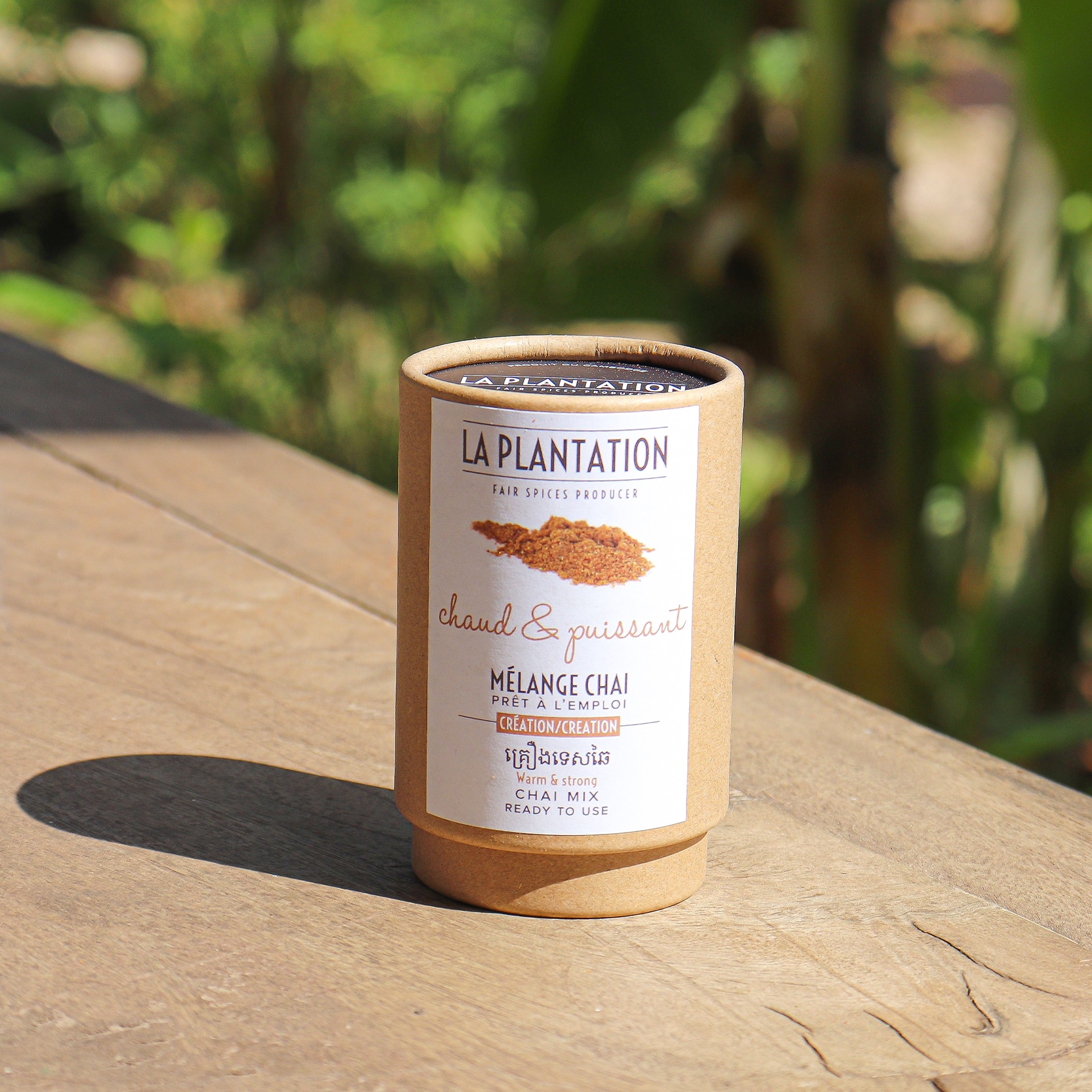
Apricot has a natural acidity and a dense flesh that holds up well to warm spices. Cinnamon is the foundational pairing: its gentle warmth and woody note highlight the sweetness of the apricot without overpowering it. A chai blend also works very well, bringing the complexity of several warm spices in a single addition.
Indicative dosage: 1 to 2 teaspoons of cinnamon or chai powder per 1 kg of fruit as a starting point.
Plum Jam
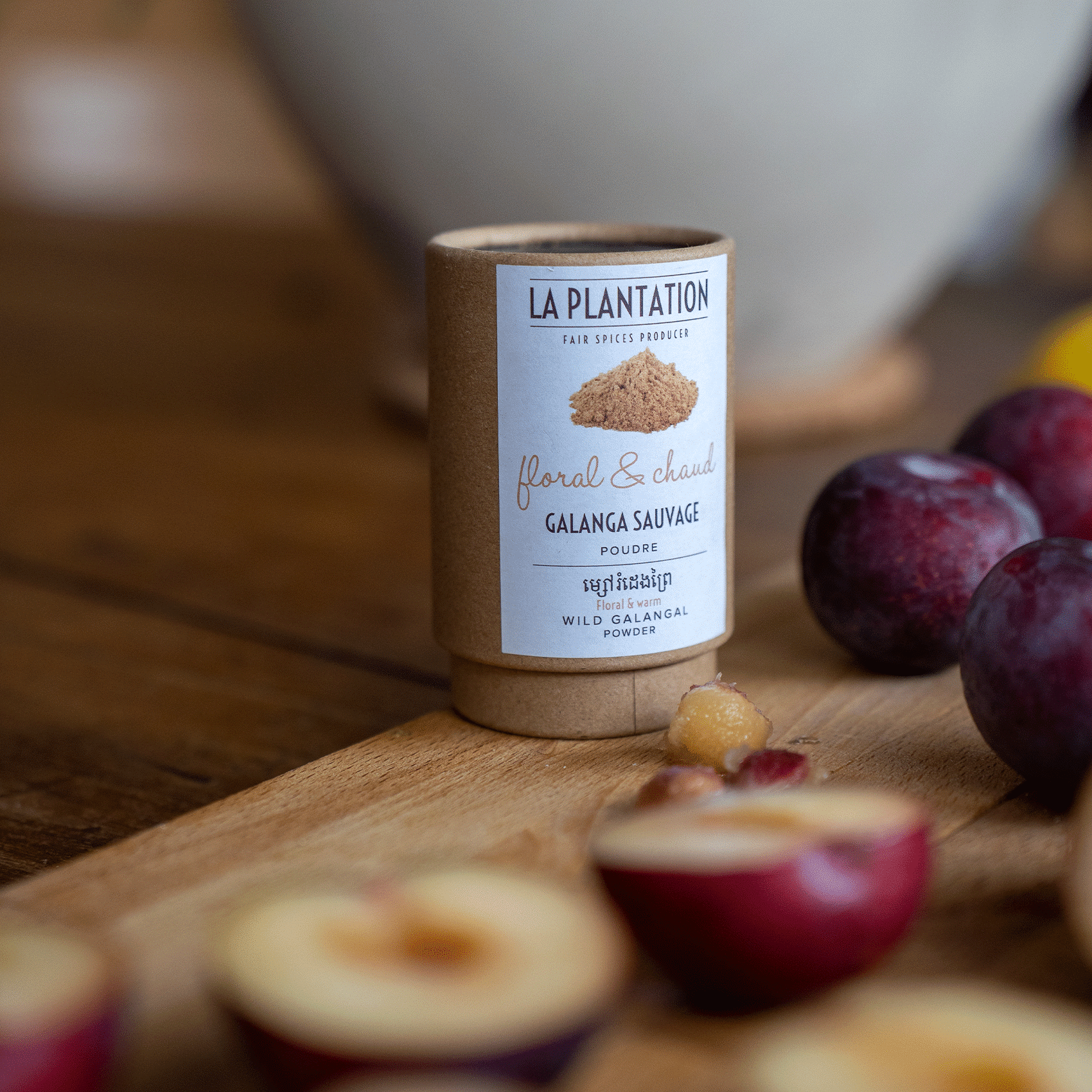
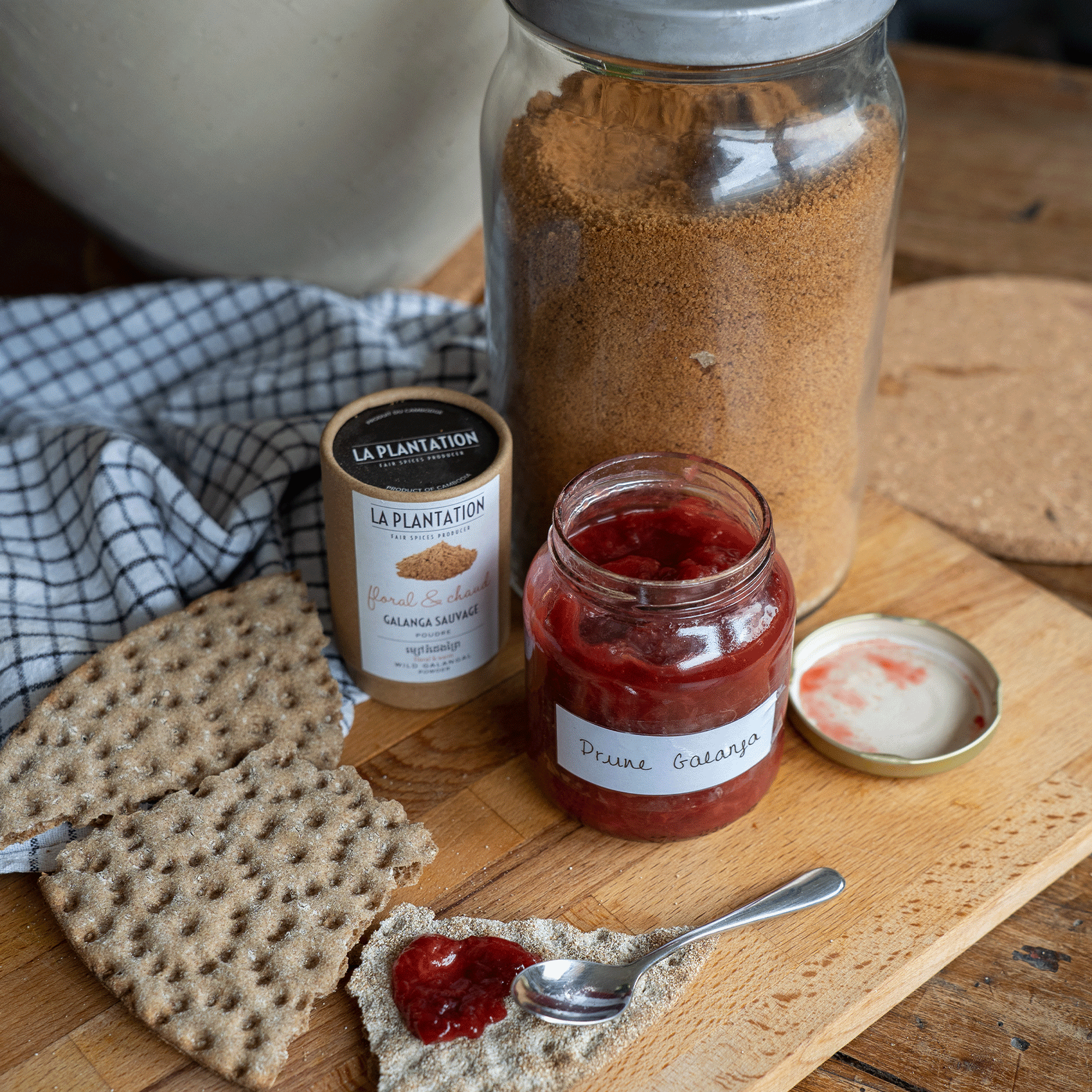
The acidity of plums pairs very well with roots such as galangal or ginger which bring strength and character to the preparation.
Indicative dosage: 1 to 2 teaspoons of galangal or ginger powder per 1 kg of fruit, then adjust to taste once the jam has cooled.
Red Berry and Wild Berry Jam
Red and wild berries, redcurrants, blackberries, raspberries, blueberries — have a slight natural bitterness and wild, savoury notes that support strong-flavoured spices.
Star anise is the most successful pairing for this fruit family: its liquorice note extends the wild, woody side of the berries. A chai blend brings complex depth, particularly effective with blueberries.
Indicative dosage: 1 to 2 whole star anise per 1 kg of fruit, to adjust to taste.
Peach Jam
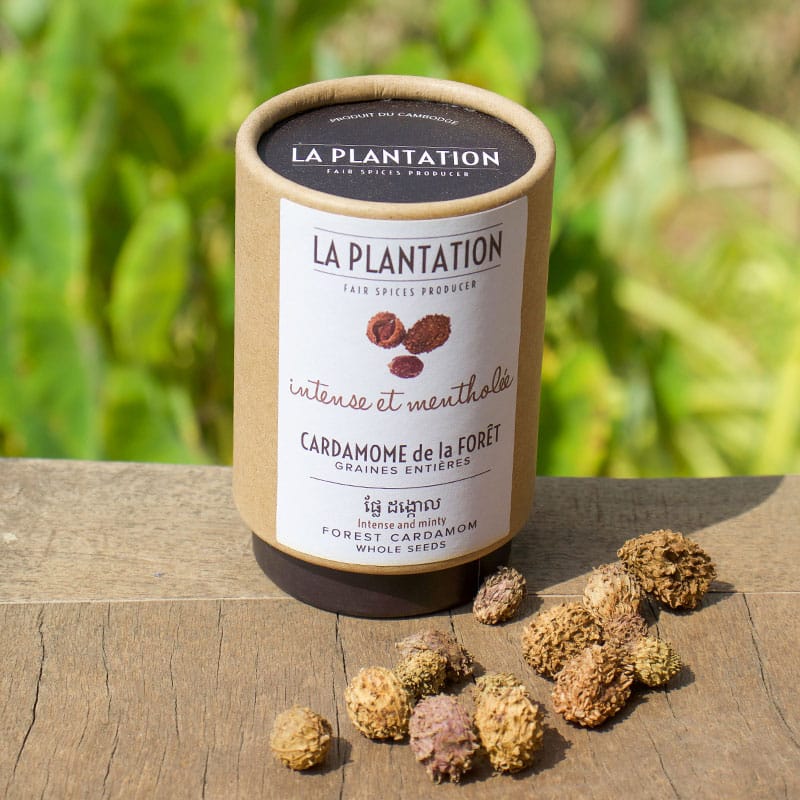
Peach is soft and low in acidity — it calls for gentle spices that accompany rather than dominate. Cardamom is the most precise pairing: its floral, lightly citrusy, and slightly mentholated notes reveal the fruitiness of the peach in a very elegant way.
Indicative dosage: 3 whole cardamom pods per 1 kg of fruit.
Strawberry Jam
Strawberry calls for spices that reinforce its fruity character without crushing it. Red long pepper is the reference pairing: added whole from the start of cooking, it infuses slowly and develops woody, lightly sweet notes that reveal the fruitiness of the strawberry in a spectacular way.
Indicative dosage: 2 to 3 whole long peppers per 1 kg of fruit.
Fig Jam
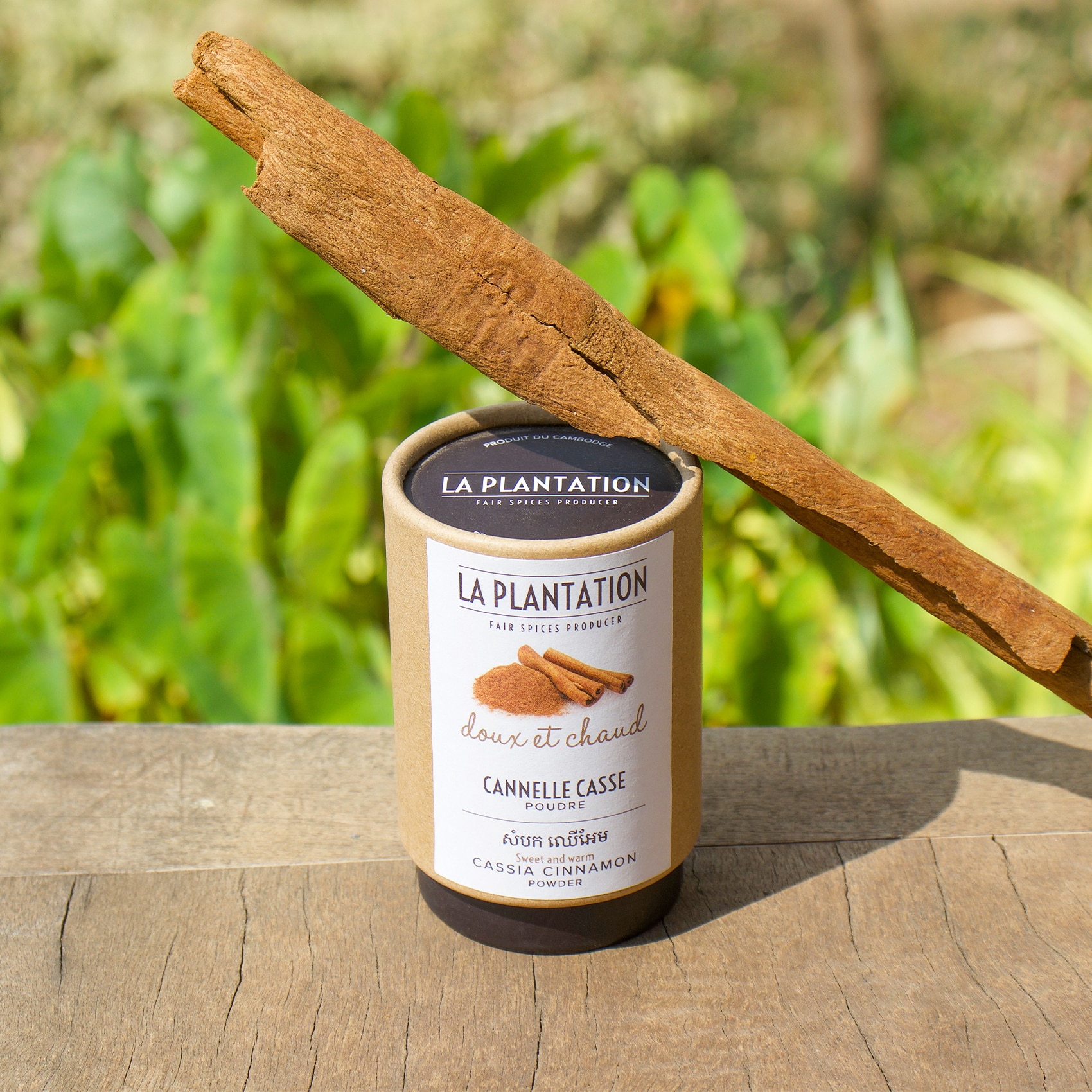
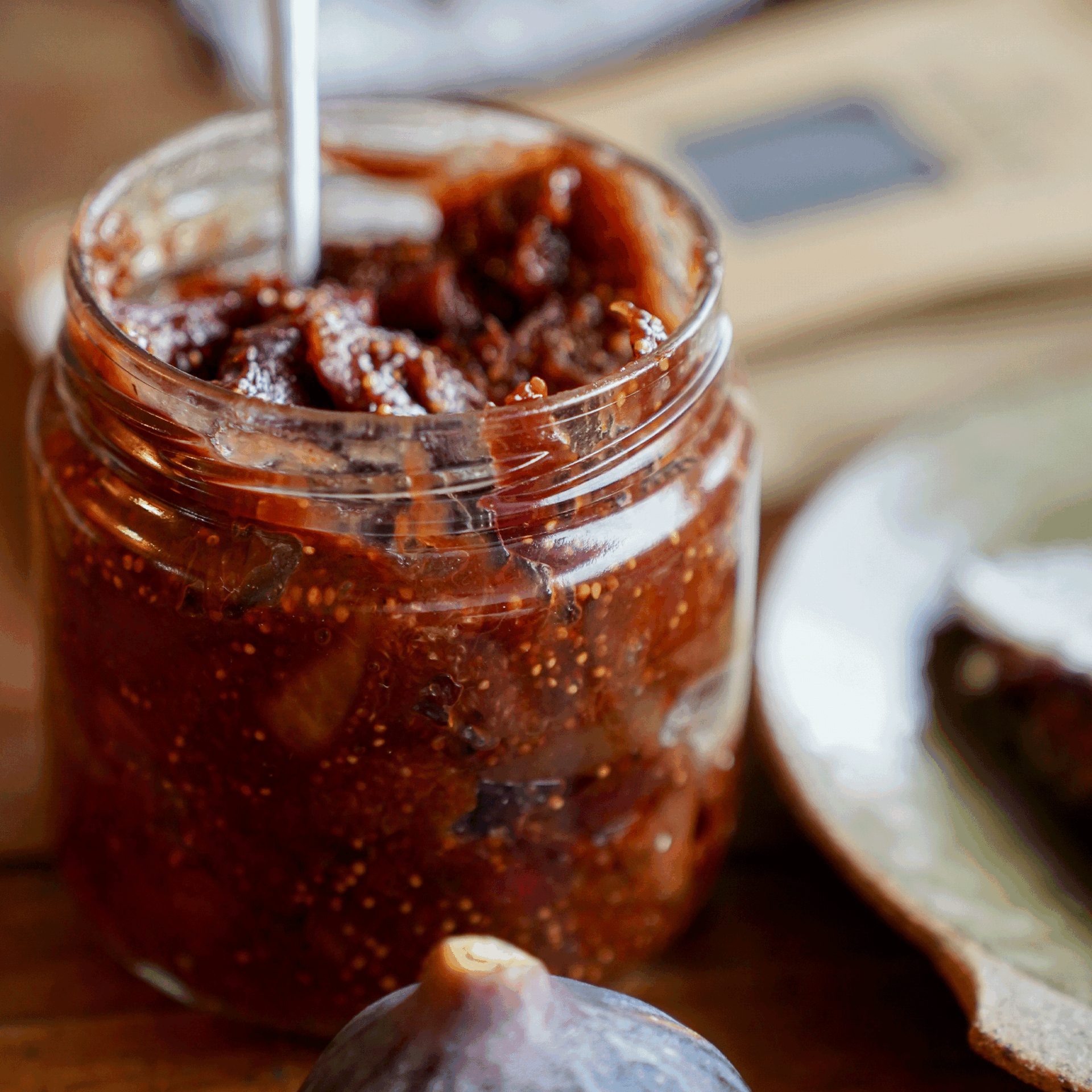
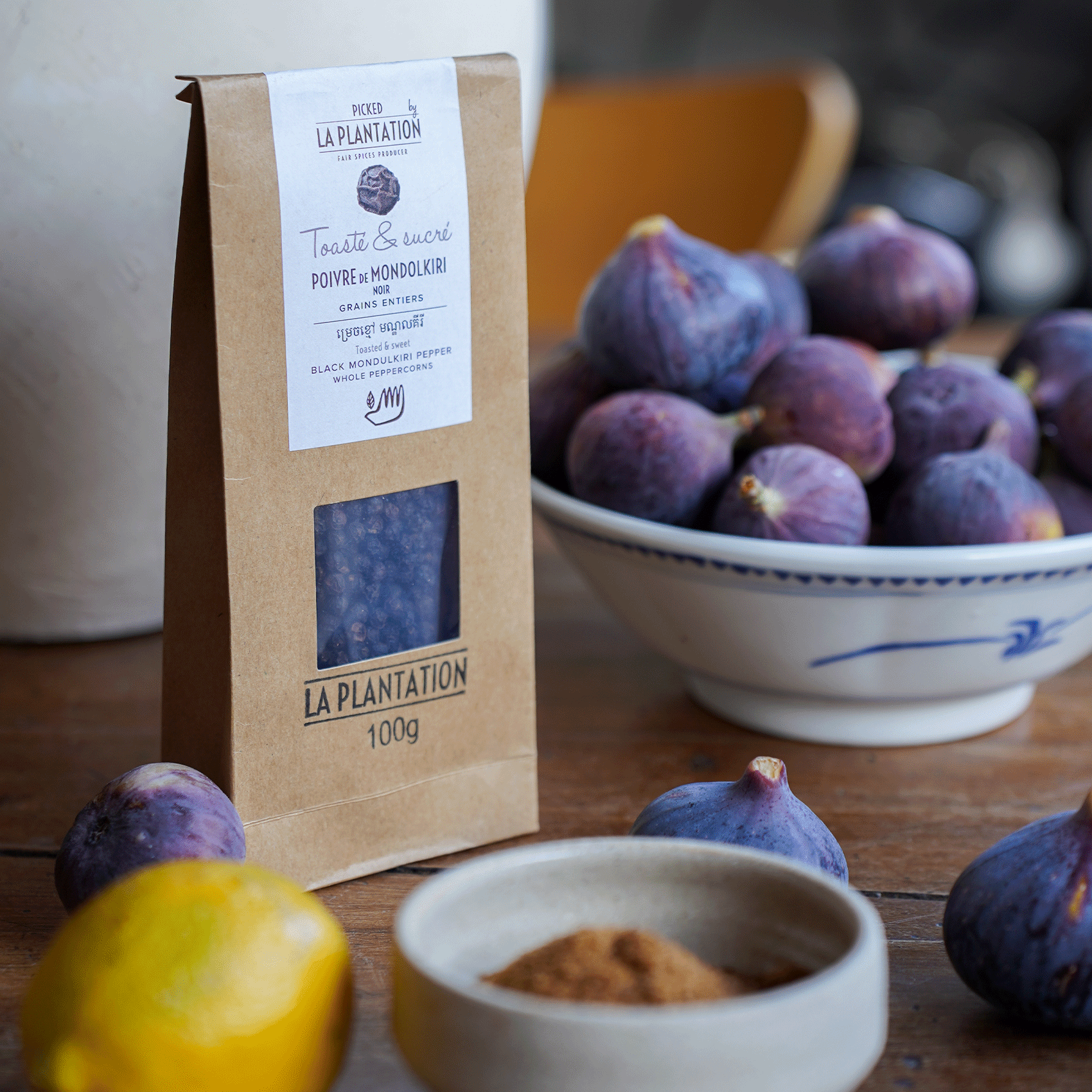
Figs have a dense sweetness and a naturally candied texture that calls for warm, deep spices. Cinnamon is the base pairing: a few pieces of bark from the start of cooking, or half a teaspoon of powder added mid-cooking. For a more surprising result, Mondolkiri black pepper brings a woody depth that works beautifully with the intense sweetness of fig.
Indicative dosage: a few pieces of cinnamon bark, or 1 to 2 teaspoons of powder, per 1 kg of fruit.
When to Add Spices to a Jam?
The moment of addition determines the result as much as the choice of spice itself. The same spice, added at a different stage of cooking, gives a different aromatic result. Three windows exist — each suited to a specific format of spice: whole, powdered, or freshly ground.
Whole Spices: from the Start of Cooking
Whole spices go in at the start, at the same time as the fruit. This is the case for star anise, cardamom pods, cinnamon sticks, and vanilla pods. The progressive heat of cooking — generally 45 minutes to 1 hour for a classic jam — slowly extracts their essential oils and allows a deep, even infusion.
The result is a blended, well-integrated aroma with no isolated dominant note. These spices are removed before jarring, unless left in the pot as a decorative element — an aesthetic choice that does not affect the final flavour.
Powdered Spices: Mid-Cooking
Spice powders go in mid-cooking, once the fruit has released its juice. This is the case for ground cinnamon, ginger, turmeric, or a chai blend. This intermediate timing responds to a precise constraint: added too early, the powder risks burning on contact with the hot base of the pan and developing a bitter note; added too late, it does not have time to dissolve fully and can leave grains in the finished jam.
After each addition, mix thoroughly and taste, to adjust the dosage with full knowledge of where the flavour sits.
Pepper and Delicate Spices: at the Very End
Freshly ground pepper, citrus zests, and fresh herbs share one characteristic: their aromas depend on volatile compounds that degrade quickly at high temperature. Prolonged exposure to heat makes them simply disappear. The addition window is limited to the last five minutes of cooking — ideally once the heat has been turned off — to preserve their freshness through to the tasting.
How to Dose Spices in a Jam?
The rule is simple: always taste and adjust. Spices concentrate during cooking is what seems discreet when raw can become dominant once the jam has reduced. Add a small quantity, taste, adjust. And always taste cold before finalising: spices are more pronounced cold than hot.
During cooking, the water in the fruit evaporates progressively, reducing the total volume of the preparation, sometimes by 30 to 40% between the start and the end. The aromas of the spices do not evaporate in the same proportions: they concentrate mechanically as the volume decreases. A pinch of spice that seemed discreet at the start of cooking can become noticeably more present once the jam has reduced and cooled.
The second factor to understand is the cold perception effect. Temperature alters the sensitivity of taste and smell receptors: a jam tasted hot, straight from the pan, will consistently seem less spiced than the same jam once it has cooled. Tasting only hot almost always leads to over-dosing with a final result that is too pronounced once the jar is opened weeks later.
Always taste cold, on a small sample cooled quickly, before validating the recipe for the full batch.
Indicative Dosages per 1 kg of Fruit
| Spice | Whole format | Powder format |
|---|---|---|
| Cinnamon | A few pieces of bark | ½ tsp |
| Cardamom | 3 to 5 pods | ¼ tsp |
| Ginger | — | ½ tsp |
| Star anise | 1 to 2 stars | — |
| Kampot pepper | — | 3 to 5 turns of the mill |
| Chai blend | — | ½ to 1 tsp |
| Turmeric | — | ¼ tsp |
These quantities are a starting point, not a fixed limit. They vary according to the ripeness of the fruit, its natural sugar content, and the chosen cooking time. A very ripe fruit and sweeter generally supports a slightly higher dose of spice without losing balance.
FAQ
Do spices change the shelf life of a jam?
No, in a well-sugared modern jam correctly sealed in sterilised jars, spices have no significant impact on shelf life, which depends above all on the sugar content and the sterilisation of the jars. Some spices (cinnamon, cloves, cardamom) possess mild antimicrobial properties, but at the quantities used in jam they do not replace good jarring technique. Historically, in contexts where sugar was scarce and sterilisation methods were empirical, spices formed part of a broader set of preservation practices — but in a modern context, their role is purely aromatic.
Can you use whole spices, or do they need to be ground?
Both work but not at the same moment. Whole spices infuse slowly throughout the cooking and give a more blended, integrated aroma. Powdered spices integrate faster and produce a more present, immediate flavour. For an intermediate result: crush roughly in a mortar before adding mid-cooking.
Do the same spices work in a fruit compote?
Yes and the same rules apply. The only difference is that a compote contains less sugar, which makes spices slightly more perceptible. Reduce the dosages by approximately one third and adjust after tasting. Ginger and cardamom are particularly effective in compotes, where their aromatic freshness comes through better than in a heavily sweetened jam.


Subscribe to our Newsletter now
Get a free product for your first order!
Donation