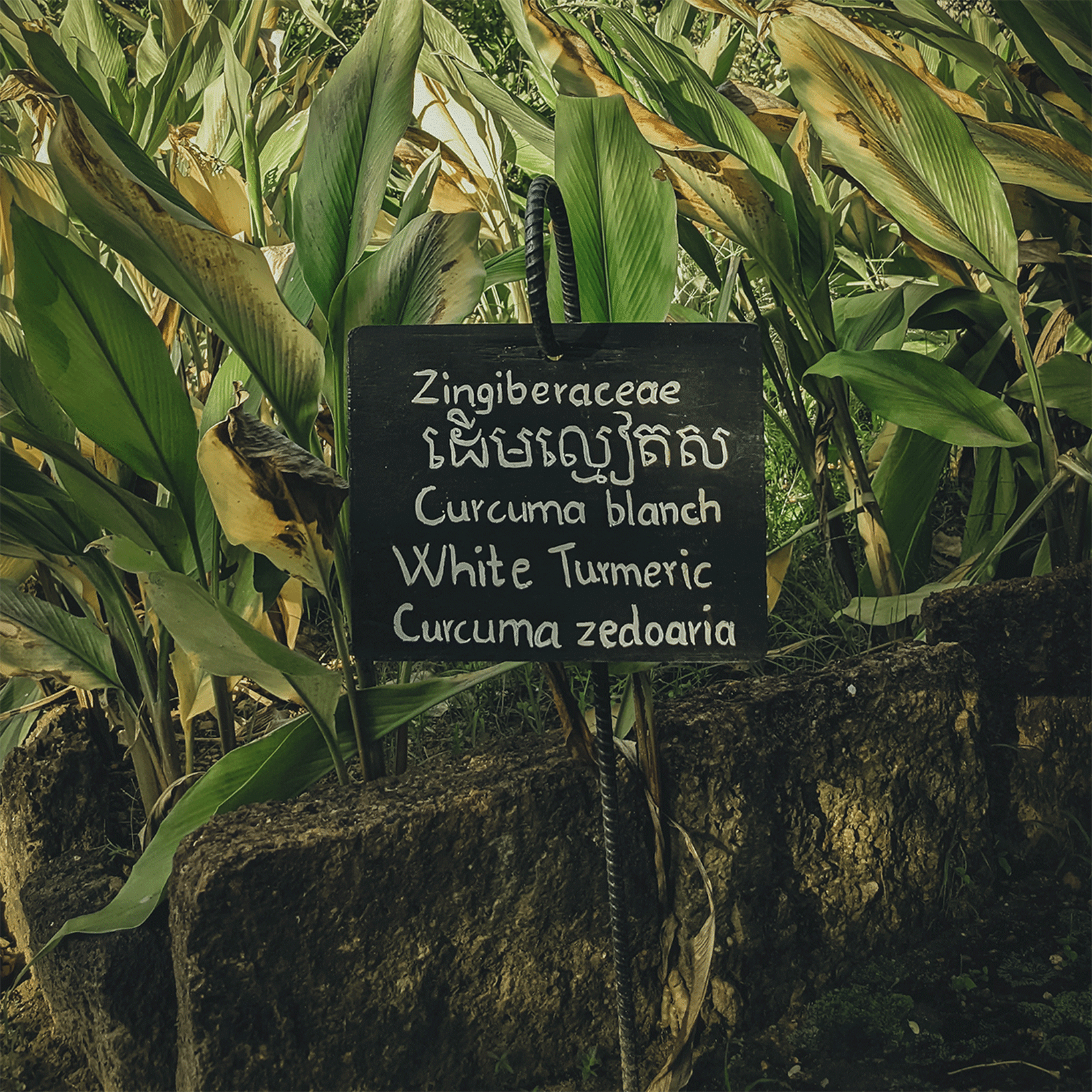
White Turmeric: The Spice of the moment
Product
-
28.11.25
Suggestions
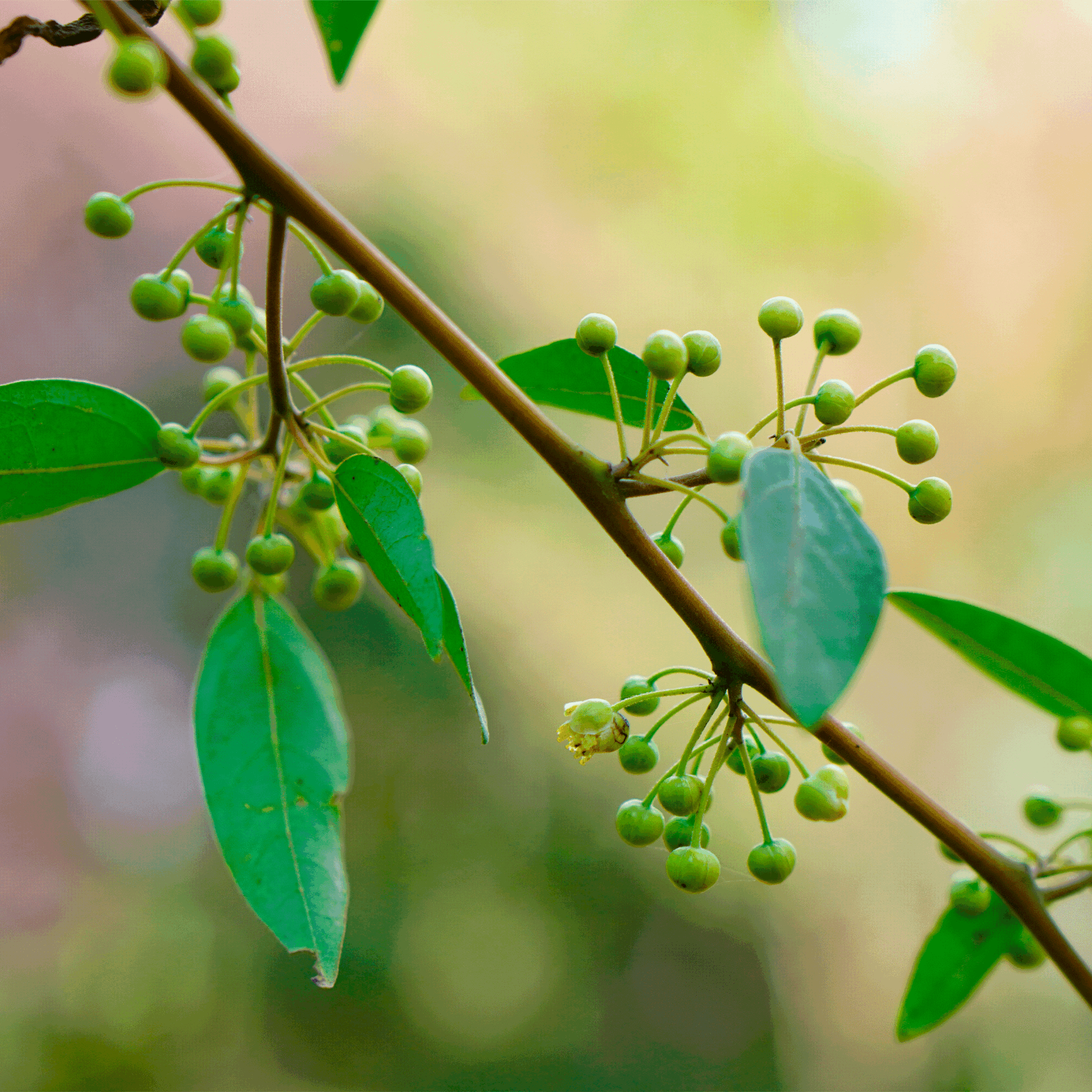
Which spices are considered “rare” and how to use them ?
Sommaire
Key takeways:
|
Saying that a spice is “rare” actually covers three distinct situations. Supermarket shelves give the impression that everything is available everywhere, but certain spices remain rare in the strict sense for one of these reasons:
Very low production, of which saffron is the typical example. A terroir impossible to replicate, such as Kampot pepper, protected by a PGI, which can only be grown in the province of Kampot, in Cambodia, where the soil and climate determine its flavor profile. An unfamiliarity with Western markets, with certain spices being produced in actual quantities in their region of origin, but remaining absent or marginal in European distribution channels, such as long pepper or Nepalese Timut pepper.
This guide starts by clarifying what “rare” really means, before exploring the spices that deserve the label. At La Plantation, a direct producer in Cambodia, we work every day with several of these rare spices. What we share here comes from that field experience.
What is a rare spice? The 3 Criteria
A rare spice can be distinguished by 3 criteria: low global production, demanding or strictly regulated cultivation or harvesting conditions, and scarcity on the European market, which can consequently impact the spice’s price.
Some spices are rare by nature, because the plant yields very little or because the harvest is extremely labour-intensive. Saffron is the best-documented example: it takes around 150,000 Crocus sativus flowers to produce 1 kg of stigmas, and each flower holds only 3 stigmas, all picked by hand. One hectare of saffron produces only 5 to 6 kg of dried stigmas per year. The high price reflects a real cost of production but not marketing rarity. Among peppers, we can mention Kampot Bird Pepper, whose unique production method yields only very limited quantities.
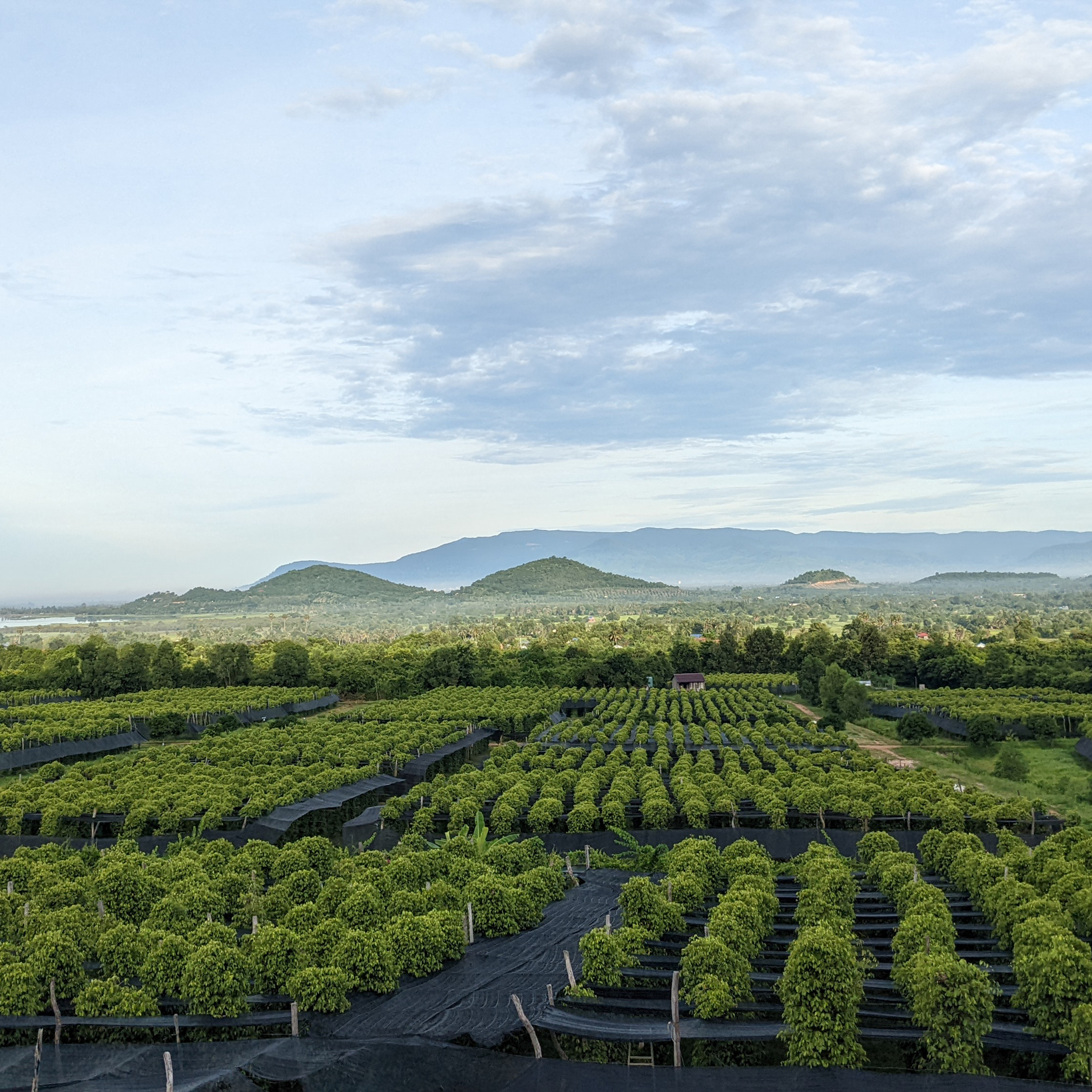
Other spices grow only in a very specific region of the world, under climatic conditions impossible to replicate elsewhere.No other terroir produces the same type of flavor profile as the spice in question. Ratanakiri pepper grows only in the red soil of northeastern Cambodia. Geographical rarity is often protected by a PGI or a protected designation of origin, as is the case for Kampot pepper.
A third category of spices is “rare” in Europe not because it is produced in small quantities, but because it remains unknown to Western markets. In Europe, a spice’s “rarity” can be approximated by its volume in imports. According to statistics compiled by the CBI from Eurostat, chili peppers and paprika accounted for 207,900 metric tons imported in 2024, pepper 112,900 metric tons, while cardamom capped out at 4,200 metric tons, mace at 1,300 metric tons, and saffron at 400 metric tons. This difference of several orders of magnitude illustrates a very uneven distribution, without confusing commercial rarity, agricultural rarity, and cultural rarity.
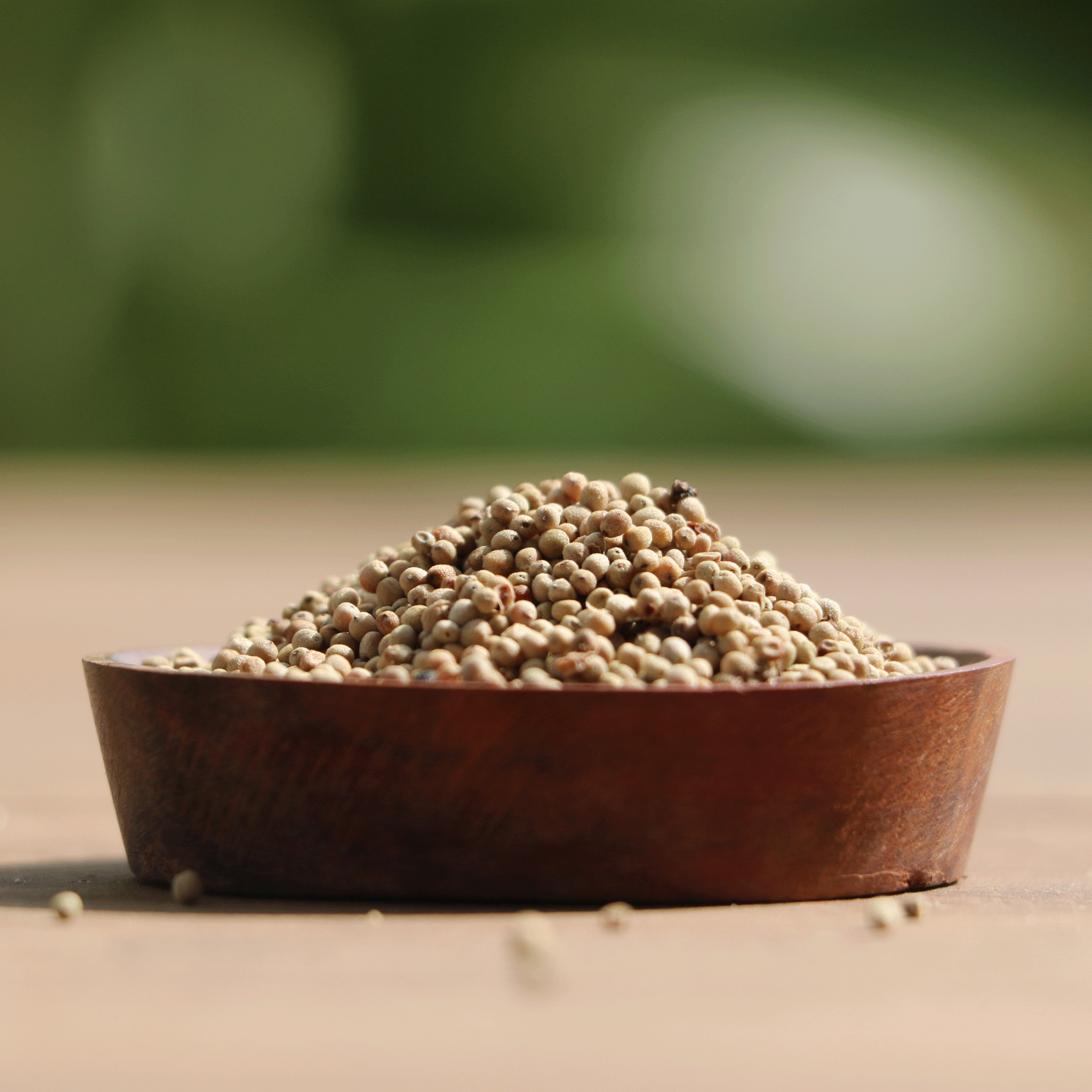
White turmeric, Ma Khen berries, wild cardamom: these spices are grown and eaten in their home regions, but their presence in European shops is still very limited.
| Type of rarity | Mechanism | Examples |
|---|---|---|
| Production rarity | Labour-intensive harvest, very low yield | Saffron, mace, quality vanilla |
| Geographical rarity | Unique terroir that cannot be reproduced | Ratanakiri pepper, Kampot pepper PGI |
| Distribution rarity | Unknown in Europe, common elsewhere | White turmeric, Ma Khen berries, wild galangal |
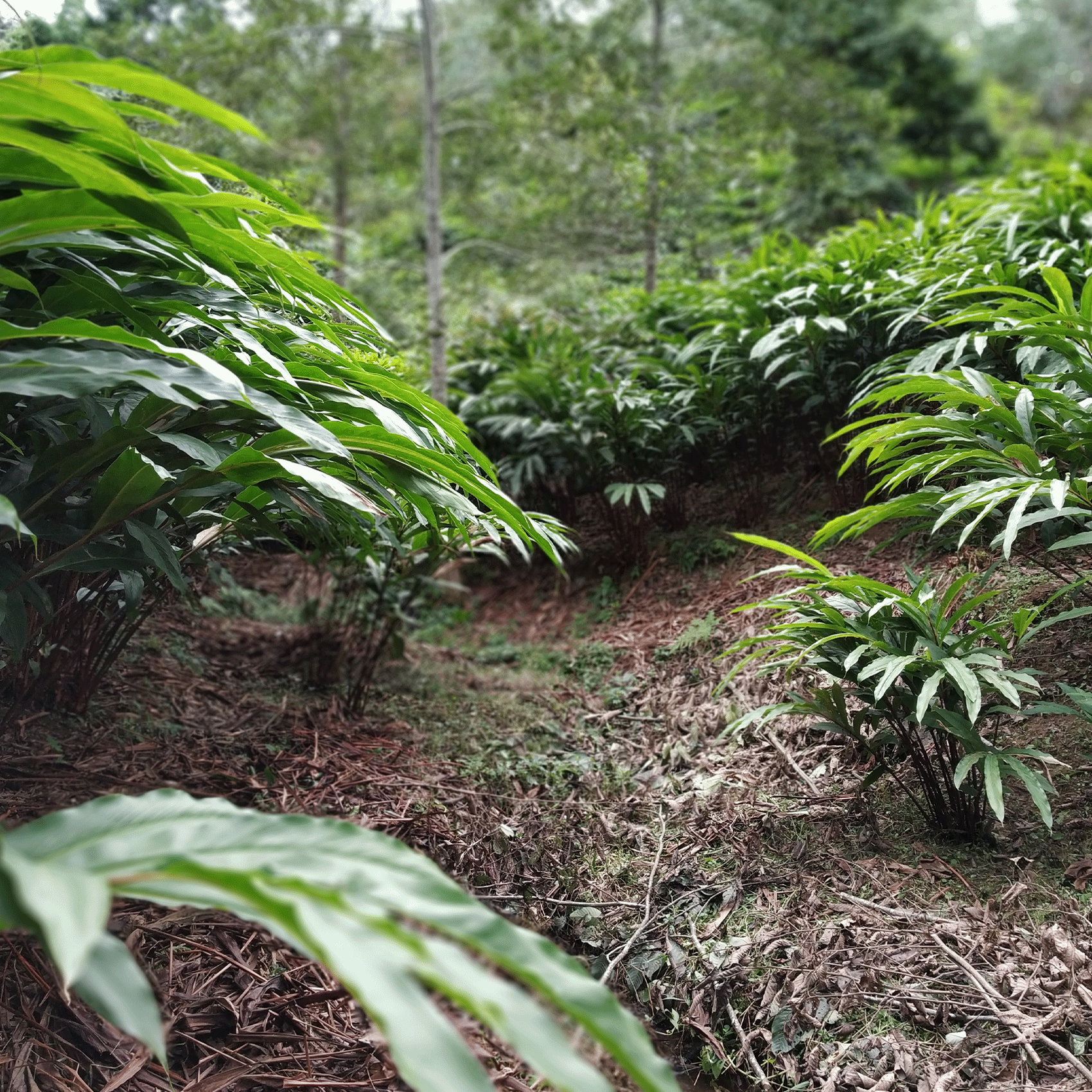
Why are some spices rarer than others?
Most rare spices share one thing: their harvest cannot be mechanised. Saffron stigmas are picked by hand, flower by flower, at dawn before the bloom opens. Ratanakiri peppers are harvested by hand in primary forest, from wild pepper vines that are not grown on plantations. This irreducible human effort explains most of their price and their structural rarity.
Some aromatic plants do not accept intensive farming. They decline or lose their aromatic qualities outside their natural environment. White turmeric grows naturally under forest cover and copes poorly with monoculture. This fragility is a natural form of quality protection: it makes large-scale production impossible without damaging the product.
Some spices have a harvest window of only a few days a year. Red Kampot pepper is harvested at full maturity within a window of 10 to 15 days at most, before the grain turns white. Missing that moment means waiting a whole year. This calendar constraint shapes the entire production and mechanically limits the volumes available.
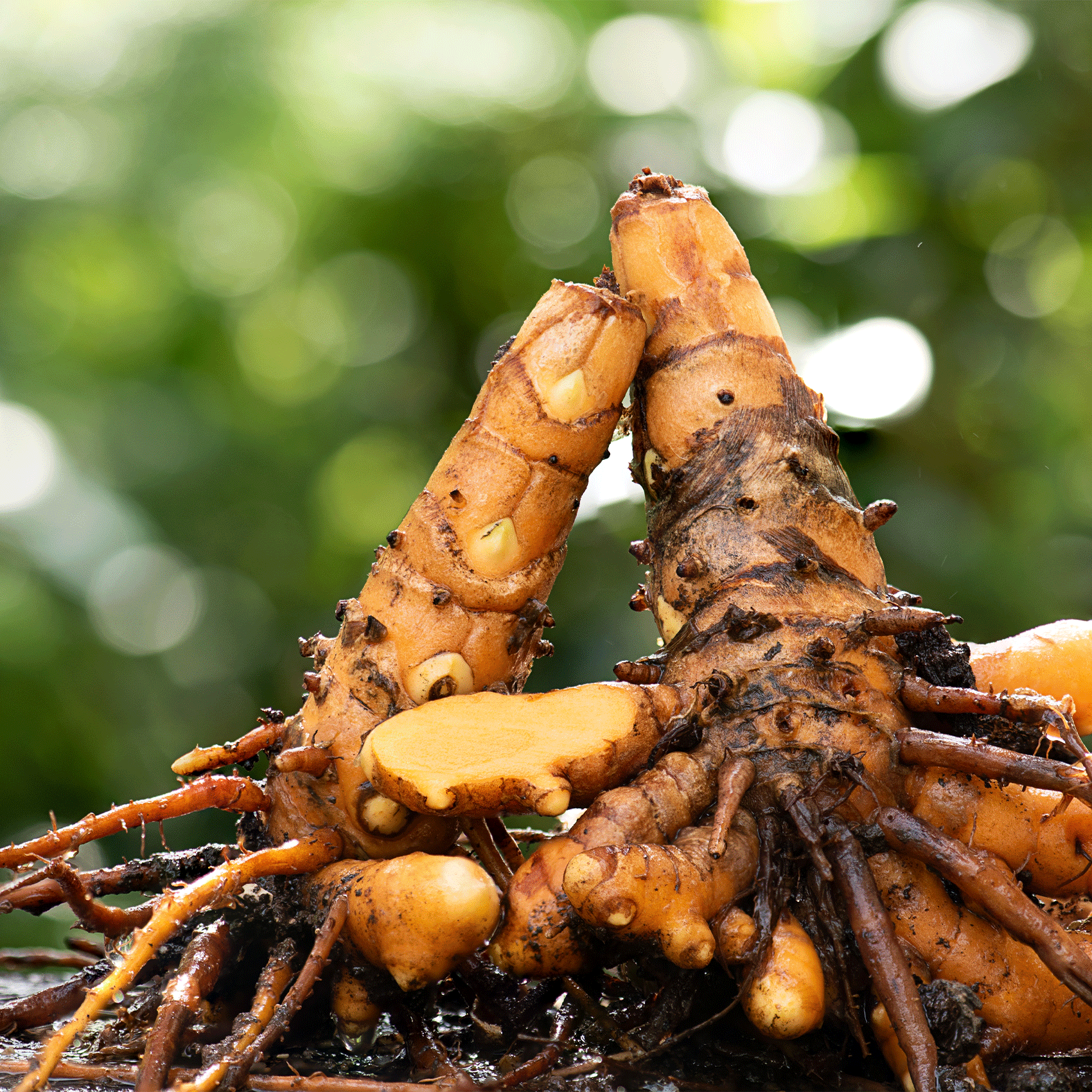
The truly rare spices to know
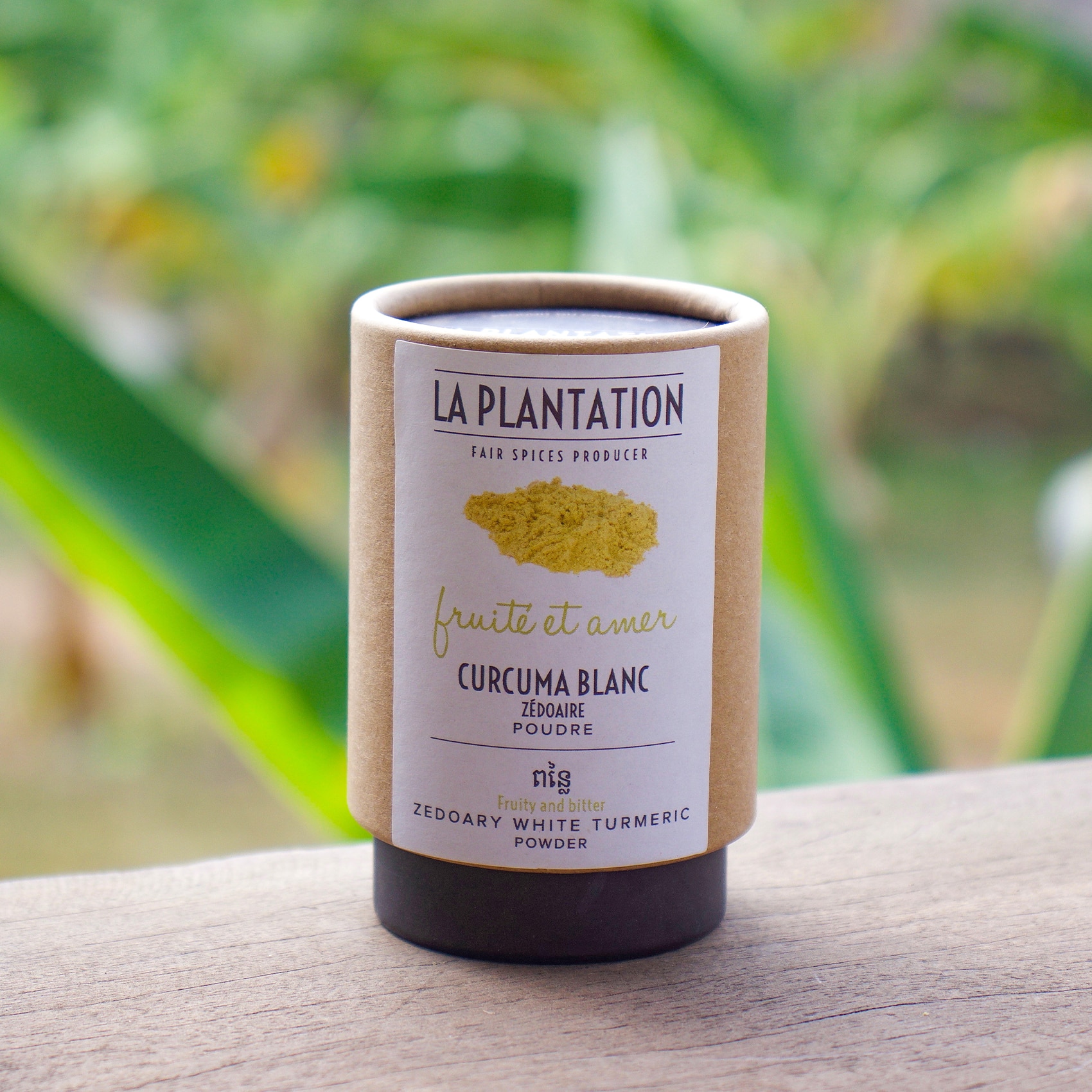
What makes it rare: Curcuma zedoaria is a cousin of yellow turmeric, grown in the forests of South-East Asia and almost absent from the European market. Its aromatic profile is camphor-like, lightly citrusy, and woody which makes it different from yellow turmeric, with which it shares neither the colour nor the colouring properties. It is often harvested in community forests in Cambodia, India, and Indonesia.
In powder form in light curries, Asian broths, and white fish marinades. It is neither a substitute nor an upgraded version of yellow turmeric: it has a distinct flavor profile, to be used for what it is.
What makes these peppers rarer are their unique terroirs, micro-local artisanal production, and manual harvesting in remote areas. Ratanakiri is located over 600 km from Phnom Penh, near the borders of Laos and Vietnam. Kampong Thom and Mondolkiri are forested regions where pepper vines grow under conditions that no intensive plantation can replicate.
Ratanakiri Black Pepper develops raw, intense aromas, with natural smoky notes from the red volcanic soil. Its production remains confidential, limited to a handful of producers.
Kampong Thom Pepper comes in a dehydrated green version (herbaceous and mentholated notes, crunchy texture) or a salt-fermented and smoked version (woody, salty, confit), two profiles that cannot be found elsewhere from this terroir.
Mondolkiri Pepper, still lesser known, grows in the forests of the eastern plateau of Cambodia and develops a wild, vegetal profile distinct from other terroirs.
Ratanakiri Black Pepper as a finish on red meat or with dark chocolate. Kampong Thom Green Pepper on raw fish, carpaccio, or fresh cheese. Kampong Thom Salt-Brined Pepper whole, straight onto the plate — never in a mill.
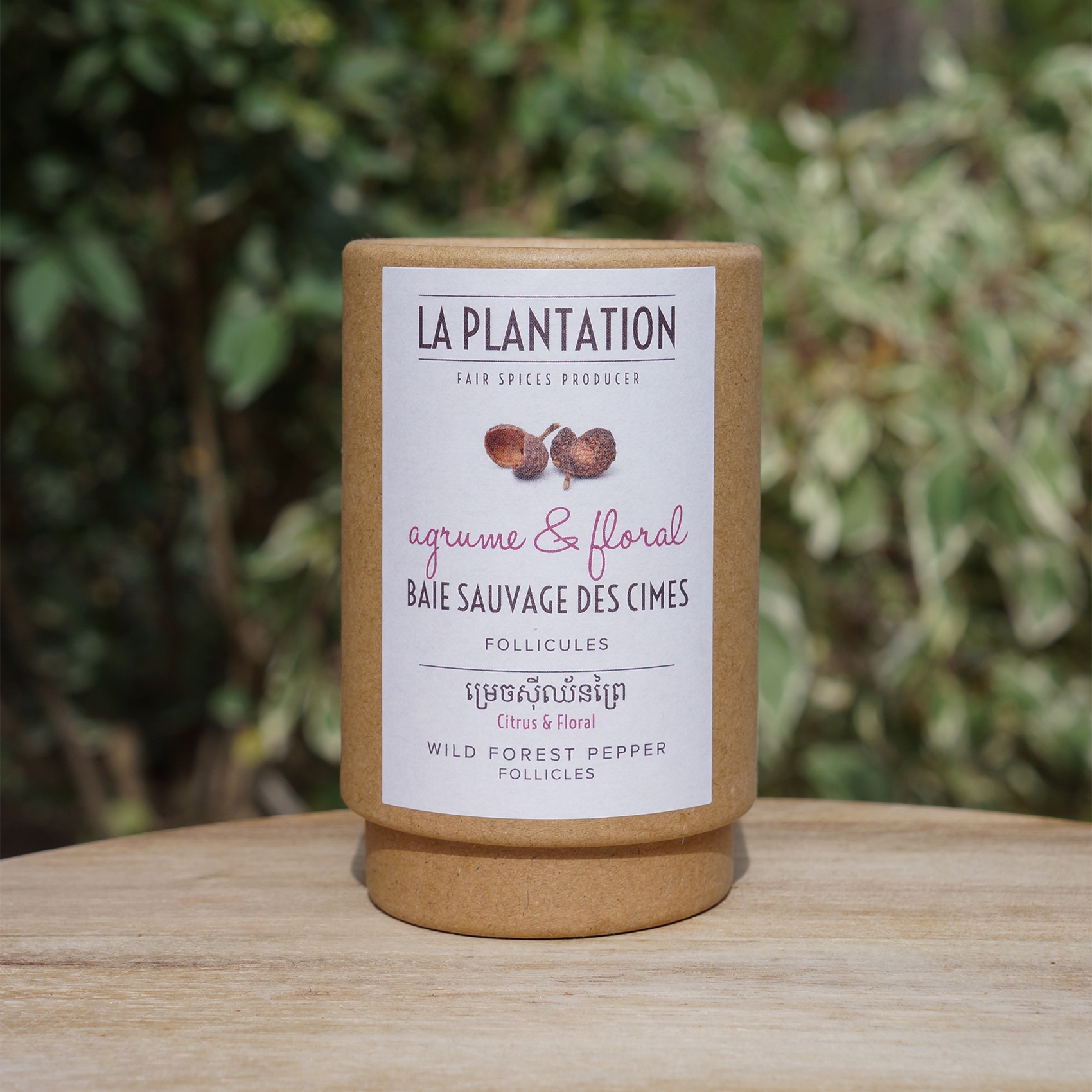
What makes them rare: berries picked by hand in wild forest areas of Vietnam and Cambodia, with no intensive farming at all. Production is limited by the natural availability of the trees, not by a choice of yield.
The Ma Khen berry (also known as baie des Cimes) belongs to the Zanthoxylum family, like Sichuan pepper. It develops a tingling and lightly numbing sensation, with notes of mandarin and cedar. The verbena berry is gentler, citrusy, and not hot, with a unique fresh and herbaceous profile.
Ma Khen pepper as a finishing touch on raw fish, in a seabream carpaccio recipe, scallops, oysters, or citrus desserts. Verbena pepper on crunchy vegetables, panna cotta, or yogurt.
What makes it rare is the relationship between the harvest period and the quantity required to harvest and market the spice. It takes 150,000 flowers to produce 1 kg of dried saffron. The flowers are hand-picked early in the morning during a bloom window of about two weeks in autumn. Yield varies greatly depending on growing conditions: it typically sits around 3 to 6 kg of dried stigmas per hectare, but can reach 10 kg/ha or more under favorable conditions.
Source: FAO.org
It’s recommended to infuse the stigmas in a warm liquid (water, milk, or stock) for 15 to 20 minutes before adding them. Never straight into a hot dish. Uses: paella, Milanese risotto, bouillabaisse, ice creams, and dessert creams.
Mace is the red fibrous aril surrounding the nutmeg seed. Each fruit yields only a small amount of this aril, which must be harvested and dried separately. It takes about 5 kg of nutmeg to produce 1 kg of mace. Its flavor profile is more delicate and floral than nutmeg: slightly peppery, warm, with a lighter note. Origin: Banda Islands in Indonesia, Grenada in the Caribbean.
in béchamel and velouté sauces (like nutmeg, but more subtle), slow-cooked chicken dishes, and baking where you want a warm note without the power of whole nutmeg.
Unusual Forms and Wild Terroirs: Two Sides of Spice Rarity
Spices are not limited to the two most common formats on the market, namely whole or ground. Certain artisanal processing methods, which are sometimes little known to the general public, unlock distinct visual and flavor dimensions.A single spice can thus exist in several forms, each with a unique palate profile, a different moment of use, and a distinct way of integrating into a dish that completely transforms its impact.
A pepper leather, a frosted vanilla bean, or a cinnamon flower are not merely aesthetic variations: they are products in their own right, whose rarity stems as much from their crafting process as from their raw material.
Here are a few concrete examples of singular spice formats you can find on this website:
Long Pepper Pearls are whole grains rolled into dense, compact beads: they are used whole as a finish, or lightly crushed for a gradual release of aromas.
Long pepper leather is obtained through a drying process of the red long pepper flesh: it is an intense spice on the palate,to be used in small quantities on meats or aged cheeses.
Cinnamon flower, or cinnamon buds, comes from the fine inner bark of the cinnamon stick. Its aroma is more delicate and less pungent than the outer bark.
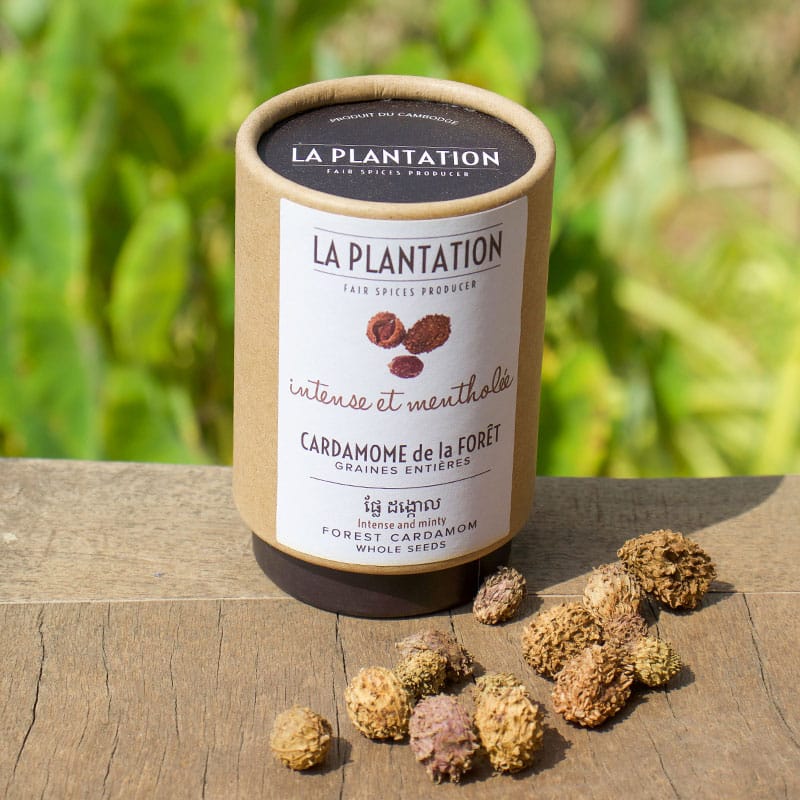
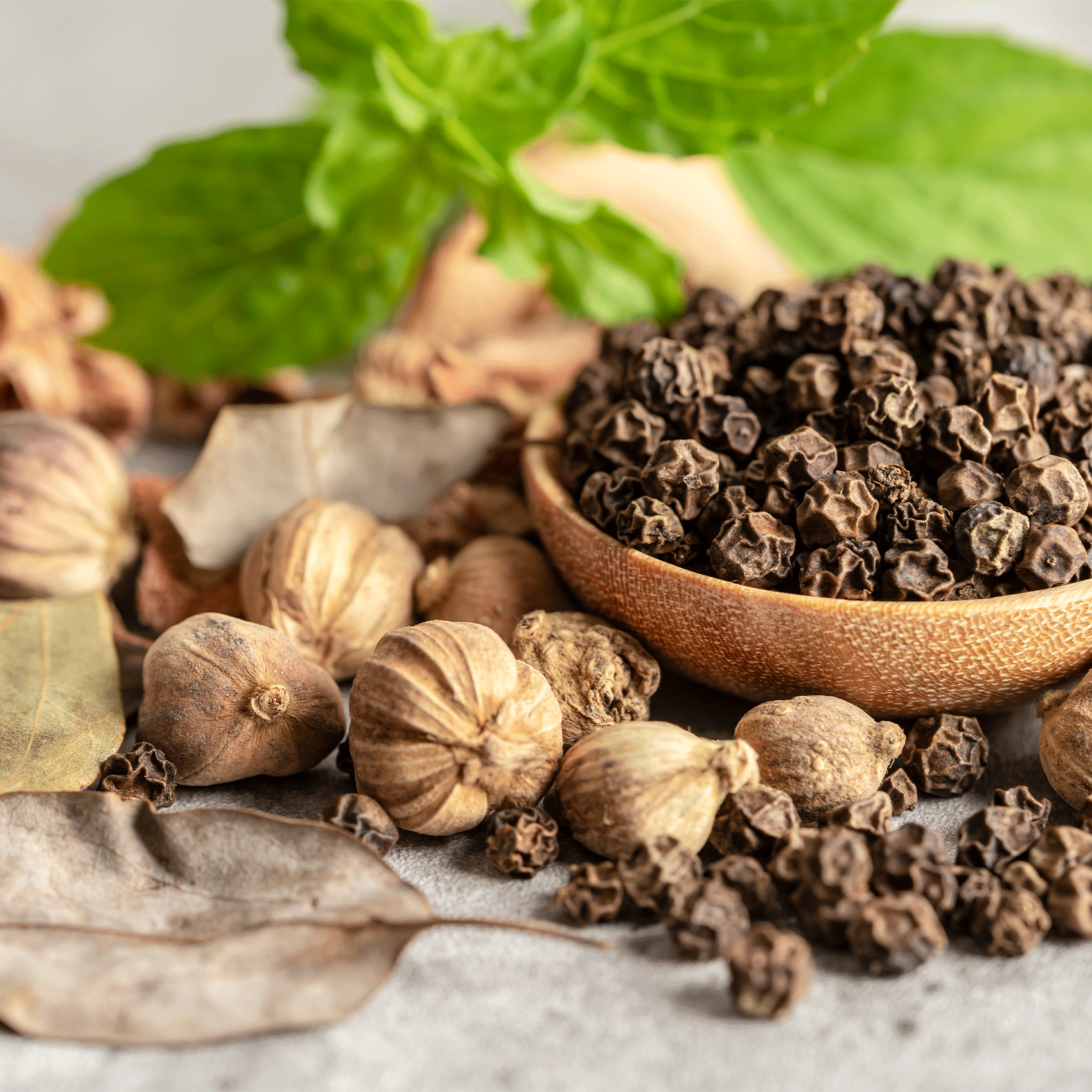
Wild cardamom is a form of rarity linked to territory and seasonality. The two varieties we work with at La Plantation grow in the forests of the Cardamom Mountains, a mountain range in south-west Cambodia that owes its name to this plant.
The harvest takes place during the rainy season, within a short window, in forest areas that are often hard to reach. Production is limited by the natural capacity of the forests, with no possibility of intensifying without damaging quality.
How to use rare spices without wasting themN
Rare spices are often highly concentrated aromatically: a small amount is enough. For saffron, 5 to 10 stigmas for a paella for 4 people: beyond that, bitterness takes over. For mace, a pinch as a finish in a sauce. For wild berries, 3 to 4 lightly crushed berries as a finish on a plate.
The practical rule: start with a quarter of what you would use for a standard spice, and adjust according to the result.
Most rare spices release their aromas better through infusion in a warm liquid than when added directly to a hot dish. Saffron, whole mace, sliced galangal: leave to infuse for 15 to 30 minutes in a liquid at 60–70°C before adding to the preparation. Wild berries: crush lightly before use to release the essential oils. This simple step changes the aromatic intensity of the result considerably.
The most delicate rare spices do not tolerate long cooking. Wild berries, rare fermented peppers, ground mace: their volatile aromas vanish with heat. Using them as a finish, off the heat or straight onto the plate, preserves most of their complexity. Saffron and galangal are exceptions: they can go in during cooking to diffuse their aromas in depth.
Useful questions about rare unknown spice
Price is often a result of rarity, but not always. A spice can be expensive for logistical reasons, because of its distribution channel, or because of its marketing position, without being truly rare. A genuinely rare spice is rare for structural reasons: low yield at harvest, a very limited geographical area, or artisan production that cannot be industrialised. Saffron and mace meet these criteria. An organic spice sold through a short supply chain may be expensive without being rare in the strict sense.
Rare spices are often more sensitive to oxidation and light than common spices. Keep them in an airtight, opaque container, away from heat and moisture. Saffron keeps in an airtight metal tin away from light: it can last 2 to 3 years without significant loss of aroma. Wild berries and whole rare peppers keep well for 2 to 3 years as whole grains, and for less time as powder. The general rule: never grind in advance but always at the last moment.


Subscribe to our Newsletter now
Get a free product for your first order!
Donation