

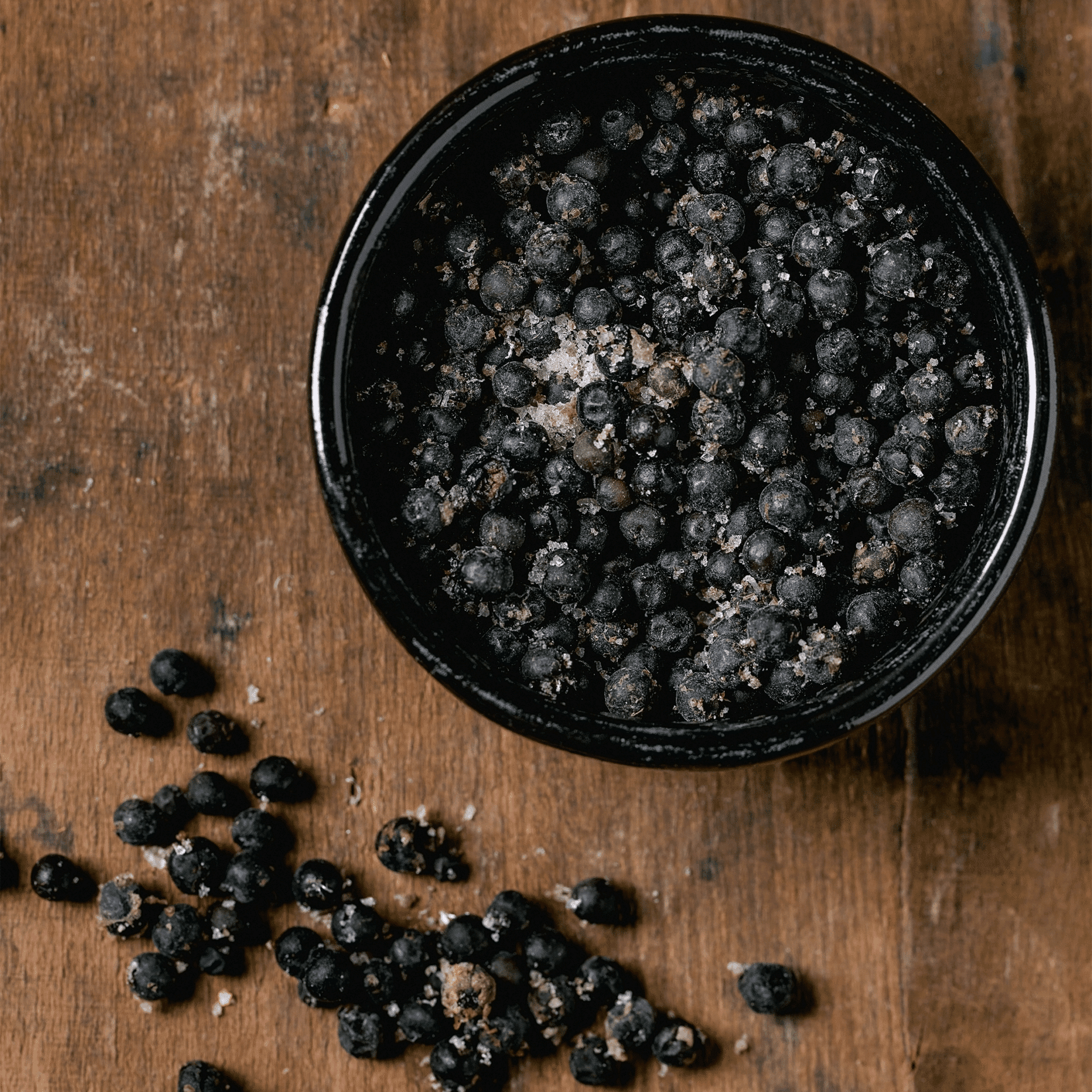
Salt fermented pepper: What it is and how to use it in the kitchen?
Our Tips
-
17.07.26
Suggestions
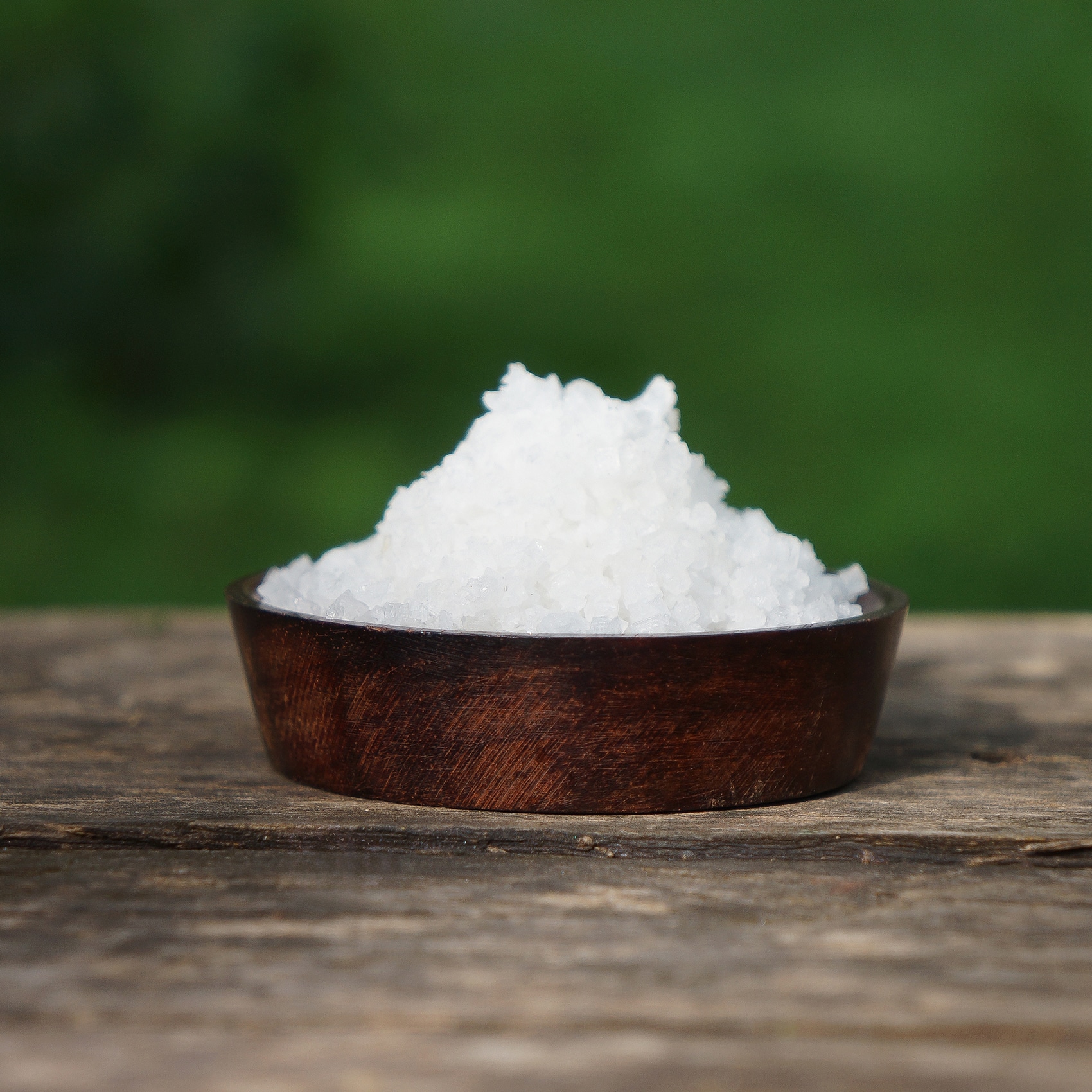
An artisan sea salt hand-harvested in the coastal salt pans of Kampot, Cambodia. PGI certified, naturally sun-dried, with no additives and no anti-caking agents. Ideal for salt mills, dry curing and salt-crust cooking. Direct from producer, packed on the farm.
En rupture de stock
Kampot coarse salt: PGI certified, sun-dried, additive-free and hand-harvested in Cambodia.
Kampot coarse salt is different in its very nature. It is produced in the coastal salt pans of Kampot province, Cambodia, using an entirely artisanal process: crystals form through natural solar evaporation in shallow pans, with no chemical or mechanical acceleration. Salt farmers harvest the crystals by hand using traditional tools, then leave them to dry in the Cambodian sun for several weeks.
This stands in direct contrast to mass-market coarse salt, which is industrially produced and accelerated evaporation under greenhouse conditions, mechanical drying, anti-caking agents added to ensure free-flowing texture. Origin is rarely traceable.
The result is naturally white to slightly pink crystals that retain their full complement of essential minerals such as magnesium, potassium, calcium, that industrial processing typically removes. No additives, no anti-caking agents and no artificially added iodine.
This salt carries the same PGI (Protected Geographical Indication) certification as Kampot pepper, a strict guarantee of origin, controlled artisanal process and full traceability from the salt pan to the packet.
Kampot coarse salt is a versatile salt with three distinct strengths.
In a salt mill: the crystals are dry, uniform in size and well suited to all types of salt mill — ceramic, glass or wooden. Unlike wet coarse salts such as fresh grey Guérande salt, they do not clog the mechanism. The grind is clean, and the salt delivers a clear, balanced salinity with no bitterness in the mouth.
For curing and dry marinades: use 1 to 3% of the weight of the meat in salt for a dry cure — duck breast, pork belly, beef fillet. The salt penetrates slowly, draws out moisture and concentrates the natural flavours. Its neutral mineral profile does not mask the taste of the meat, unlike heavily iodised salts.
For salt-crust cooking: encase a whole fish, a leg of lamb or root vegetables in lightly moistened coarse salt. Cook in the oven at 200°C. The crust creates a natural steam chamber — the salt does not penetrate the flesh, it simply seals in the juices and the flavour.
For pasta and vegetable cooking water: add directly to boiling water (10 to 12 g per litre). The crystals dissolve quickly under heat.
Texture and dryness: Kampot coarse salt is noticeably drier than most European artisan salts, with naturally white to slightly pink crystals. The conditions of the Cambodian dry season allow for more complete evaporation, producing a salt of exceptional purity that works well in all types of salt mill.
Mineral profile: Kampot salt has a slightly lower natural iodine content than Guérande grey salt, giving it a cleaner, less briny salinity on the palate.
Availability: Kampot coarse salt is produced between November and May during the dry season, packed once a year and available in limited quantities.
How should Kampot coarse salt be stored?
In an airtight container like a glass or ceramic jar and away from moisture. Salt is hygroscopic: it absorbs ambient humidity and can clump if left open. Do not store near a hob or a window exposed to steam.
Is Kampot salt dry or wet?
It is naturally sun-dried for several days after harvest. It is significantly drier than fresh grey Guérande salt, which makes it particularly well suited to mechanical salt mills that can seize up with wetter salts.
Does it contain iodine?
It contains naturally occurring iodine from seawater. No iodine is artificially added. Most supermarket table salts are artificially iodised, this one is not.
What is the difference between Kampot coarse salt and fleur de sel?
Both are produced in the same salt pans of Kampot, but they are harvested differently. Fleur de sel is skimmed by hand from the surface of the water at the end of the day, it is the finest, most delicate layer of crystals, used exclusively as a finishing salt. Coarse salt is harvested from the bottom of the pan, with larger, harder crystals better suited to mills, curing and cooking. Each has its own specific use: fleur de sel at the table, coarse salt in the kitchen.
Can Kampot coarse salt replace table salt in everyday cooking?
Yes, with a simple adjustment. Coarse salt crystals are larger than table salt granules and dissolve more slowly — use slightly more when seasoning cold preparations, or allow extra time for the crystals to dissolve. In cooking water, the difference is negligible.
Is artisan sea salt healthier than table salt?
Artisan sea salt retains trace minerals (magnesium, potassium, calcium) that are removed during industrial refining. It contains no anti-caking agents or artificial additives. That said, the sodium content of artisan sea salt and refined table salt is broadly comparable. Both should be consumed in moderation.
Origin
Spice-Food Pairing
Allergen
Conservation
DDM
Ingredients
Subscribe to our Newsletter now
Get a free product for your first order!
Donation