

Spices that pair perfectly with Lamb
Recipes
-
26.03.24
Suggestions
Spices and slow cooking: Which to choose and how to use them
Sommaire
Slow cooking develops aromas but only when spices are chosen correctly and added at the right moment. On cooking forums, one observation comes up regularly: “I slow-cooked my dish for 6 hours and it tastes completely flat.” The cooking method is not to blame, it is the choice of spices and when they were added.
Some spices deepen with the hours. Others, more delicate, lose their aromas within the first hour of heat. Understanding this distinction completely changes the result. This guide explains the two spice families, the key technique for activating them correctly, and how to apply them according to the dish.
Why slow cooking transforms spices differently?
A temperature maintained between 70 and 90°C allows the progressive diffusion of essential oils throughout the dish. Unlike high-heat cooking, which can burn delicate spices, gentle heat lets aromas develop slowly. Whole spices are particularly well suited to this: they release their aromatic compounds gradually over several hours, producing a depth that is difficult to achieve in quick cooking.
Volatile aromatic compounds evaporate under prolonged heat. Fresh mint, basil, soft herbs, citrus zests: added at the start of cooking, they contribute very little after several hours.
This is a frustration frequently reported by home cooks: a dish that has been simmering for a long time can taste flat if only fresh herbs were used. The solution is to make a clear distinction between background spices which hold up through long cooking and finishing spices, which are added off the heat.
The two spice families: Background and finishing ?
| Spice | Profile | Why it holds | Dishes |
|---|---|---|---|
| Cinnamon bark, pieces | Warm, lightly sweet | Releases tannins that round out sauces | Tagine, chilli, dahl, mulled wine |
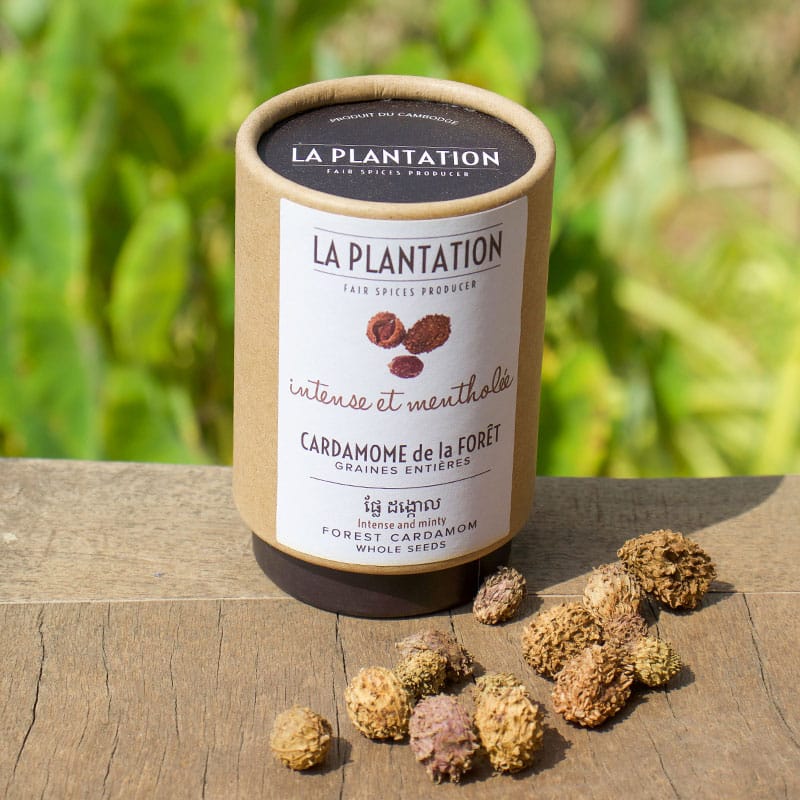
| Wild cardamom pods | Floral, mentholated, citrusy | Slow infusion with no bitterness | Dahl, curry, chicken, rice |
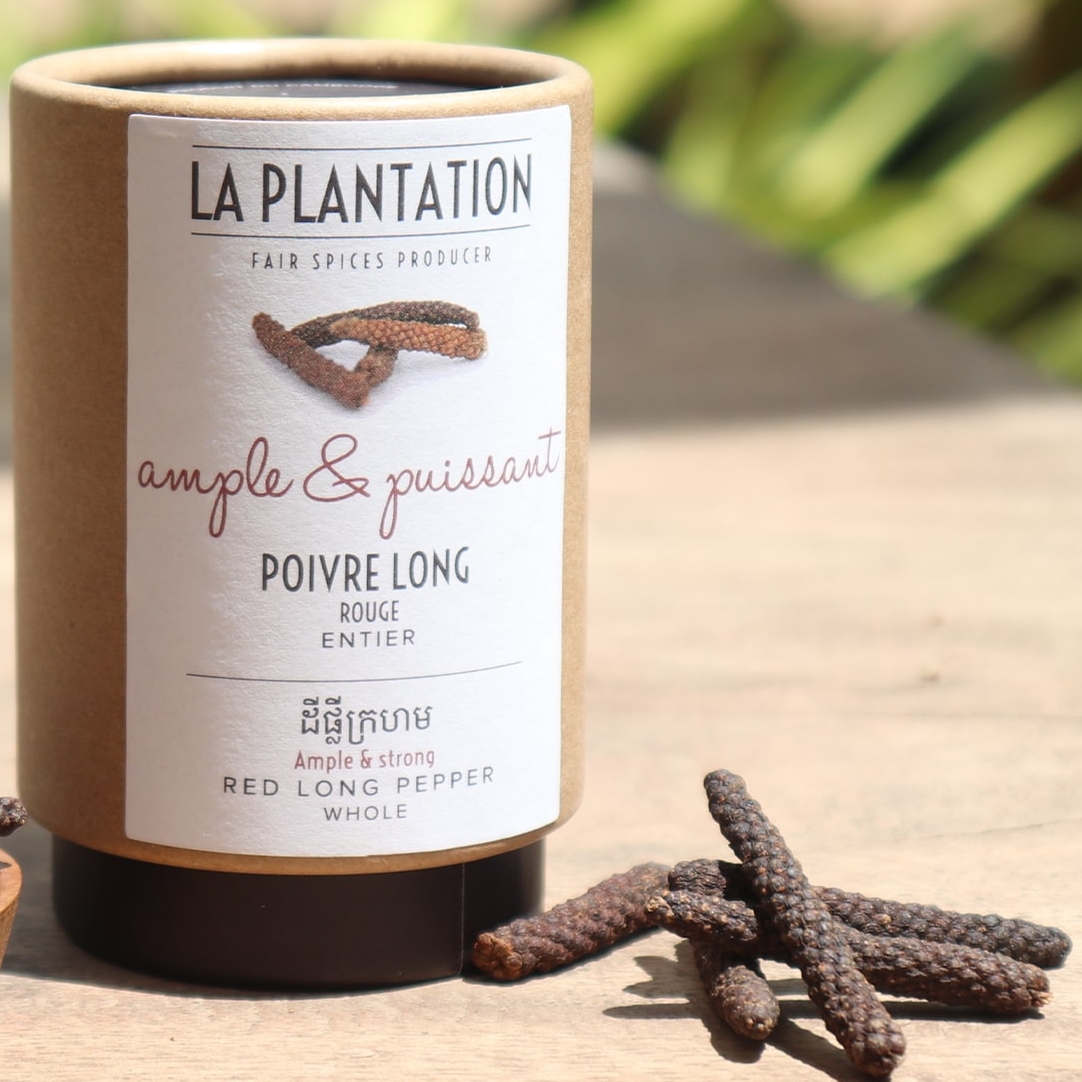
| Whole red long pepper | Woody, lightly sweet | Dense structure, releases aromas gradually | Stews, spiced pears, tagines |
| Dehydrated green Kampot pepper | Fresh, herbaceous, lightly spicy | Holds up to long cooking better than ground pepper | Slow-cooked dishes, spiced pears, pot-au-feu |
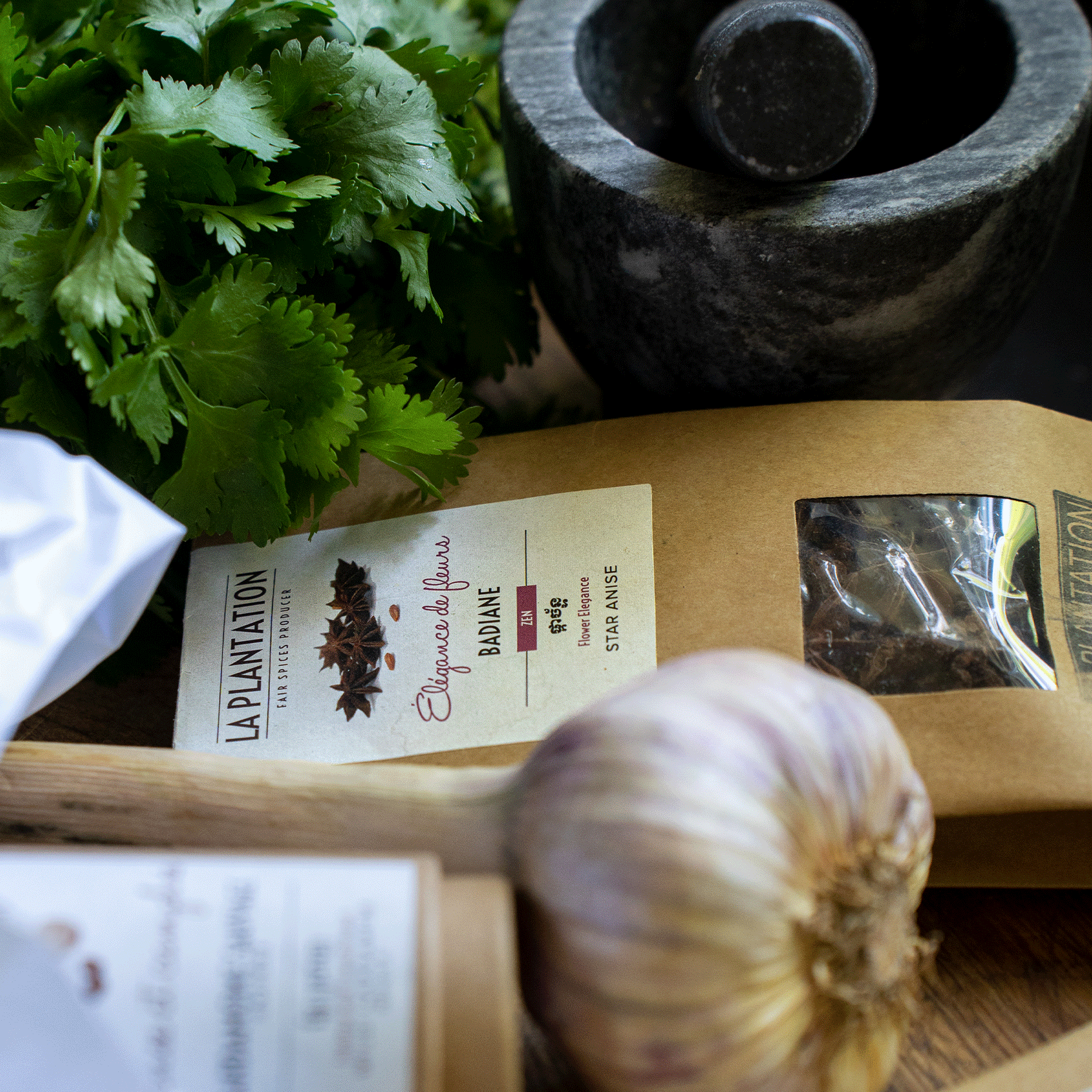
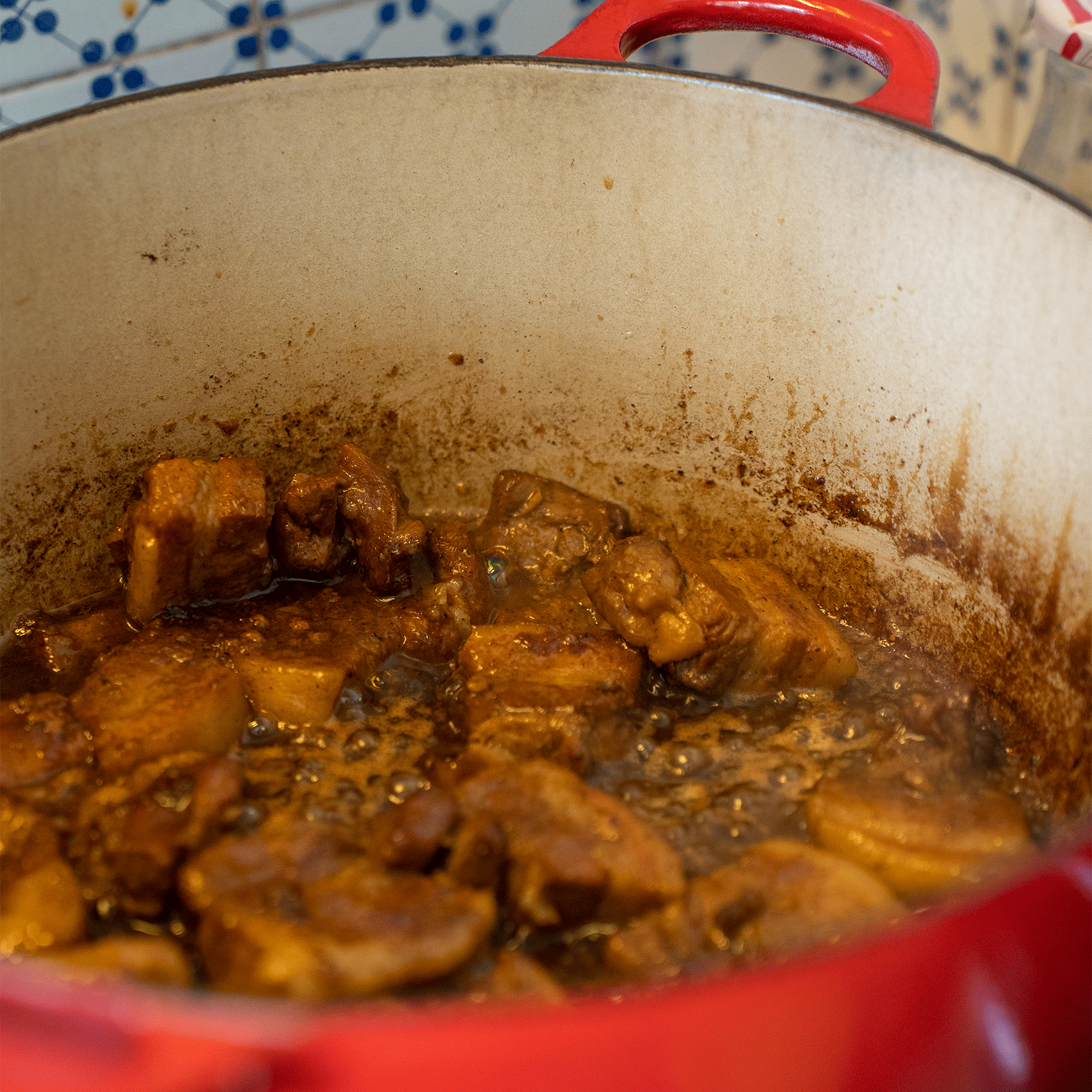
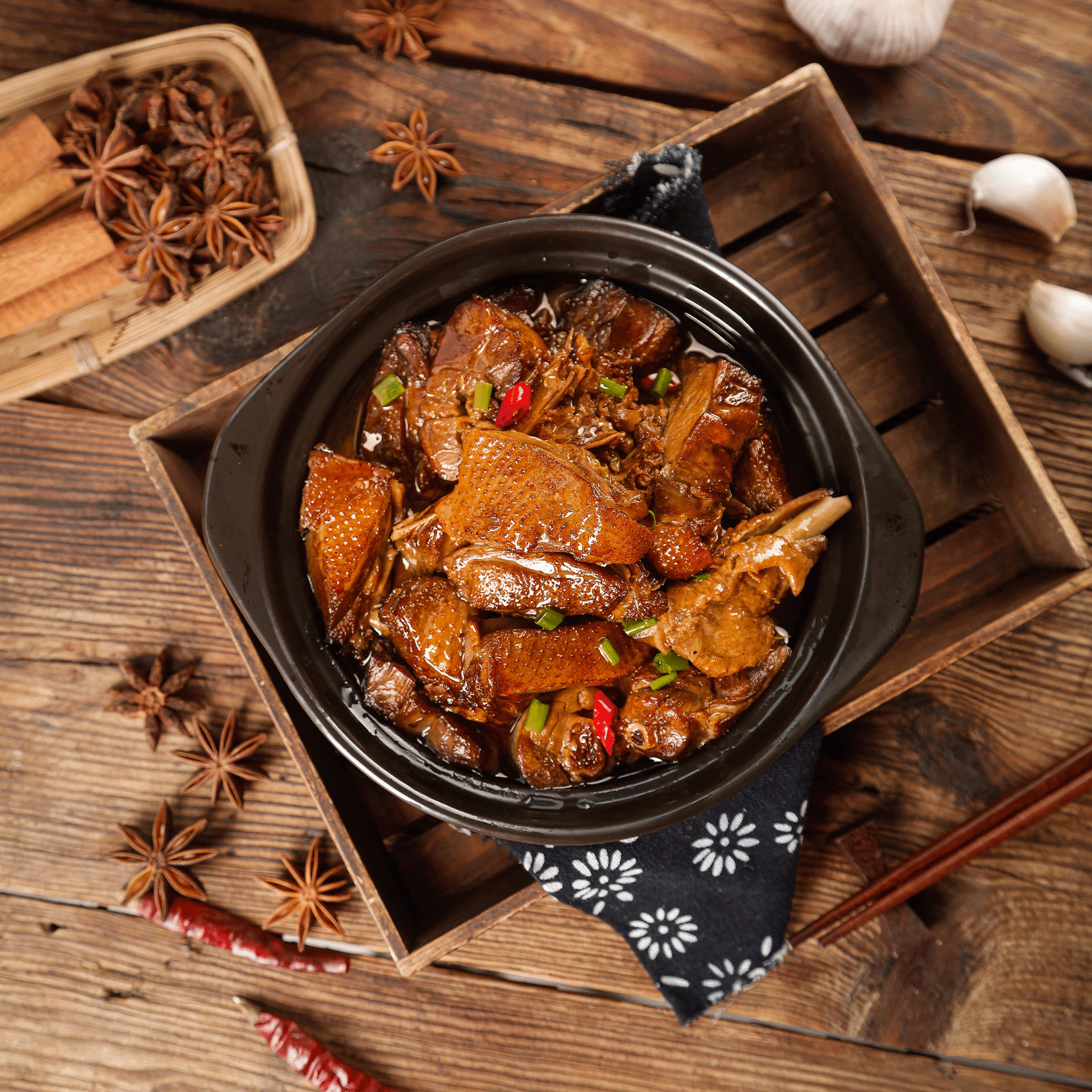
| Whole star anise | Liquorice, anise, woody | Infuses slowly — remove after 1 to 2 hours | Braised pork, dahl, mulled wine |
| Whole cloves | Intense, woody, warm | Releases eugenol slowly over several hours | Pot-au-feu, tagine, mulled wine |
| Bay leaf | Woody, lightly bitter | Infuses gradually without becoming aggressive | All slow-cooked dishes |
| Cumin seeds | Earthy, warm | Holds up well to prolonged heat | Chilli, dahl, curry |
A few important points. Star anise should not remain in the cooking for more than 2 hours: beyond that, it can contribute an unpleasant bitterness. Remove it as soon as the desired anise depth is reached. Whole red long pepper is used like cinnamon bark, slipped in whole at the start of cooking and removed before serving.
Wild cardamom pods should be lightly cracked before adding, so they open and release their seeds during cooking. Dehydrated green Kampot pepper can be used whole or lightly crushed: it brings a herbaceous freshness that black pepper cannot provide over long cooking times.
Finishing spices are added in the final minutes of cooking, or directly into the bowl. They bring what long cooking cannot: freshness, vivid heat, and natural salinity.
Freshly ground pepper is the most effective finishing gesture on a slow-cooked dish. Ground at the last moment, it delivers warmth and volatile aromas that long cooking would have erased.
Salt-fermented pepper is added directly into the bowl: its freshness and natural salinity contrast pleasantly with the concentration of flavours in a slow-cooked dish.
Kampot fleur de sel added as a finish intensifies the perception of every aroma already present in the dish.
Fresh herbs like coriander, parsley, mint, always go in off the heat. A zest of lemon or kaffir lime at the last moment wakes up the entire preparation.
Which Spices for Which Slow-Cooked Dish?
A tagine cooks sealed under its conical lid. The steam condenses and falls back onto the dish, creating a progressively concentrated sauce. Background spices are worked into the olive oil with the onion at the very start of cooking: ras-el-hanout, ground ginger, turmeric, half a teaspoon of cinnamon bark, one clove.
A useful ratio: 1 tablespoon of ras-el-hanout, half a teaspoon of ginger, half a cinnamon stick for 4 people. Finish with fresh coriander and preserved lemon zest.
A chilli simmers for 2 to 3 hours and needs spices that progressively build a complex tomato sauce. Background spices: cumin (seeds or powder), smoked paprika, oregano, mild chilli, one clove only. Toast the cumin and paprika in the oil with the onion before adding the meat and tomatoes. This gesture is what gives a chilli its characteristic depth.
Finish with a pinch of cayenne if needed and fresh coriander.
In a pot-au-feu, spices play a role of structuring the stock — not aromatic power. Background spices: bay leaf, a clove pressed into an onion, thyme, black peppercorns, coriander seeds.
What to avoid: powdered spices, which cloud the broth, and fresh herbs, which darken and turn bitter. Finish with freshly ground black pepper in the bowl, fleur de sel, and horseradish as a condiment. The purity of the broth takes precedence over aromatic intensity.
Dahl is the dish that best illustrates the value of the tarka. Red or green lentils absorb aromas throughout their cooking — but only if the spices have been activated first. The tarka takes 60 seconds maximum: mustard seeds and cumin in hot oil or ghee until they begin to pop, then turmeric, ginger, curry, or garam masala. Add the lentils and stock immediately.
Finish with fresh coriander, mild chilli, and a squeeze of lime juice.
Chicken absorbs spices well without overpowering them — which gives it considerable flexibility. Asian version: yellow or green curry, ginger, turmeric, coconut milk. Coat the chicken pieces in the spice-and-fat mixture and leave to marinate for 30 minutes before cooking. Mediterranean version: smoked paprika, garlic, thyme.
In both cases, fresh herbs go on as a finishing touch: coriander for the Asian version, parsley for the French one.
FAQ
There is no absolute rule, but a logic to respect. A slow-cooked dish handles 4 to 6 distinct background spices well, provided they share a common aromatic register. Combining warm and woody spices together (cinnamon, cloves, cardamom, long pepper) produces a coherent result. Mixing very different registers (anise, smoky, floral) in the same dish risks a confused outcome. The finishing stage remains the space to introduce a contrast: a single spice or fresh herb that cuts across the background aromatic base.
Yes and tasting systematically before serving is always worth doing. Several simple moves bring back depth to a flat dish. A splash of vinegar or a squeeze of lemon juice wakes up every aroma present without adding new ones. A spoonful of curry paste or ras-el-hanout fried for 30 seconds in a little butter and stirred in at the end of cooking adds an immediate new aromatic layer. Freshly ground pepper in the bowl delivers a freshness that background spices cannot. Fleur de sel at the finish intensifies the perception of every aroma already present.
Yes, the principle is identical. The difference lies in temperature: an electric slow cooker maintains between 70 and 90°C, slightly lower than a casserole on a gentle hob. Whole spices are particularly well suited to a slow cooker for very long cooks. Fresh herbs should always be added at the end in both cases.


Subscribe to our Newsletter now
Get a free product for your first order!
Donation