How to pair spices with raw food?
Our Tips
-
04.07.25
Suggestions
Which spices work best with root vegetables and tubers?
Sommaire
The right spice for a root vegetable or tuber is chosen according to the flesh itself: dense, sweet, or earthy, it pairs just as well with warm spices as with floral or smoky ones. The flavour profile of the vegetable, sweet, earthy, or delicate, guides the choice.
An edible root, such as a carrot, parsnip, or turnip, differs from a tube, a swollen underground stem, such as a Jerusalem artichoke or potato. The latter also differs from cucurbits like squash or other vegetables particularly used during autumn. Each family has its ideal combination of spices and seasonings to enhance its flavor.
From October to March, root vegetables and tubers return to our plates, often with the same seasoning. The choice of spice changes the result considerably.
This guide presents the flavour profiles of each vegetable, the spices that suit them, and the right gestures for each cooking method.
How to add flavour to root vegetables and tubers?
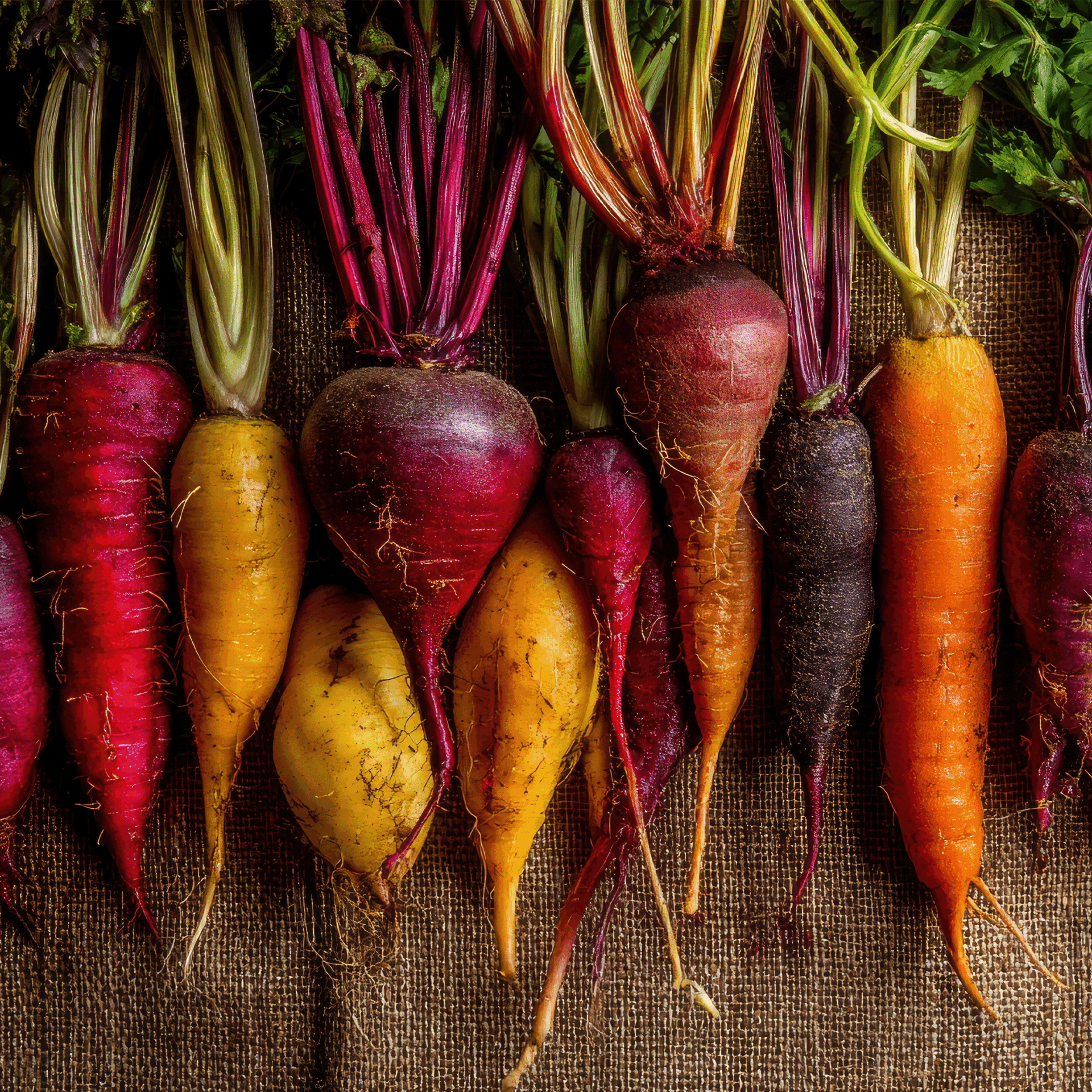
Sweet vegetables (carrot, parsnip, beetroot) concentrate their sugars during cooking. Spices either contrast with this sweetness or extend it.
Earthy and pungent vegetables (turnip, swede, black radish) have sulphurous and lightly bitter notes. They hold up well to more assertive spices.
Delicate vegetables (celeriac, Jerusalem artichoke, salsify) have quiet flavours, somewhere between hazelnut and artichoke. They call for precise rather than powerful spices. These three profiles serve as the guiding thread for everything that follows.
Spice aromas are largely fat-soluble: they dissolve in fats, not in water. A dense flesh like that of root vegetables therefore needs oil, butter, or cream to carry and distribute their aromas properly.
The dry heat of the oven also plays a key role. It caramelises the natural sugars of the roots and extends the effect of the spices. For soups and velouté preparations, the tarka technique, frying spices in fat before adding the vegetables, produces the deepest aromatic diffusion.
Which spices for which root vegetable or tuber?
| Vegetable | Flavour profile | Primary spice | Secondary spice |
|---|---|---|---|
| Carrot | Sweet, lightly earthy | Ginger | Turmeric, cardamom |
| Parsnip | Sweet, woody | Kampong Thom black pepper | Cinnamon, star anise |
| Turnip | Pungent, lightly bitter | Khmer green curry | Ginger |
| Swede | Sweet, sulphurous | Turmeric | Mondolkiri black pepper |
| Celeriac | Delicate, hazelnut | Galangal | Kampot white pepper PGI |
| Beetroot | Sweet, earthy | Cinnamon or Ma Khen berry | Smoked Ratanakiri black pepper |
| Jerusalem artichoke (tuber) | Delicate, artichoke | Red long pepper | Cardamom, galangal |
| Black radish | Pungent, assertive | Green pepper rub | Kampot black pepper PGI |
| Salsify | Soft, oyster-like, hazelnut | Yellow curry | Vadouvan |
Carrot is sweet, lightly earthy, and versatile. Ground ginger serves as the base spice: its liveliness contrasts with the natural sweetness of the vegetable. Turmeric adds colour and a gentle warmth; cardamom brings a floral note. A cardamom duo powder integrates well into roasted carrots, a velouté soup, or grated raw carrot.
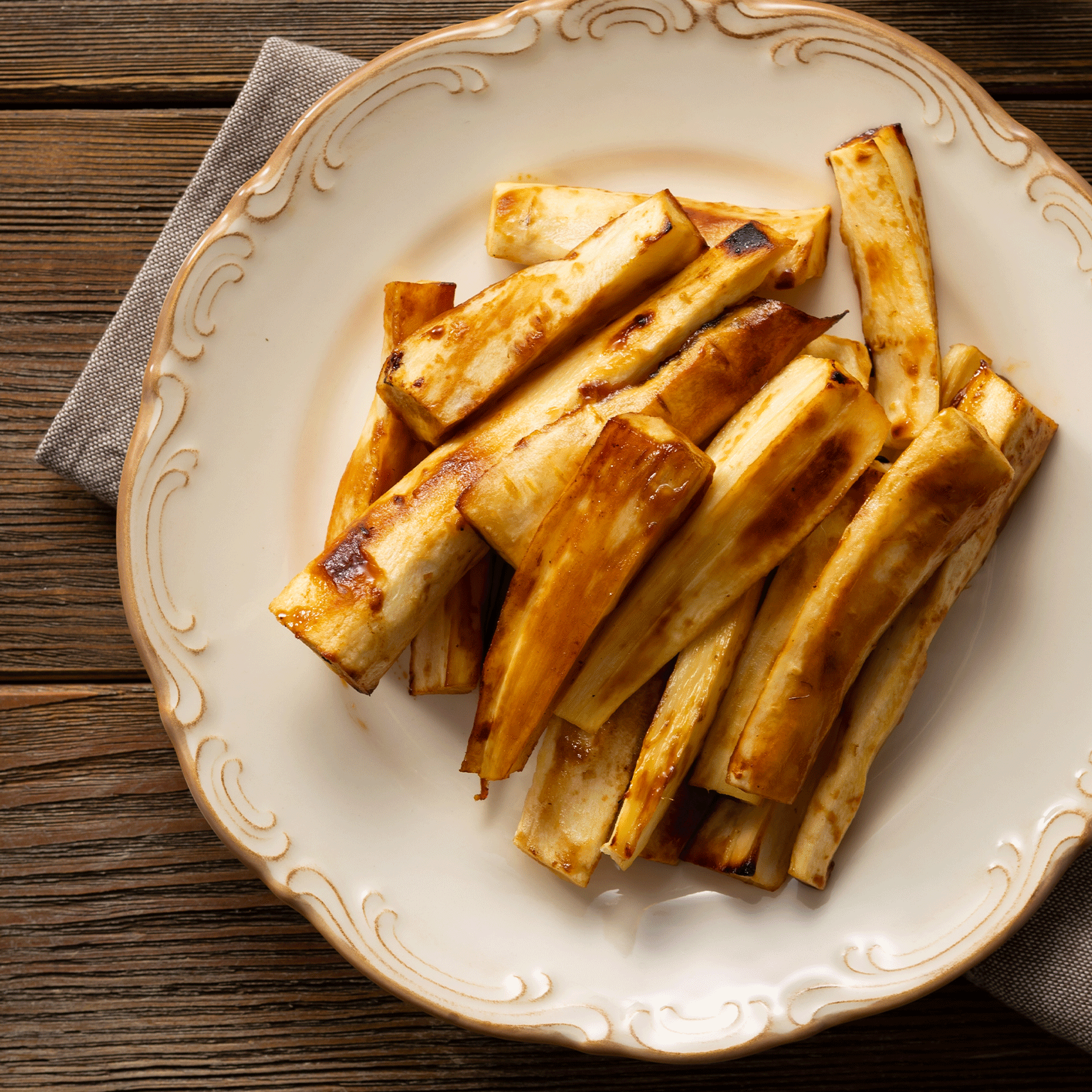
Parsnip is sweet, with a hazelnut and celery note. Kampong Thom black pepper brings a woody warmth that balances this sweetness. Cinnamon bark or a star anise offer a softer, more anise-forward direction. Roasted, puréed, or as oven crisps, parsnip accepts all three.
Raw turnip is pungent; cooked, it softens and develops a lightly bitter edge. Khmer green curry, with its fresh, vegetal notes, brings out its fresh side. A pinch of ginger rounds out the whole preparation. Worth trying in glazed turnips, stir-fried with coconut milk, or in a soup.
Swede is sweet, with a sulphurous note and a dense texture. Turmeric, fried in fat, softens the sulphurous edge and colours the flesh. A few turns of Mondolkiri black pepper at the finish add a woody touch. Mash, roasted, or gratin: all three preparations suit it well.
Delicate and aromatic, celeriac becomes very soft when cooked. Galangal powder, more floral than ginger, respects this finesse. A touch of Kampot white pepper PGI at the finish avoids colouring the pale flesh. Velouté soup, purée, thick roasted slices, or rémoulade: celeriac suits a wide range of preparations.
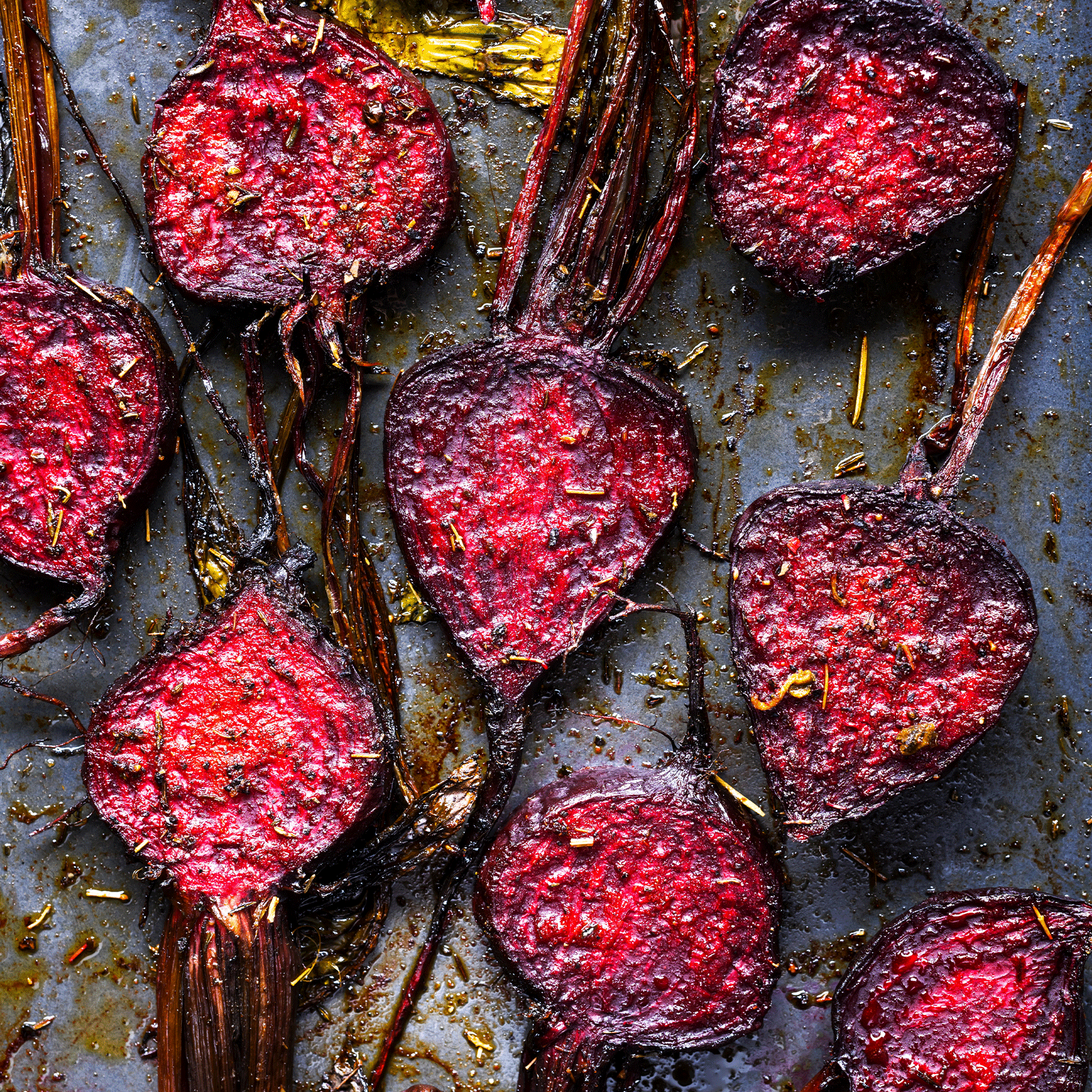
Beetroot is sweet and earthy, a note that some find too pronounced. Cinnamon bark brings a warm softness. Ma Khen berries, with their citrus notes and light tingling sensation, create a contrast with the earthiness. Smoked Ratanakiri black pepper, conversely, extends that earthy side with a smoky note. Beetroot can be roasted, served raw in thin slices, or used in a warm salad.
Jerusalem artichoke is a delicate tuber, with notes of artichoke and hazelnut. Ground red long pepper, woody and lightly sweet, accompanies it without overpowering. Wild cardamom and galangal add a floral dimension.
Three ways to cook it:
Velouté soup, roasted, or as crisps
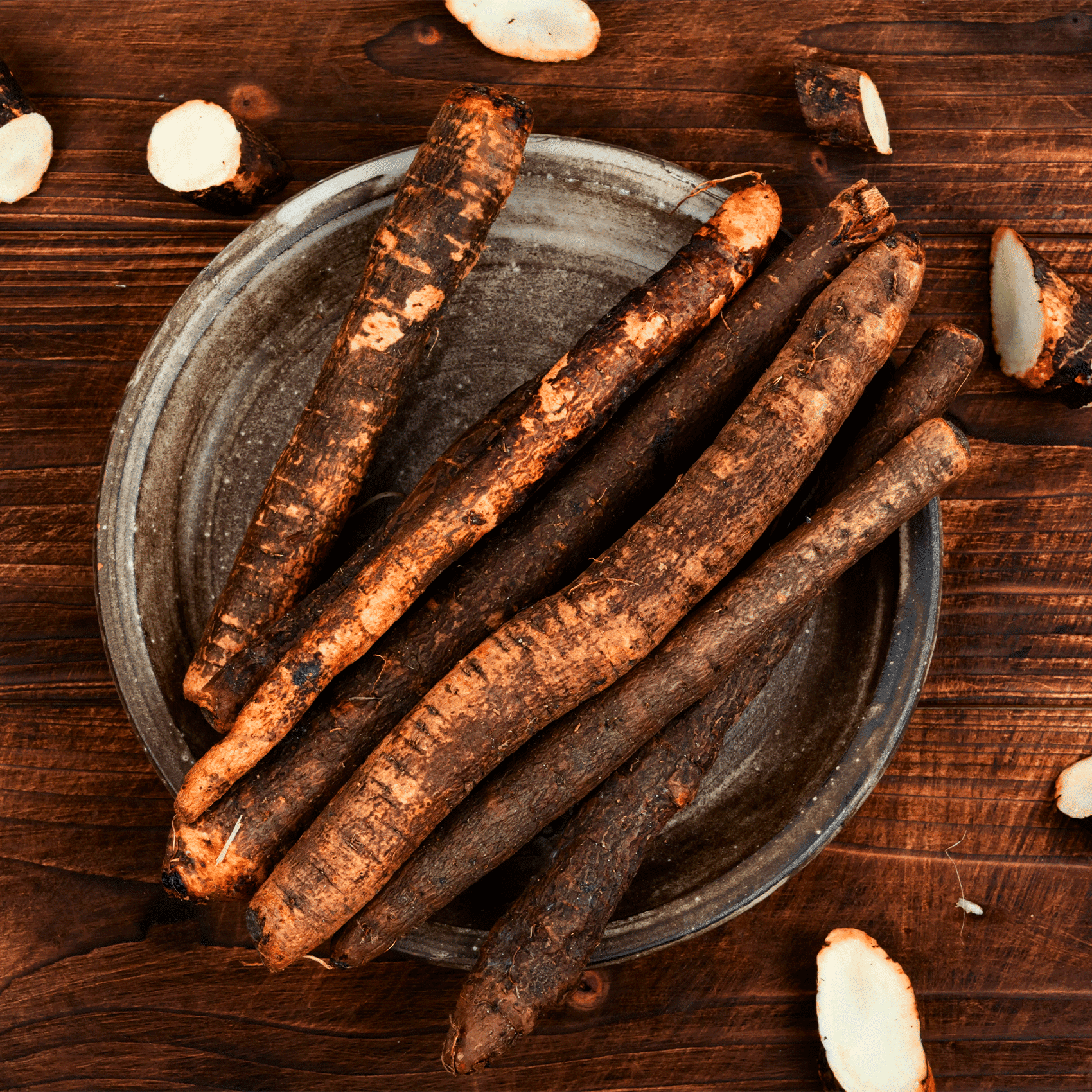
Raw, black radish is pungent and reminiscent of horseradish. Cooked, it softens considerably. A green pepper rub, with its vegetal freshness, accompanies this natural punch. A little freshly ground Kampot black pepper PGI at the finish completes the seasoning. It is easy to prepare: roasted in the oven, grated in a salad, or in thin rounds.
Salsify is mild, with oyster-like and hazelnut notes. It darkens quickly in contact with air: keeping it in acidulated water once peeled limits this. Yellow curry brings a gentle warmth. Vadouvan, a soft, aromatic curry with floral notes, is a more perfumed alternative. Pan-fried in butter, gratin, or as a velouté soup.
How to season root vegetables and tubers by cooking method
It is recommended to cut the vegetables into evenly sized pieces and coat them in oil before adding ground spices: they adhere better and distribute evenly. Cut evenly sized pieces, allow 1 teaspoon of spices per 500 g of vegetables, and bake at 200 °C for 30 to 45 minutes depending on size.
This temperature works well for carrots, parsnips, beets, and Jerusalem artichokes. Whole spices, such as cinnamon or star anise, go into the dish from the start of cooking. Pepper should be ground right after coming out of the oven to preserve its volatile aromas.
The choice of spice follows the nature of the vegetable. Carrots and parsnips, which are high in sugars, balance well with cumin or coriander. Beets, with their earthy taste due to geosmin, benefit from being paired with a citrusy note like zest or sumac.
Bloom the ground spices in hot fat before adding the vegetables and broth which allow 30 seconds to 1 minute over medium heat until the aromas rise, without letting them brown.
The flavors dissolve into the oil or butter, then distribute throughout the dish when blended. Whole spices (star anise, cardamom pods) infuse in the broth and are removed before blending.
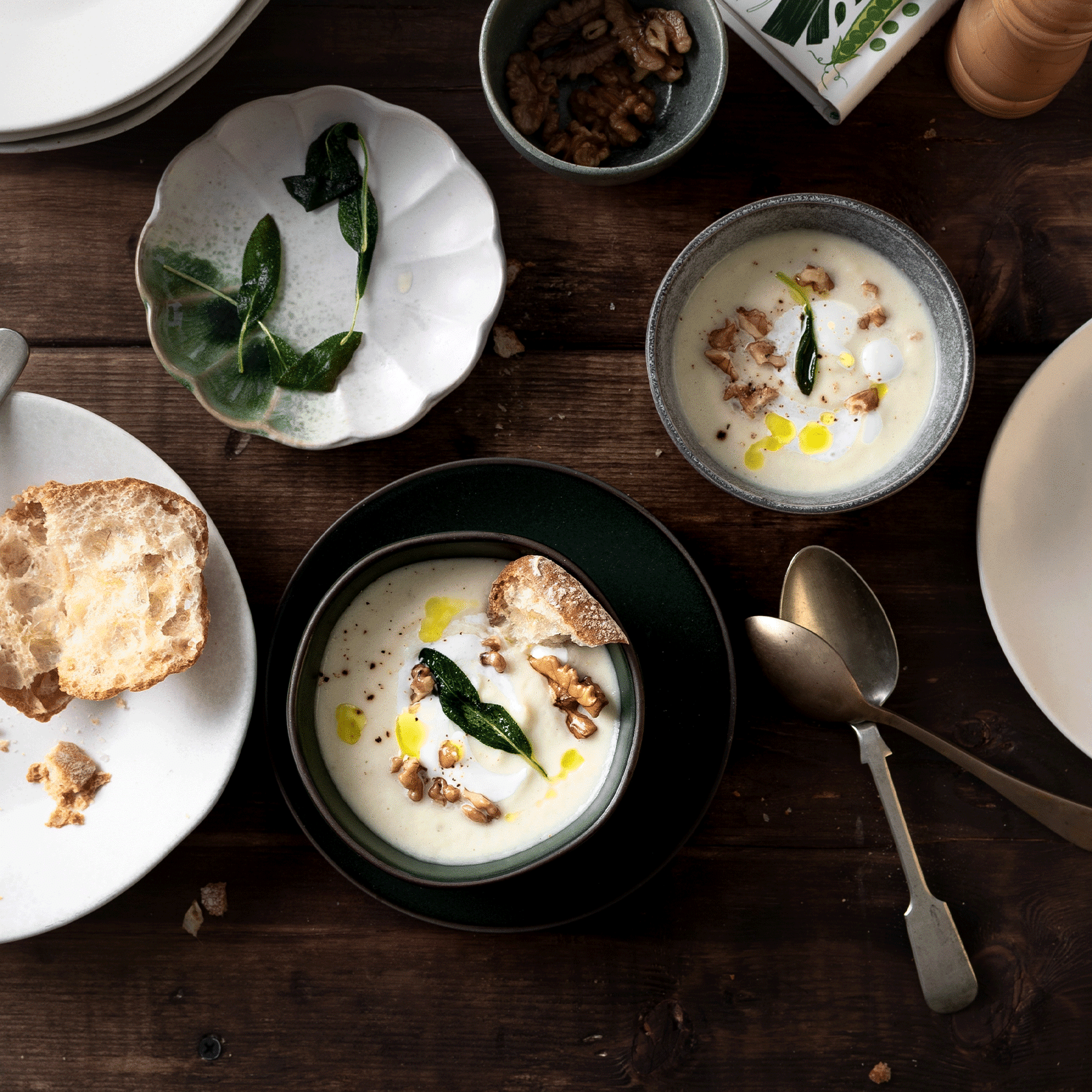
For a light-colored velouté (celeriac, Jerusalem artichoke, salsify), choose a spice that does not add color. White pepper, such as PGI White Kampot Pepper, flavors the dish without leaving dark specks, unlike black pepper, turmeric, or paprika. For a purée, infuse the spices in warm butter or cream before folding them in, then add freshly ground pepper when serving.
When serving raw, dissolve the spice in a fatty or acidic liquid, and use a light hand. Beets, carrots, black radishes, and celeriac all lend themselves well to being eaten raw.
Spice powder sprinkled directly over grated carrots stays dry and harsh on the palate: whisk it first into the oil or vinegar of the dressing, then let it marinate for 15 to 30 minutes.
Without heat to mellow them, the aromas express themselves fully. Each vegetable calls for its own pairing. On raw beets, citrus zest and freshly cracked pepper offset their earthy flavor.
Black radish already contains pungent sulfur compounds (isothiocyanates). It is best to avoid adding extra heat and opt for crushed coriander seeds instead.
When to add spices depends on the cooking time. For stews, whole spices and powders are added right from the start: the liquid prevents burning and the long cooking time allows for full extraction. Add a pinch of the same spice at the end of cooking to restore the volatile notes lost along the way.
For a salsify gratin, whole spices and powders are added at the start of cooking. Infuse the spices in hot milk or cream for 10 minutes before pouring over the vegetables. Nutmeg and white pepper are the classics for this type of dish.
For pan-fried parsnips, cooked for 10 to 15 minutes over high heat, ground spices are added during the last 2 to 3 minutes over reduced heat. Whole seeds (cumin, mustard), however, go into the oil right from the beginning.
Useful questions about spices with root vegetables and tubers
A touch of acidity, a little fat, and an aromatic spice balance these notes. On beetroot, a wild berry with citrus notes or a splash of vinegar contrasts with the earthiness. On turnip, a curry with fresh, vegetal notes and a little coconut milk soften the bitterness.
It depends on the vegetable. Carrot, parsnip, and Jerusalem artichoke can keep their skin if well scrubbed: the skin holds spices well during oven cooking. Turnip, swede, celeriac, and black radish have a thicker skin that is generally removed. Beetroot peels easily after cooking.
Half a teaspoon of ground spice is generally enough, and up to one teaspoon for mild spices like turmeric or ginger. For whole spices: one stick of cinnamon or one star anise per dish. Pepper is dosed at the finish: a few turns of the mill. In all cases, taste and adjust.


Subscribe to our Newsletter now
Get a free product for your first order!
Donation