

Quelles épices utiliser pour le poisson ?
Our Tips
-
01.08.25
Suggestions
Which spices and herbs work best with poultry?
Sommaire
The right spices for chicken and other poultry depend on the cut — chicken, capon, or turkey — and the preparation: roasted, poached, grilled, or braised. Poultry flesh is delicate and mildly flavoured, which allows it to take a wide range of spices, from smoky to citrusy.
This guide presents the essential spices to know and how to use them, a selection of herbs, ready-to-use blends, and the specific nuances for each bird.
Which Spices to Use for Chicken and Poultry?
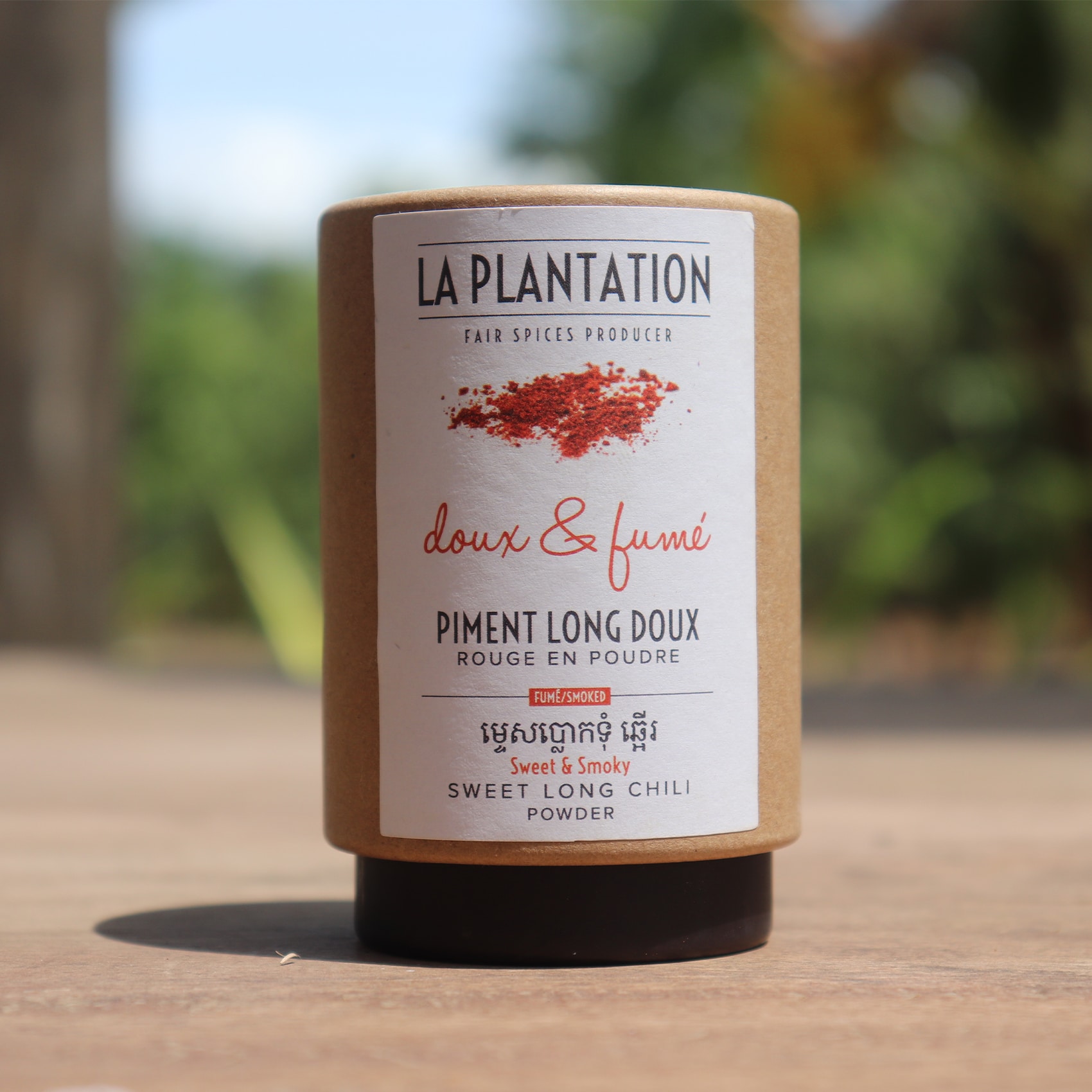
Smoked paprika colours the skin and brings a characteristic ember-like note. Its pigments and smoky compounds dissolve in fat: in the heat of the oven, they caramelise on the skin and give it colour. Mixed with a drizzle of oil and rubbed over the bird before roasting or pan-frying, it both colours and bastes the skin during cooking. Allow around one tablespoon of smoked paprika powder for a 1.5 kg chicken.
Turmeric gives the flesh a golden-orange tint and a gentle warmth. It is used in a dry marinade or a wet one — with coconut milk or yoghurt, which also tenderises the flesh. It works well on thighs and wings. One teaspoon of turmeric powder is enough for four pieces.
Pepper is used primarily as a finishing touch or infused into a sauce. Its piperine — the compound that makes it pungent — dissolves in fat. Red Kampot Pepper PGI and Mondolkiri Red Pepper, softer and fruitier than black pepper, pair very well with the delicate flesh of poultry. Red long pepper, woody and lightly sweet, can be infused whole into the cooking juices or sauce and removed before serving.

Which Herbs Work Best with Chicken?
Thyme, rosemary, and tarragon are the three reference herbs for poultry. Thyme and rosemary, both heat-resistant, go in from the start of cooking to perfume the juices deeply. Tarragon, more delicate and lightly anise-like, is added at the end of cooking or into a sauce to preserve its freshness.
Thyme has a woody fragrance and holds up well to heat. Add it from the start in the cooking juices, or in an olive oil and lemon marinade — a few sprigs for a whole bird.
Rosemary has resinous notes and holds up through long cooking. Tuck two or three sprigs into the cavity, or strip the leaves into the juices at the start of cooking. Its fragrance is powerful — a small amount is enough.
Tarragon has a delicate anise note, long associated with poultry in French cooking — the heart of poulet à l’estragon. Add it fresh in the last ten minutes of cooking, or stir directly into a cream sauce.
Ready-to-Use Spice Blends for Poultry
A ready-to-use blend brings already-dosed and balanced spices, ready to rub or marinate. For poultry, curry, harissa, vadouvan, spice rubs, zaatar, and a dedicated roast chicken blend cover most uses — from a gentle braise to a punchy marinade — without having to measure each spice individually.
Choosing between a blend and separate spices comes down to control and dosage. A blend saves time and delivers a proven balance, at the cost of less adjustability and the need to watch out for added salt. Separate spices demand more experience, but allow every note to be tuned. For anyone starting out with poultry, a blend is the safest route.
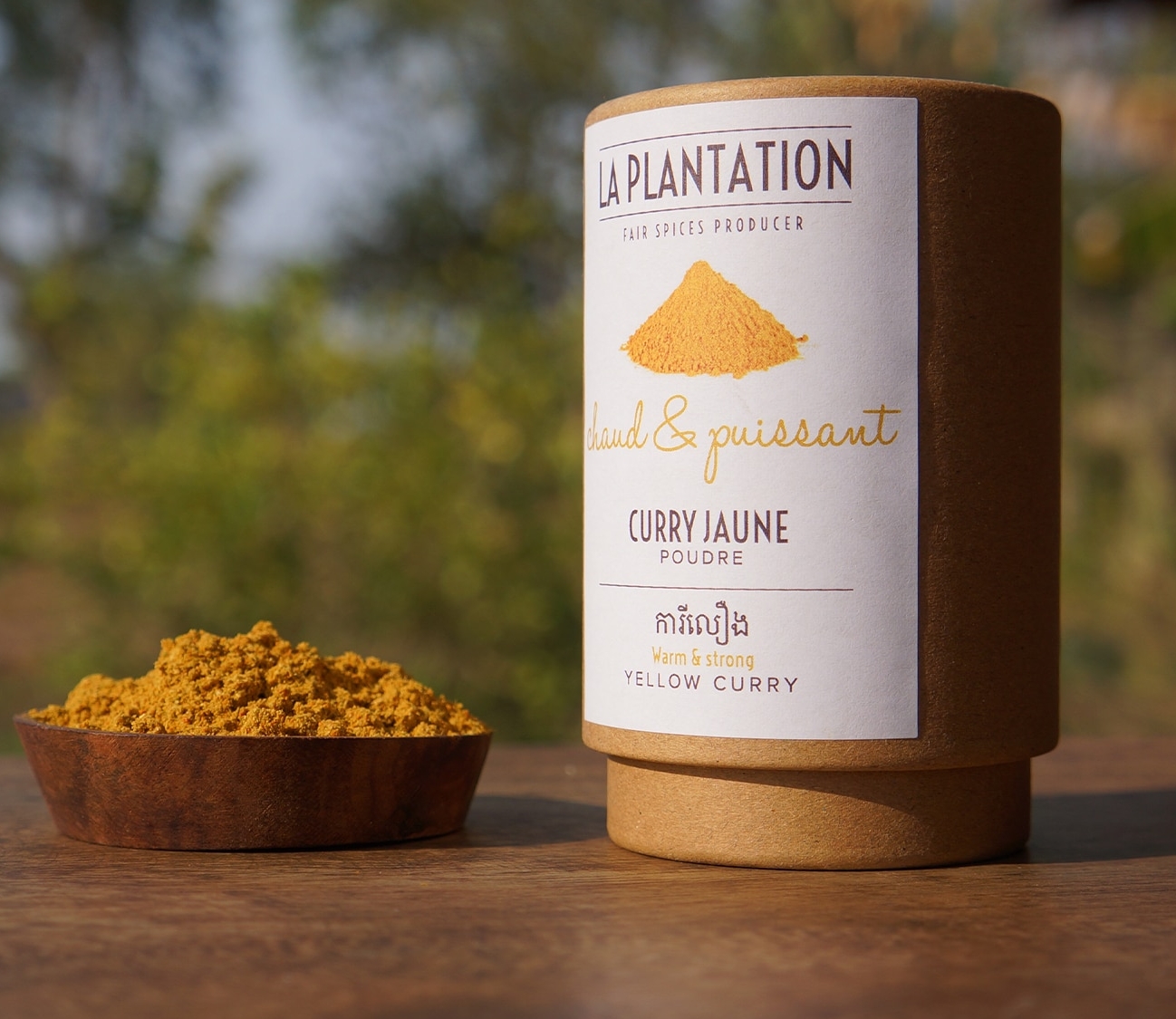
Curry is a spice blend that delivers a complete aromatic structure in one move. For a braise, fry the powder for 30 seconds in hot fat — the tarka technique — to wake up the aromas before adding the chicken, then liquid (coconut milk or stock). Green or red curry gives a mild version; yellow curry gives a more intense result.
Harissa is a condiment of chillies, garlic, and toasted spices, originally from North Africa. Its progressive heat works well in marinades on thighs, drumsticks, and wings, before the oven, the frying pan, or the barbecue.
Vadouvan is a blend with a mild curry profile, lifted by notes of confit onion and garlic. Mix it with softened butter and slip it under the skin, so it perfumes the flesh throughout roasting. It holds up through long cooking, which makes it ideal for large birds.
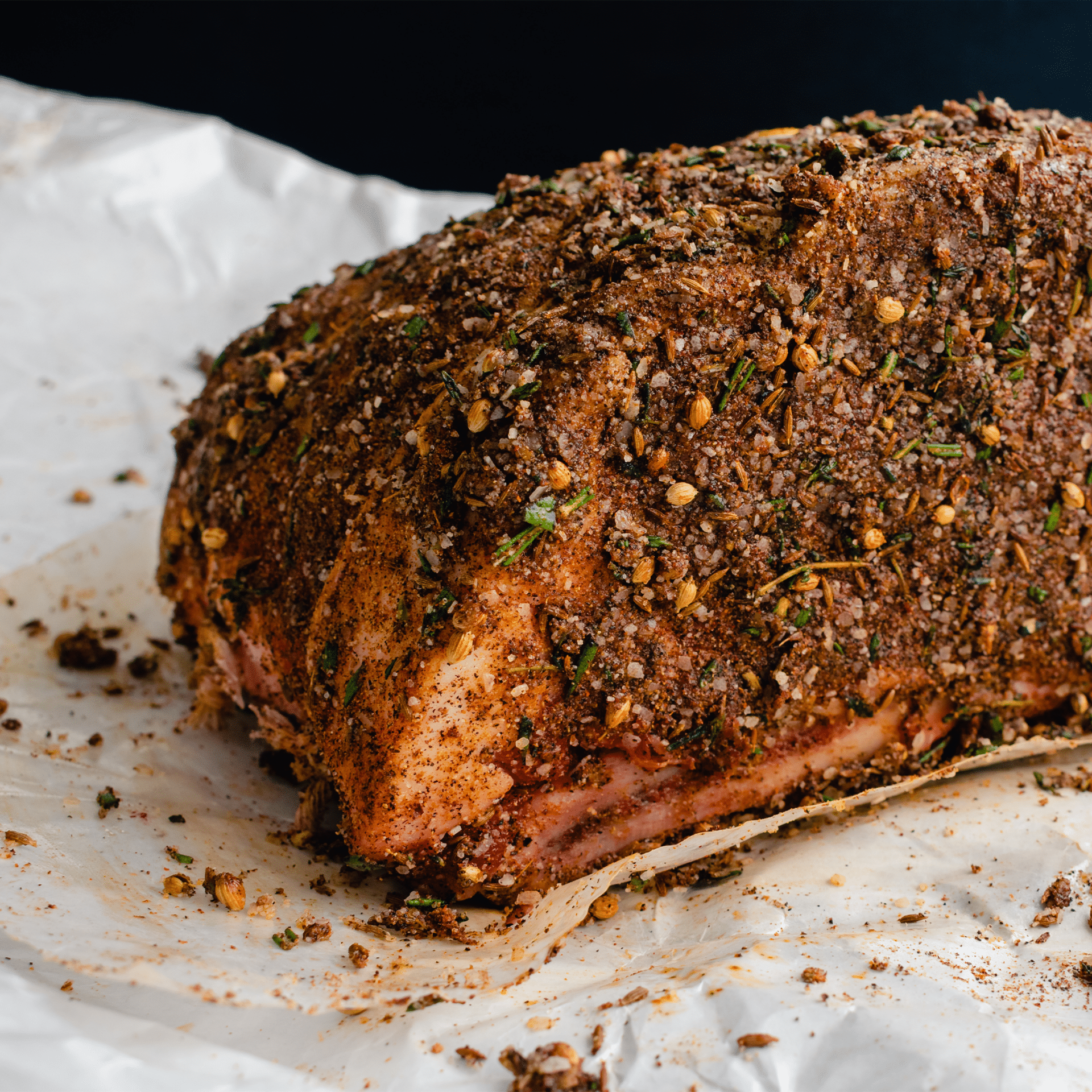
A rub is a dry spice blend massaged over the skin before cooking. This technique develops deep aromas and a surface texture that cooking alone cannot produce. The cacao rub draws inspiration from Mexican mole — a sauce of chillies, spices, and cacao traditionally served with poultry. Rub it on dry, 24 to 48 hours before cooking, to let the aromas penetrate the flesh.
A roast chicken spice blend is an assembled mix designed specifically for poultry. It can be used dry — rubbed over the skin — or to prepare a marinade. It seasons a chicken in one move: over or under the skin, with a drizzle of oil or applied dry. It is the most direct route to a consistent, well-seasoned result with no guesswork.
Zaatar is a Middle Eastern blend of thyme, sumac (a tart red berry), and toasted sesame. The herbs and sesame give it a Mediterranean character. Rub it over the skin before cooking, or use it in a marinade with olive oil. One to two tablespoons is enough for a whole chicken.
Which Spices for Which Bird?
Each bird calls for different spices according to its flesh. Turkey dries out quickly and benefits from a dry brine before seasoning. Capon, dense and fatty, holds up well to spices that last through long cooking. Guinea fowl, leaner with a more pronounced flavour, prefers gentle and fresh spices. The table below summarises the key associations.
| Bird | Flesh characteristic | Suitable spices and techniques |
|---|---|---|
| Turkey | Dries out easily | Dry brine 24–48h, then rub (accounting for the salt it contains) |
| Capon | Dense and fatty | Spices that hold through long cooking — vadouvan under the skin |
| Guinea fowl | Lean, pronounced flavour | Gentle and fresh spices — dehydrated green pepper, wild berries |
For Christmas or Thanksgiving, a dry brine is one of the most effective methods for turkey: rub the bird with salt and leave it uncovered in the refrigerator for 24 to 48 hours. This preserves the juices and dries out the skin, making it crispier once roasted. Apply the rub afterwards, taking into account any salt it already contains. If using a rub with cacao or sugar, watch the colour: if the skin darkens too quickly, cover with foil.
Capon is a young castrated and fattened cockerel. Its dense, fatty flesh holds up through long cooking — which makes it well suited to spices that last the duration, such as vadouvan butter slipped under the skin before the oven. Guinea fowl, with its leaner, more flavourful flesh, calls for gentler, fresher spices: dehydrated green Kampot pepper or a wild berry, rather than a full-on spice rub.
Recipe Ideas to Try
Each spice leads naturally to a different poultry recipe.
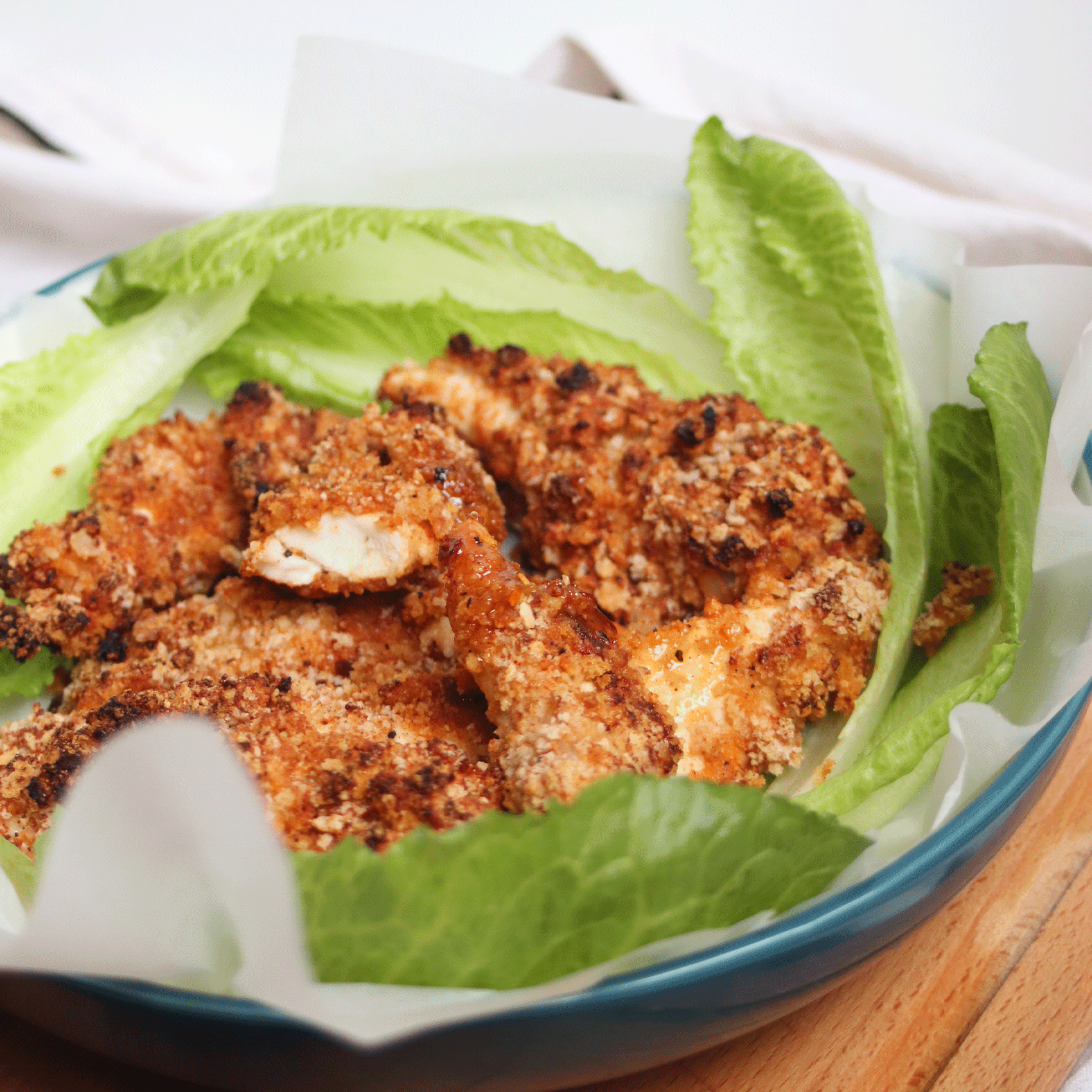
Smoked paprika → crispy golden chicken, coated and roasted at high heat
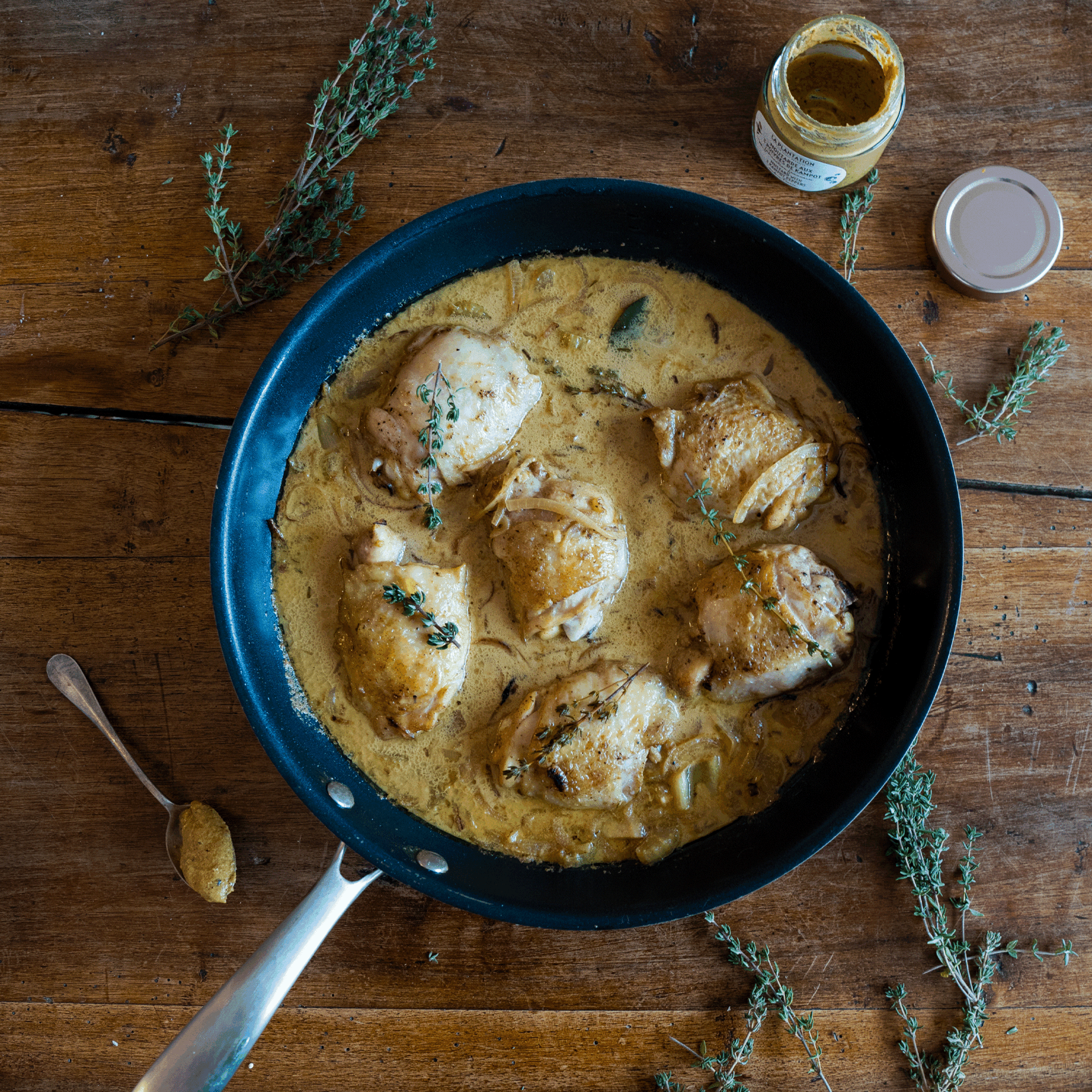
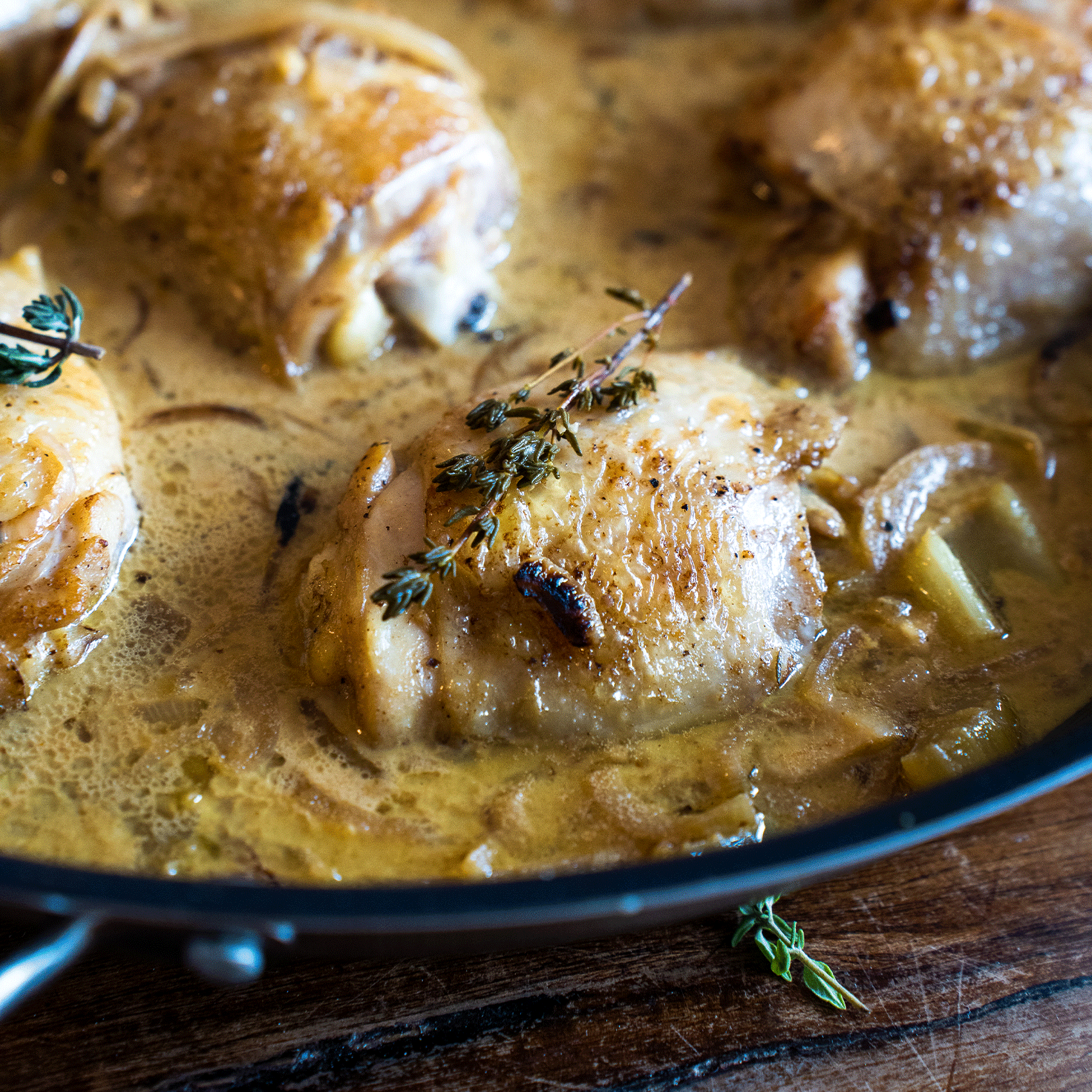
Kampot pepper mustard → chicken in cream sauce with Kampot pepper mustard
Lemongrass and coconut milk → fragrant, lightly sweet braised chicken, with Kampot lemongrass
Frequently Asked Questions
Both work — with different effects. Under the skin, spices stay in contact with the flesh and perfume it from the inside throughout cooking: this suits fine blends like vadouvan butter. Over the skin, they colour and caramelise on the surface for a crispy, golden finish — the natural role of smoked paprika rubbed in oil. For a complete roast chicken, the two can be combined.
Warm, woody spices pair well with stuffings made with chestnuts, dried fruit, or sausage meat. Long pepper — whole or ground — adds a woody, lightly sweet note. A touch of smoked paprika or cinnamon rounds out the blend. If the stuffing contains raw meat, always fry a small ball in a pan and taste it before stuffing the bird.
A cream, wine, or mushroom sauce is extended beautifully by red or black pepper added off the heat, just before serving, to keep the aroma intact. Red Kampot Pepper, soft and fruity, suits cream sauces well, while infused long pepper adds background depth. The base of the sauce counts as much as the spice: a good chicken cooking juice is what gives the sauce its foundation.
For a 1.5 kg chicken, use 2 to 3 tablespoons of a ready-made blend — such as a roast chicken spice blend. Dry the skin before applying, rub generously, then roast at 200°C for 1 hour 15 to 1 hour 30 depending on the weight, basting regularly with the cooking juices. This gives crispy skin and moist, well-seasoned flesh.


Subscribe to our Newsletter now
Get a free product for your first order!
Donation